

 English
 Español
Don't hesitate to send a message
Dog Chain Collars Guide: Materials, Training Types & Sizing
Content
- 1 What Is a Chain Collar for Dogs
- 2 Dog Collar Materials
- 3 Stainless Steel Chain and Stainless Steel Dog Collars
- 4 Dog Training Chain Collars and Professional Training Use
- 5 Choke Chain vs. Martingale Chain Collars
- 6 Heavy Duty and Durable Collars for Large Breeds
- 7 Dog Collar Size Guide
- 8 How to Choose a Dog Collar
What Is a Chain Collar for Dogs
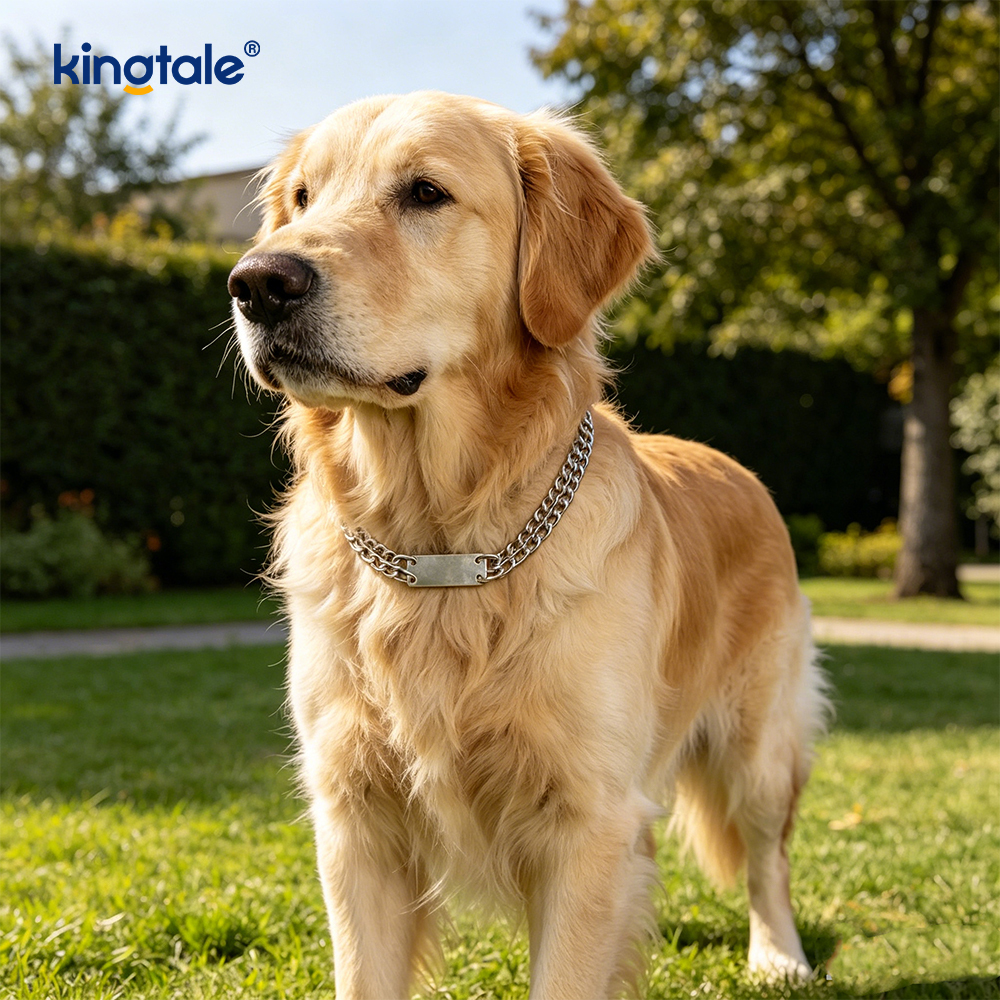
A chain collar for dogs is a collar made from interlinked metal links rather than fabric, leather, or nylon webbing, used either as a standalone everyday collar or as part of a training tool designed to apply corrective pressure during leash work. The linked construction of a metal chain dog collar gives it flexibility similar to fabric while offering far greater resistance to chewing, snagging on brush, or wearing through compared to woven materials — a real advantage for dogs that spend time outdoors, in kennel environments, or around other dogs where a fabric collar might otherwise get chewed or torn.
Chain collars generally fall into two functional categories worth distinguishing early. The first is a fixed-length decorative or everyday chain collar, which functions like any other collar with a stationary ring for tag and leash attachment and doesn't tighten or loosen in response to leash tension. The second is a training-specific chain collar engineered to slide and tighten through its own mechanism, covered in detail further below. Understanding which category a given product falls into matters significantly for both safe use and matching the collar to the actual purpose it's being bought for — using a training-mechanism collar as an all-day, unsupervised everyday collar is a common and avoidable mismatch.
Weight is also worth factoring in beyond just strength — a chain collar sized appropriately for a large breed will naturally weigh more than an equivalent fabric collar, which is generally a non-issue for medium and large dogs but can be an uncomfortable, unnecessary burden if the same style is scaled down and used on a small or toy breed where a lighter material would be more appropriate.
Dog Collar Materials
Understanding dog collar materials at the metal level explains why price and durability vary so much between chain collars that look similar at a glance. Chain collars are typically made from either chrome-plated steel, which is more affordable but relies on the plating remaining intact to resist rust, or stainless steel, where corrosion resistance is a property of the alloy itself rather than a coating that can wear through or chip.
Chrome-plated chain works acceptably for dogs that stay mostly dry and indoors, but the plating tends to wear fastest at the link joints, where repeated flexing under leash tension gradually abrades the coating away and exposes the base steel underneath to moisture. Once that happens, rust can develop at those specific wear points even while the rest of the collar still looks fine, which is part of why chrome-plated chain collars often show localized rust spots rather than uniform corrosion across the whole piece.
Link gauge — the thickness of the wire used to form each link — and weld quality also affect durability independent of the base metal choice. Welded links resist opening under sustained tension far better than links that are simply bent, pinched, or interlocked without welding, which matters most for larger, stronger dogs capable of generating significant pulling force. Cheaper chain collars sometimes cut cost by using thinner gauge wire or unwelded links, both of which are worth checking for specifically rather than assuming any two chain collars of similar appearance offer comparable strength.
Stainless Steel Chain and Stainless Steel Dog Collars
A stainless steel chain collar generally costs more upfront than a chrome-plated equivalent but holds up significantly better against the moisture, saliva, and outdoor exposure a dog collar routinely encounters throughout daily use. Because the corrosion resistance comes from the chromium content of the alloy itself rather than a surface treatment, a scratched or worn stainless link doesn't expose an unprotected base metal underneath the way a worn chrome-plated link does — the alloy's resistance to rust holds regardless of surface wear.
This becomes particularly relevant for dogs that swim regularly, live in humid or coastal climates, or wear their collar essentially full-time rather than only during walks — conditions where a chrome-plated collar's protective coating faces near-constant wear and moisture exposure, accelerating the point at which rust becomes visible. For dogs in drier climates with more limited collar wear time, the practical difference between grades is less pronounced, which is part of why a stainless steel dog collar is often positioned as a premium upgrade rather than a strict necessity for every dog.
Beyond corrosion resistance, stainless steel chain also tends to hold its polished appearance longer than plated alternatives, which matters for owners who care about a collar's finished look over years of use rather than just its functional durability — plated chain gradually dulls and can develop uneven discoloration as the coating wears unevenly across different links.
Dog Training Chain Collars and Professional Training Use
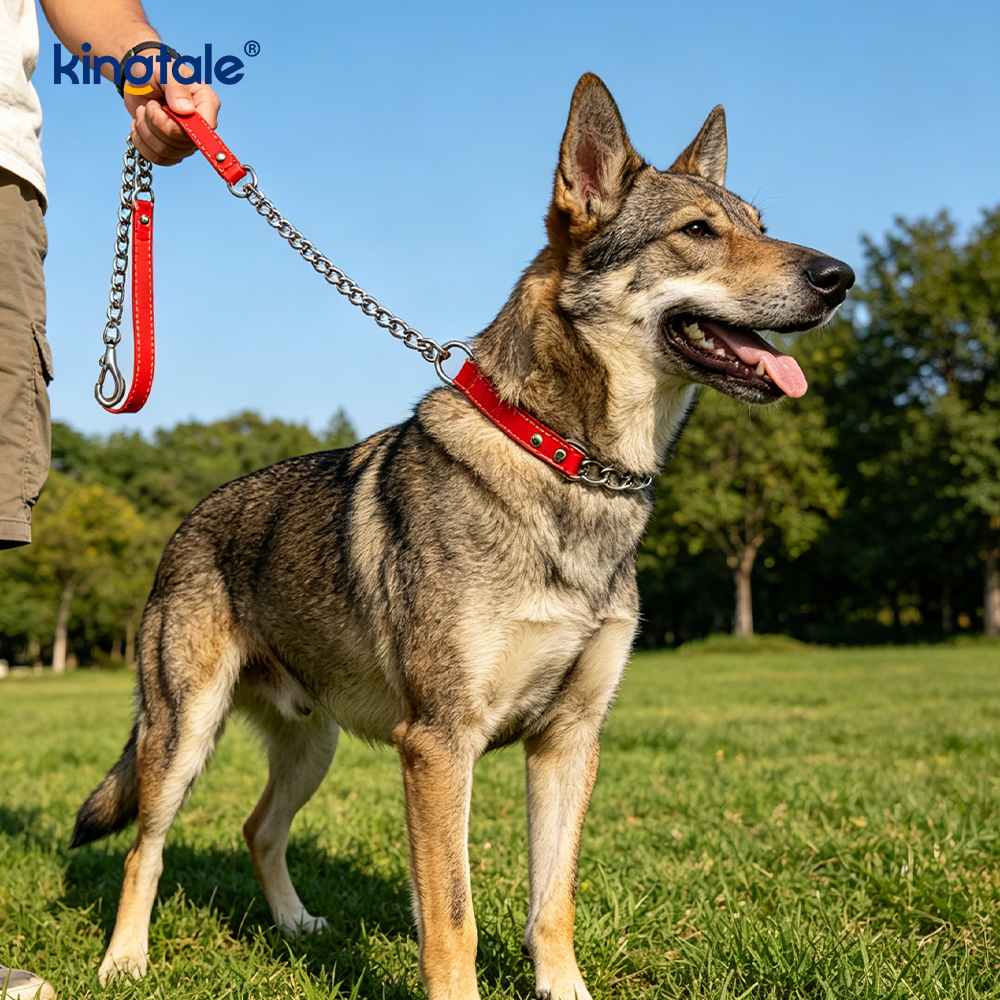
A dog training chain collar differs from an everyday chain collar in one key respect: it's designed to slide through a ring or loop at either end, allowing the collar to tighten in response to leash tension and loosen again once tension is released. This sliding action is what gives the collar its function as a piece of dog training equipment — the change in pressure around the neck is intended to get a dog's attention and discourage pulling, rather than the collar simply staying at a fixed circumference the way a buckle or snap collar does.
In professional dog training collar contexts, chain training collars are typically used as part of a broader leash-handling technique taught by a trainer, relying on brief, well-timed tension and release rather than sustained pulling — the training value comes from the timing and consistency of how the collar is used, not from the collar itself doing the training work independently. This is a meaningful distinction for buyers to understand: the collar is a tool that supports a specific handling technique, and its effectiveness depends heavily on correct use rather than being a passive fix for pulling behavior on its own.
Because correct technique matters so much to safe and effective use, many trainers recommend first-time users get in-person guidance — either from a professional trainer or through reputable instructional resources — before relying on a chain training collar independently, since improper use (constant tension rather than brief correction and release, or leaving the collar on unsupervised) reduces training effectiveness and increases the risk of discomfort or injury to the dog.
Choke Chain vs. Martingale Chain Collars
Within slip-style training collars, two designs come up most often, and they work through meaningfully different mechanisms worth understanding before choosing between them:
| Type | How It Works | Tightening Limit |
|---|---|---|
| Choke chain collar | Chain slides freely through a ring at each end, tightening with leash tension and loosening once tension releases | No built-in limit; can continue tightening as long as tension is applied |
| Martingale chain collar | A limited-slip design with a smaller control loop that tightens the neck loop only up to a pre-set point before stopping | Built-in stop prevents over-tightening beyond the designed limit |
This built-in stop is the main reason martingale-style collars are more commonly recommended by trainers and behaviorists over unlimited-slip choke chains — the limited tightening range still discourages pulling and helps prevent a dog from slipping the collar over its head during a sudden pull or startle response, without the risk of continued, unrestricted tightening that an unlimited-slip choke chain allows if a dog lunges hard or the handler doesn't release tension promptly.
Proper adjustment is essential to how well a martingale collar actually functions. The control loop needs to be set so the collar tightens just enough to sit snugly at its maximum closure — typically allowing two fingers of space even when fully tightened — without over-tightening, or on the other end of the range, staying loose enough that a narrow-headed dog could still slip out. This adjustment is usually a simple sliding buckle or length adjustment on the larger loop, and it's worth rechecking periodically as a dog's neck size changes with growth, weight change, or seasonal coat thickness.
Regardless of which style is chosen, both are generally intended for supervised training sessions and controlled leash walking rather than as an everyday, all-day collar left on an unsupervised dog — the sliding, tightening mechanism that makes them effective training tools is also what makes them unsuitable for unsupervised wear, where a collar can catch on something and tighten with no one present to release the tension.
Heavy Duty and Durable Collars for Large Breeds
A heavy duty dog collar built for larger animals needs to account for forces well beyond what a small or moderately sized dog generates — a large, strong dog lunging against a leash can apply substantial peak force through the collar in a fraction of a second, far higher than the steady pulling force the same dog exerts during normal walking. Undersized hardware — thin links, weak rings, lightweight buckles — is the most common failure point when a collar rated for a smaller dog is used on a larger, stronger one.
A genuinely strong dog collar for large breeds typically specifies both a minimum link or webbing gauge and a rated breaking strength for the D-ring or attachment point, since the leash connection point is frequently the weakest link in an otherwise robust collar if it wasn't specifically reinforced to match the rest of the collar's strength rating. Among durable dog collars, welded (rather than soldered) attachment points, thicker link gauges, and hardware explicitly load-rated for the dog's approximate pulling force are the details that separate genuinely long-lasting collars from ones that look sturdy but wear out or fail under real strain.
Buyers shopping for dog collars for large dogs — mastiffs, large working breeds, and dogs with a strong prey drive or high reactivity that can generate sudden, significant force on a lunge — should treat load ratings as a real specification to check rather than assuming any collar labeled "heavy duty" is automatically matched to their dog's size and strength.
Dog Collar Size Guide
Proper sizing according to a reliable dog collar size guide starts with measuring the dog's neck circumference directly rather than relying on breed or weight alone, since neck size varies meaningfully even within a single breed or weight class — two dogs of the same weight can have noticeably different neck measurements depending on build and coat thickness. Measuring snugly but not tight, then adding roughly two finger-widths of allowance, is the standard approach for a well-fitted everyday collar.
| Approximate Weight | Typical Neck Range | Notes |
|---|---|---|
| Under 25 lbs | 10–14 in (25–36 cm) | Lighter gauge chain is usually appropriate; avoid oversized heavy-duty hardware |
| 25–60 lbs | 14–20 in (36–51 cm) | Mid-weight chain gauge suits most dogs in this range |
| 60–90 lbs | 18–24 in (46–61 cm) | Confirm rated breaking strength on rings and attachment points |
| Over 90 lbs | 22–28 in (56–71 cm) | Heavy-duty gauge and reinforced hardware strongly recommended |
Fit requirements shift depending on collar type. Everyday flat collars should sit comfortably with enough room to slide two fingers between collar and neck without excessive slack. Training-specific and martingale chain collars, by contrast, need to be sized so the collar sits high on the neck just behind the ears when properly positioned and fitted with enough length that it can tighten and release through its full intended range without being permanently cinched — an oversized training collar sits too low and doesn't respond correctly, while an undersized one can be constantly tight even without active leash tension. Rechecking fit periodically matters for growing puppies and for any dog experiencing meaningful weight change, since a collar sized correctly six months ago may no longer fit appropriately.
How to Choose a Dog Collar
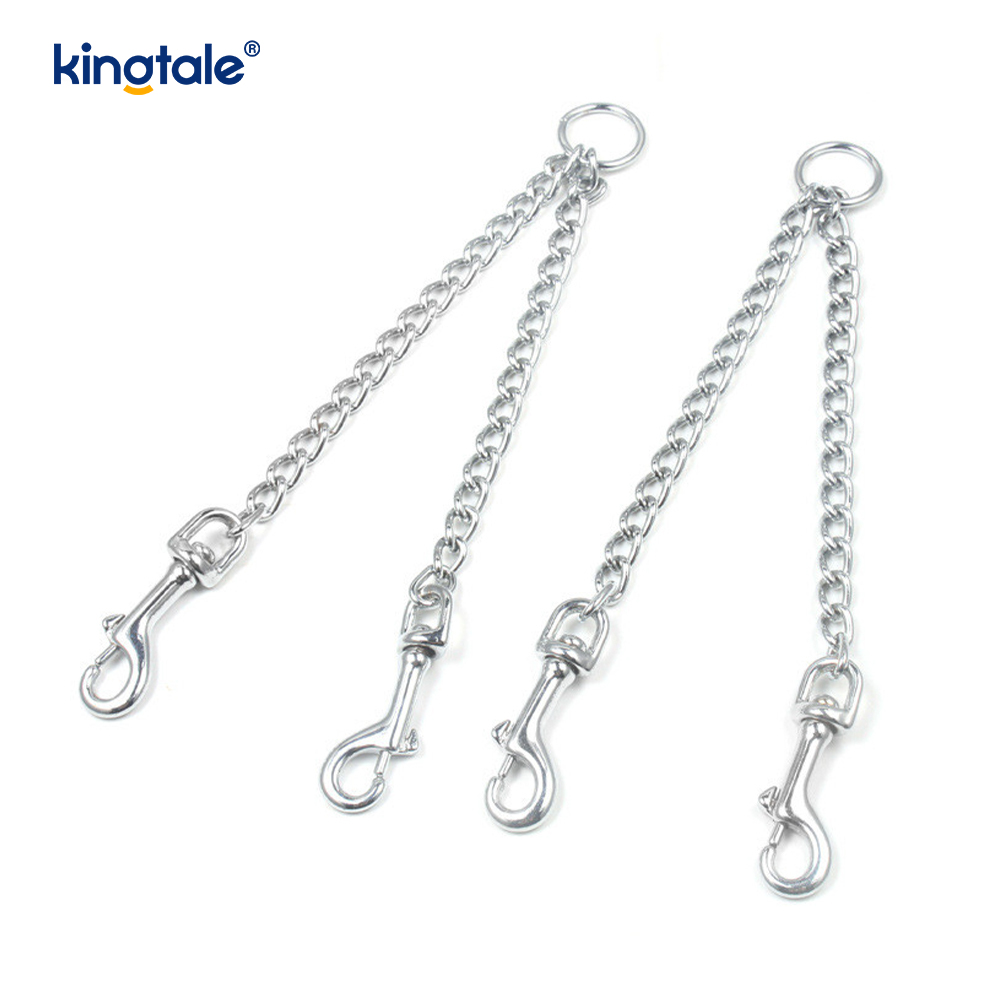
Working through how to choose a dog collar comes down to matching a handful of decisions to the dog's size, temperament, and how the collar will actually be used, rather than choosing based on appearance or price alone:
- Purpose first — decide whether the collar is for everyday wear and ID tag attachment, or specifically for supervised training and leash correction, since these call for different collar types entirely.
- Material for the environment — stainless steel for dogs that swim, spend significant time outdoors, or live in humid climates where corrosion resistance matters most; chrome-plated chain is a reasonable, more affordable choice for drier, mostly indoor conditions.
- Hardware strength matched to the dog — check rated breaking strength on rings and connection points specifically for larger or stronger dogs, not just overall collar appearance.
- Correct sizing and fit — measure neck circumference directly and fit according to the specific collar type's requirements rather than relying on generic small/medium/large sizing alone.
- Supervision requirements — training-specific chain collars, whether choke-style or martingale, are generally intended for active, supervised sessions rather than being left on an unattended dog.
The most consistent mistake in this category is choosing based on collar style alone without confirming that the hardware, sizing, and intended use actually align with the specific dog — a well-made collar mismatched to the wrong purpose or improperly fitted causes more problems than a simpler collar that's correctly matched to how it will actually be used.



Reliable Materials - Sourced for performance and pet safety.
Quick Links
Ready to Customize Your Pet Products?
