

 English
 Español
Don't hesitate to send a message
Dog Leash Guide: Types, Lengths, and How to Choose
Content
What Actually Makes a Dog Leash Safe and Comfortable
A good dog leash comes down to three things: material strength, hardware quality, and how the handle sits in your hand during a sudden pull. Nylon webbing rated at 800-1,200 lbs breaking strength covers almost every dog under 100 lbs, while leather softens with use and resists abrasion better over years of daily walks. Biothane, a coated webbing material, has gained ground with owners who walk in wet or muddy conditions since it wipes clean in seconds and doesn't absorb odor the way nylon does over time.
The weak point on most leashes isn't the strap at all — it's the bolt snap. A stamped, welded steel or brass snap holds up far longer than the cast zinc clips found on budget leashes, which can crack after repeated jerking from a strong puller. Trigger-style snaps are quick to operate one-handed but wear out faster under constant tension, while bolt snaps are slower to open but rarely fail even after years of daily use. For dogs over 70 lbs, a swivel-eye bolt snap also prevents the leash from twisting into a tangled coil during play or sudden direction changes.
Padded or neoprene-wrapped handles matter more than most buyers expect. Without padding, a leash can cut into the palm during a hard lunge, and that split-second flinch is often when dogs slip free. For anyone walking a dog over 50 lbs, a padded handle with a secondary traffic-control loop near the clip gives a second grip point for close-quarters control near roads or crowds. Stitching quality is another overlooked detail — box-stitched or bar-tacked seams at the handle and clip hold up to years of tension, while single-line stitching is often the first thing to fail on a cheap leash.
Choosing the Right Leash Length for Different Situations
Length should match the environment, not the dog's size. A 4-foot leash keeps a dog close for city sidewalks and crowded areas, giving the handler tight control without the dog wandering into traffic or other pedestrians. A 6-foot leash is the most common all-purpose length, balancing freedom to sniff with enough control for basic obedience work. Anything longer than 6 feet, such as a 10 to 30-foot training or long line, is built for open-field recall practice, not everyday walking, since excess slack becomes a tripping hazard in tight spaces.
Shorter isn't always better, though. A leash under 4 feet forces the dog to walk almost against the handler's leg, which works for service-dog-style heeling but frustrates most pets that want at least some room to explore. On the other end, long lines require practice to manage — letting 20 feet of leash drag on wet pavement or through brush wears down the material fast and can wrap around a handler's ankles if the dog circles back suddenly.
- 4 feet: Urban walking, busy sidewalks, vet visits
- 6 feet: General daily walks, obedience training
- 8 feet: Parks and trails with moderate space
- 10-15 feet: Backyard recall practice, semi-controlled spaces
- 20-30 feet: Open-field training lines, not for retractable use near roads
A practical rule many trainers use: pick the shortest length that still lets the dog complete its normal walking routine without constant tension on the line. Constant tightness, regardless of length, is usually a sign the leash is either too short for the setting or the dog hasn't yet learned to walk without pulling toward every distraction.
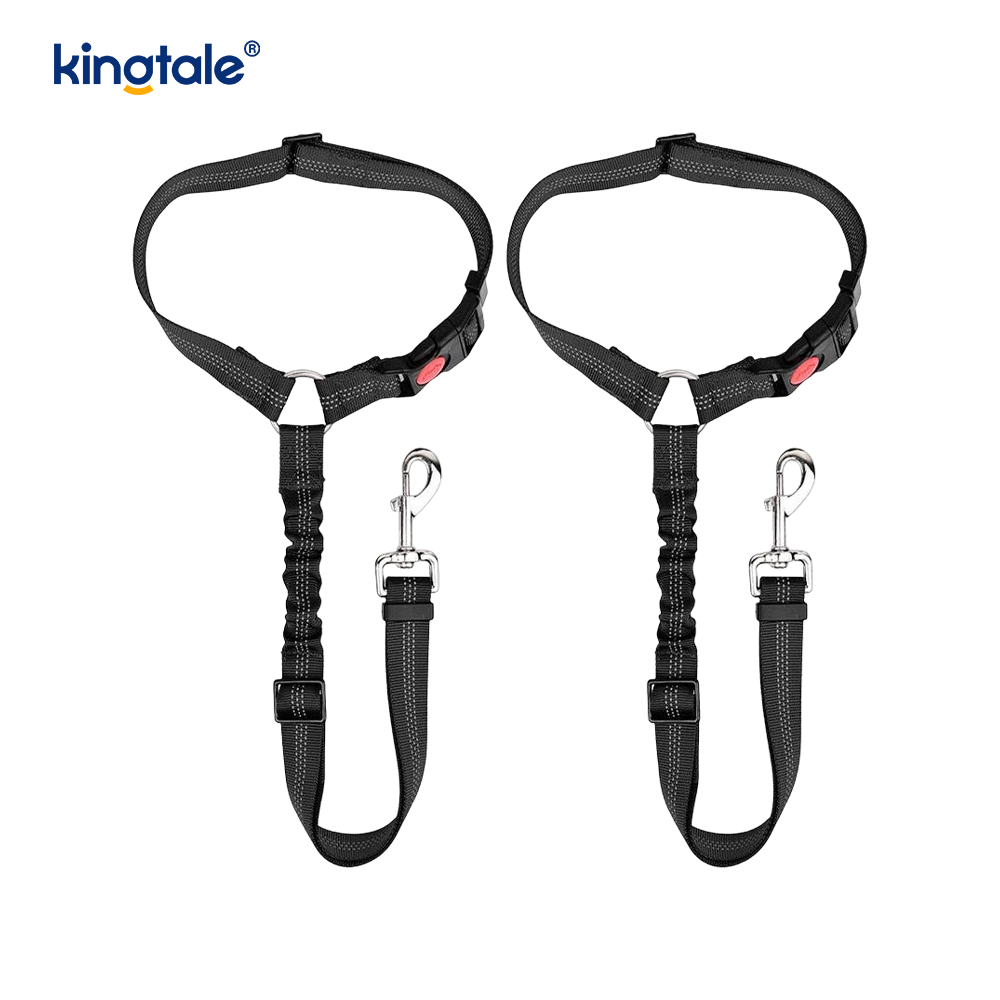
Leash Types Compared
Not every dog leash style suits every dog. A strong puller on a retractable leash is a common cause of rope-burn injuries and lost control, while a slip leash is better suited to quick vet-clinic handling than daily use on an untrained dog. Matching the leash type to the dog's size, training level, and the environment usually matters more than any single material or brand choice.
| Type | Best For | Drawback |
|---|---|---|
| Standard flat leash | Daily walks, all dog sizes | Fixed length, no auto-adjust |
| Retractable leash | Calm dogs in open areas | Slower reaction time, cord-burn risk |
| Slip leash | Quick handling, vet visits, shelters | Not ideal for untrained pullers |
| Hands-free leash | Running, hiking, multi-dog handling | Less precise control for reactive dogs |
| Chain leash | Heavy chewers | Heavy, uncomfortable for long walks |
Comparison of common dog leash types by use case and limitation.
Retractable leashes deserve a closer look because they're widely sold but frequently misused. The thin cord variants, common in budget models, have been linked to finger and hand injuries when a dog lunges suddenly, since the cord can slice skin faster than a wide webbing tape version. Tape-ribbon retractables are safer in that regard, but neither style gives the instant stopping control of a fixed-length leash, which matters most in unpredictable settings like off-leash parks or areas with wildlife.
How Leash Choice Shapes Walking Behavior
The leash itself can reinforce or undo training. Retractable leashes teach dogs that pulling extends their range, which directly conflicts with loose-leash walking goals — trainers commonly see faster progress on pulling issues once owners switch to a fixed 6-foot leash. A front-clip harness paired with a standard leash reduces pulling force by redirecting the dog's momentum sideways rather than letting it drive forward against a back-clip collar.
Timing also plays a role that's easy to overlook. A leash that stays slack whenever the dog walks calmly, and only tightens briefly during a correction, teaches the dog to associate slack with the desired behavior. A leash that's constantly taut, regardless of what the dog is doing, removes that feedback loop entirely, which is one reason many dogs never fully stop pulling even after months of walking on the same leash and collar setup.
For multi-dog households, a coupler or double-dog dog leash attachment works only when both dogs walk at a similar pace; mismatched dogs are usually safer and calmer on two separate leashes, even if it means using both hands. Puppies in particular benefit from a lightweight leash during early training, since a heavy chain or thick leather leash can feel disproportionately restrictive and slow down the association between calm walking and a relaxed leash.
Maintenance and Common Mistakes to Avoid
A dog leash degrades faster than most owners expect, especially with daily outdoor use. Nylon fibers weaken under prolonged UV exposure, which is why a leash left clipped to an outdoor kennel or hung in direct sun for months can snap under normal tension even though it looks intact. Rinsing salt, sand, or de-icing chemicals off the leash after walks in winter or coastal areas prevents the webbing from stiffening and cracking at stress points near the clip and handle.
- Inspect the stitching at the handle and clip every few weeks for fraying
- Avoid wrapping the leash tightly around a hand or wrist, which increases injury risk during a sudden pull
- Replace any leash with a cracked or bent clip immediately rather than continuing to use it
- Match leash strength to dog weight rather than buying the thinnest option available for cost savings
One of the most common mistakes is buying based on size alone rather than pulling behavior. A calm 60-lb dog may do fine on a standard nylon leash, while a 30-lb dog with a strong prey drive can generate enough sudden force to snap the same leash at the clip. Matching hardware and material strength to actual behavior, not just body weight, prevents most leash failures.



Reliable Materials - Sourced for performance and pet safety.

Quick Links
Ready to Customize Your Pet Products?
