

 English
 Español
Don't hesitate to send a message
Dog Harness Guide: Types, Sizing & How to Put One On
Content
- 1 What a Harness Does Differently From a Collar
- 2 Types of Dog Harnesses at a Glance
- 3 How to Size a Harness Correctly
- 4 How to Put a Harness on a Dog, Step by Step
- 5 Choosing the Right Harness for Specific Needs
- 6 Harness or Collar for a Puppy?
- 7 Can a Dog Wear a Harness All Day?
- 8 Frequently Asked Questions
What a Harness Does Differently From a Collar
A harness spreads the force of a pull across a dog's chest and shoulders instead of concentrating it on the neck, which is why vets generally recommend harnesses over collars for daily walking — especially for puppies still developing their trachea and cervical vertebrae, and for any breed prone to coughing, eye pressure issues, or neck sensitivity. A collar still has a place for holding ID tags and for dogs that are already leash-trained and walk calmly, but the moment pulling, lunging, or sudden stops enter the picture, a harness reduces the risk of tracheal injury significantly.
The trade-off is that a poorly fitted harness can rub at the armpits or restrict shoulder movement if the wrong style is chosen, which is the main argument people raise as a disadvantage. That risk comes down almost entirely to choosing the right type and size — not from harnesses being inherently worse than collars.
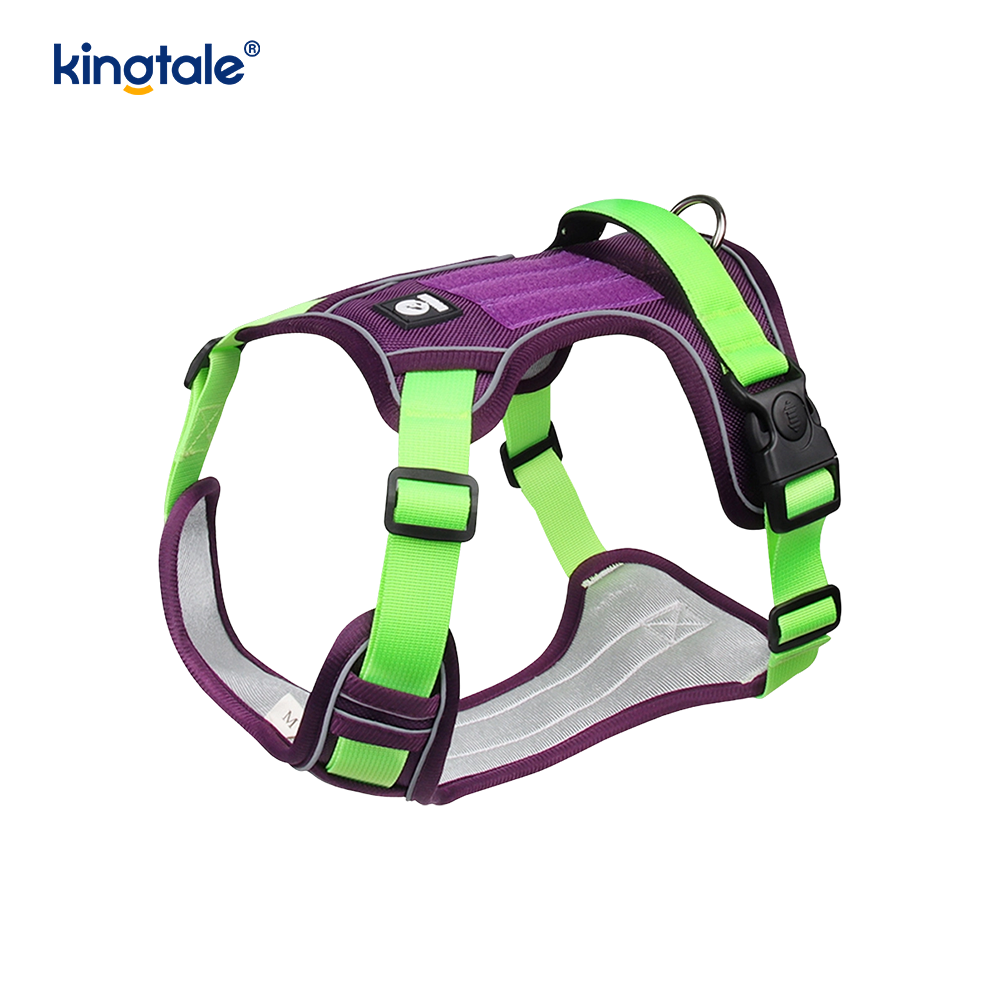
Types of Dog Harnesses at a Glance
Common dog harness types, where the leash attaches, and the situations each one fits best.
How to Size a Harness Correctly
Sizing comes down to two measurements: girth (the widest point around the rib cage, just behind the front legs) and neck circumference for styles with an adjustable neck loop. Weight charts on packaging are only a starting estimate — a deep-chested or barrel-chested dog of a given weight often needs a size up from what the chart suggests, while a lean, narrow-chested dog of the same weight may need a size down.
A correctly sized harness should:
Allow two fingers to slide flat under any strap without forcing it.
Sit close to the body without straps that twist, ride up into the armpits, or sag loosely across the back.
Not restrict the dog's elbows or shoulder rotation when walking or trotting.
How to Put a Harness on a Dog, Step by Step
The exact motion depends on the style, but the sequence below covers the two most common designs:
1. Overhead/back-clip style — slip the neck loop over the dog's head, guide each front leg through its respective loop, then bring the back panel up and secure the belly strap, checking that the chest piece sits flat against the breastbone.
2. Step-in style — lay the harness flat on the ground, have the dog step both front paws into the leg loops, then lift the back panel up and clip it closed over the spine.
3. Final check — once buckled, the dog should be able to fully extend a front leg forward without the harness binding at the armpit, and you should not be able to pull the harness off backward over the head.
Choosing the Right Harness for Specific Needs
Matching harness features to common situations, breeds, and behavior patterns.
Harness or Collar for a Puppy?
For puppies still building leash manners, a harness is generally the safer everyday choice since it removes neck pressure during the sudden stops, jumps, and zigzags typical of early leash training. A collar is still useful for holding ID tags at home, but most trainers recommend clipping the leash to a properly fitted puppy harness rather than a collar until loose-leash walking is consistently reliable.
Can a Dog Wear a Harness All Day?
A well-fitted, lightweight harness can be left on for several hours without harm, but it shouldn't become permanent daily wear. Extended wear without breaks can cause coat matting, pressure marks, or skin irritation under the straps, particularly in warm weather or on dogs with thick or long coats. Removing the harness during rest periods and checking the skin underneath periodically prevents these issues from developing unnoticed.
Frequently Asked Questions
How is a dog harness actually constructed?
Most harnesses are built from nylon or polyester webbing reinforced with stitched seams at stress points, metal or heavy-duty plastic D-rings for leash attachment, and quick-release buckles; padded versions add a layer of foam or mesh lining where the straps cross the chest and ribs.
What's the safest harness style for small dogs?
Step-in harnesses with soft, wide padding and a back-clip ring tend to be the safest choice for small breeds, since they avoid pressure on the trachea and reduce the handling stress that comes with pulling a harness over the head.
Is a body leash the same thing as a harness?
Not exactly — a body leash typically combines a harness-style chest wrap with an integrated leash in one piece, while a standard harness is a separate piece that a regular leash clips onto.



Reliable Materials - Sourced for performance and pet safety.

Quick Links
Ready to Customize Your Pet Products?
