

 English
 Español
Don't hesitate to send a message
What Are the Key Differences Between Step-In and Over-Head Pet Harnesses?
Content
Introduction
Choosing the right Pet Harnesses is not only a matter of convenience but a critical decision that directly affects animal safety, biomechanics, and long-term comfort. For B2B buyers, importers, and distributors, understanding the structural and functional differences between step-in and over-head harnesses helps ensure product suitability across dog sizes, climates, and usage scenarios.
As a vertically integrated designer and exporter of pet accessories, Zhangjiagang Kingtale International Co., Ltd. focuses on engineering-driven solutions that enhance pet safety, comfort, and happiness. This article provides a technical, side-by-side evaluation of step-in and over-head harnesses to support informed procurement decisions.
Understanding Pet Harnesses
What Is a Pet Harness?
A pet harness is a load-distribution system designed to transfer leash forces away from the cervical spine and onto the chest and torso. Compared with collars, harnesses reduce localized stress, minimize tracheal pressure, and improve handler control—particularly for puppies, small breeds, and active dogs.
Engineering Functions of Modern Pet Harnesses
- Even force dispersion across sternum and rib cage
- Reduced risk of neck injury during sudden pulls
- Improved gait stability during walking and training
- Enhanced safety for urban and outdoor environments
Step-In Pet Harnesses
Structural Design and Wearing Mechanism
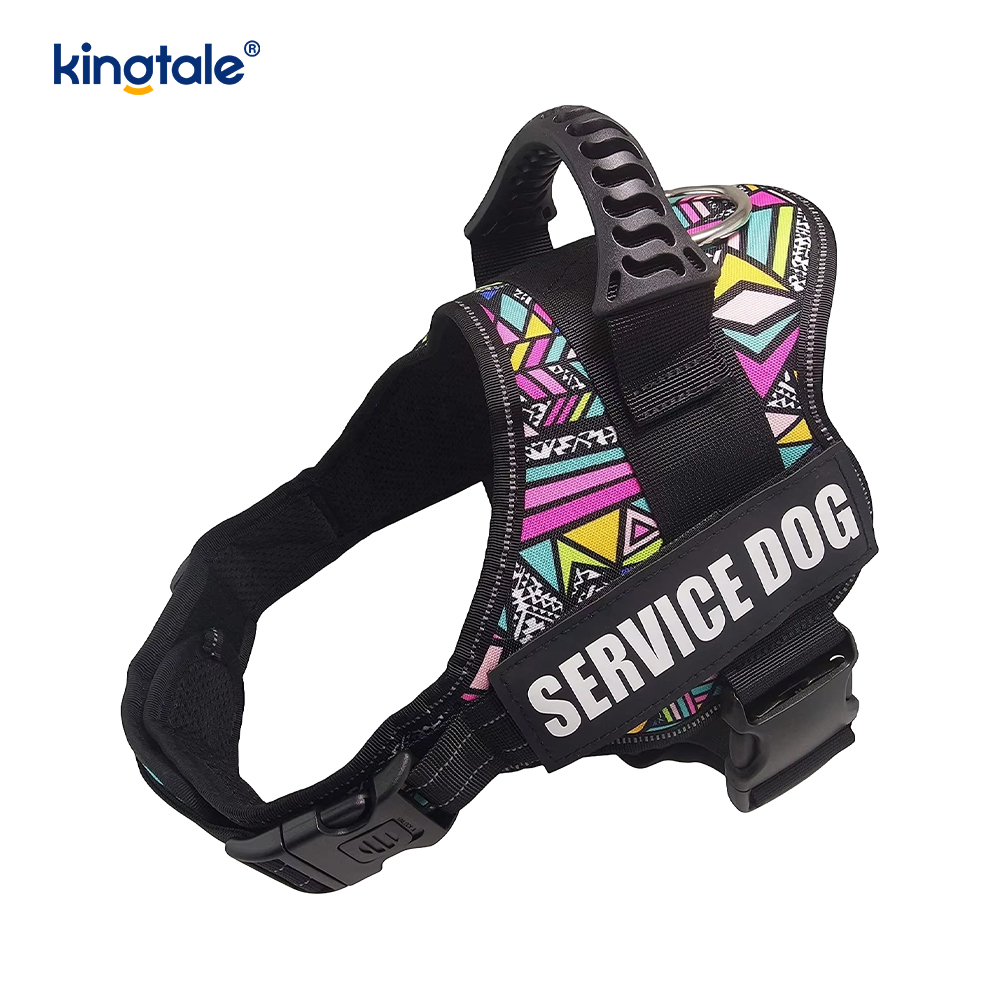
Step-in harnesses require the dog to place its front legs into two openings before the harness is secured across the back or chest. This configuration avoids passing material over the head, making it particularly suitable for dogs sensitive to facial contact.
Application Scenarios and Target Segments
This design is widely regarded as the Best Pet Harness for Small Dogs, especially toy and miniature breeds with delicate skeletal structures.
- Ideal for daily walks and light activity
- High acceptance for dogs resistant to over-head gear
- Frequently selected as a Comfortable Pet Harness for Walking
Advantages and Limitations
From an engineering perspective, step-in harnesses emphasize simplicity and comfort but require precise sizing to avoid lateral slippage.
| Aspect | Step-In Harness Characteristics |
| Force Distribution | Primarily chest-based, moderate back support |
| Ease of Use | High for calm dogs, moderate for active dogs |
| Fit Sensitivity | Requires accurate chest girth measurement |
Over-Head Pet Harnesses
Structural Design and Wearing Mechanism
Over-head harnesses are designed to be slipped over the dog’s head and secured around the torso using adjustable straps. This structure enables greater control over fit and load distribution.
Application Scenarios and Target Segments
Due to their adjustable geometry, over-head designs are commonly specified as an Adjustable Pet Harness for Medium Dogs and active breeds requiring stability during movement.
- Suitable for training, outdoor activity, and longer walks
- Preferred as an Easy-to-use Pet Harness for Puppies with growth-adjustment needs
Advantages and Limitations
Over-head harnesses offer superior structural stability but may require acclimation for dogs sensitive to head contact.
| Aspect | Over-Head Harness Characteristics |
| Force Distribution | Balanced across chest, shoulders, and back |
| Adjustability | High, suitable for growth and weight variation |
| Security Level | Higher resistance to escape |
Comparing Step-In and Over-Head Harnesses
Comfort and Ergonomics
Comfort depends on strap placement, padding density, and breathability. In warmer climates, material selection becomes critical.
| Criteria | Step-In Harness | Over-Head Harness |
| Initial Acceptance | Higher | Moderate |
| Long-Term Stability | Moderate | High |
| Heat Management | Optimized with breathable mesh as a Breathable Pet Harness for Hot Weather | |
Safety and Compliance Considerations
Both harness types should comply with international textile safety and durability standards to ensure long-term reliability.
How to Choose the Right Pet Harness for Your Dog
Key Selection Criteria for B2B Buyers
- Target dog size and breed distribution
- Climate and seasonal usage
- Material durability and wash resistance
- Adjustment range and SKU efficiency
Manufacturer Perspective
At Zhangjiagang Kingtale International Co., Ltd., harness development integrates ergonomic modeling, material testing, and user behavior analysis. This ensures compatibility across collars, leashes, and carriers while aligning with our mission to enhance pet safety and comfort.
Frequently Asked Questions (FAQ)
1. Are step-in harnesses safer than collars?
Yes. Both step-in and over-head harnesses reduce cervical stress compared to collars by distributing force across the chest.
2. Which harness type is better for puppies?
Over-head designs are often preferred due to adjustability, making them an Easy-to-use Pet Harness for Puppies during growth phases.
3. Do harnesses affect a dog’s gait?
Properly engineered harnesses support natural movement without restricting shoulder rotation.
4. What materials are recommended for hot climates?
Lightweight mesh and moisture-wicking fabrics are essential for a Breathable Pet Harness for Hot Weather.
5. How should distributors manage sizing variations?
Offering adjustable harness models reduces SKU complexity while improving end-user satisfaction.



Reliable Materials - Sourced for performance and pet safety.
Quick Links
Ready to Customize Your Pet Products?
