

 English
 Español
Don't hesitate to send a message
Breathable Dog Harness Guide: Mesh Materials, Fit Tips, and Heat Control
Content
In 24-degree weather, the chest skin under a solid nylon harness can run about five degrees hotter than the same spot under an open mesh panel after a 15-minute walk. Dogs cool themselves by panting and through their paw pads, not by sweating across the chest, so the material that covers the ribcage either helps heat escape or locks it in. That is why a breathable dog harness is the central specification for warm-climate owners, long-coated breeds, and dogs that work or run on harnesses.
This guide looks at breathability the way a product engineer would: fabric air permeability numbers, mesh structure, harness geometry, and fit pressure. It ends with a sourcing checklist for retailers and brands, because the same mesh that keeps a dog cool also decides durability, returns, and warranty performance in a wholesale program.
How Breathability Works in a Dog Harness
A breathable dog harness combines air-permeable fabric, open strap spacing, and a liner that lifts the panel off the coat so the chest keeps exchanging air while the dog moves.
Air permeability is the volume of air, measured in liters per square meter per second (L/m2/s), that passes through a fabric under a set pressure differential, commonly tested under ASTM D737. A typical spacer-mesh harness panel tests above 800 L/m2/s; a dense oxford weave drops below 300; a coated shell can fall under 150.
Those numbers explain why mesh harness is not a single category. Four design elements control real-world breathability, and a harness can fail on any one of them even when photos look convincing.
- Shell weave density: loose knits pass air freely, while tight weaves block it.
- Open surface area: webbing-only skeletons expose most of the back and sides.
- Spacer layer: keeps the shell from collapsing onto the fur during movement.
- Padding thickness: dense foam acts like a blanket even when it sits under a mesh outer layer.
Breathable Dog Harness Materials: Mesh versus Durability
For daily walking and training, 3D spacer mesh and air-mesh shells offer the best airflow-to-durability ratio; coated fabrics should be reserved for rain gear and heavy brush.
The table below maps the five shell materials most common in breathable dog harness manufacturing. The bar chart underneath shows representative ASTM D737 air permeability values for the same materials.
| Material | Air permeability | Moisture wicking | Abrasion resistance | Typical role |
| 3D spacer mesh | Very high (800-1200 L/m2/s) | High | Medium | Chest and back panels |
| Air mesh (polyester) | High (700-1000 L/m2/s) | Medium-high | Medium | Shoulder and side panels |
| Open nylon webbing | Medium (400-700 L/m2/s) | Medium | High | Straps and back skeleton |
| Oxford fabric | Low (200-400 L/m2/s) | Low | High | Solid shells and pack panels |
| PVC-coated fabric | Very low (under 150 L/m2/s) | None | Very high | Rainwear and water-sport gear |
Spacer mesh wins the airflow test for a structural reason: its middle layer of monofilament yarn keeps two outer textiles apart, so air moves horizontally through the panel even when the dog presses against it. A single-layer weave has no such air column and collapses flat under tension. That is why a 12 mm spacer panel can keep a coat dry on a 30-minute walk, while a neoprene pad leaves it damp.
Spacer mesh is a three-dimensional knit with a permanent air channel: two flat textile layers joined by vertical monofilament yarns. The structure behaves like a tiny ventilated bridge under compression, unlike foam, which closes its cells when squeezed.
Zhangjiagang Kingtale International Co., Ltd. builds this construction into its harness family and exports it to retail and brand programs worldwide. The no-pull breathable reflective vest is a direct example of a spacer-mesh chest panel combined with a solid webbing frame.
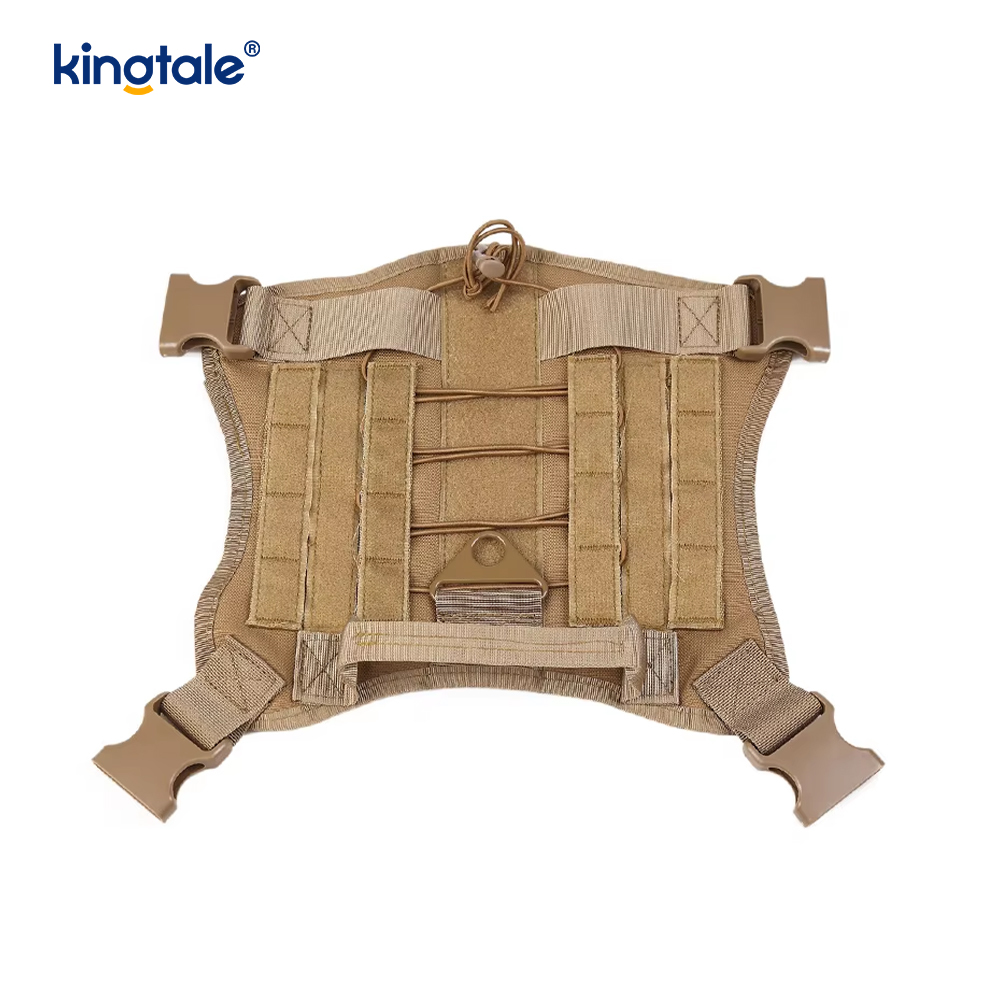 Spacer Mesh No-Pull Reflective Vest Harness for Medium DogsThis tactical-style harness combines a breathable spacer-mesh chest panel with a solid webbing frame and reflective trim, built for medium to large breeds. Its adjustable fit directly affects airflow, making it a practical choice for training and outdoor use.View Product →
Fit and Geometry: Heat Traps in a Harness
Fit controls breathability as much as fabric does: an overtight harness flattens the spacer layer and blocks airflow, while a loose harness shifts and flaps, which rubs the coat and stops moisture from evaporating.
The same mesh that tests well in the lab can fail on the dog when geometry is wrong. Two harness layouts dominate the market, and they trap heat very differently.
Y-Front Open Geometry
Straps split below the neck and run along the sides of the sternum, leaving the center of the chest exposed. Contact area is roughly 30 percent smaller, which makes this the cooler layout for daily walking in warm weather.
Wide Chest Plate
A solid plate spreads no-pull pressure evenly, but it covers the sternum and traps heat unless it is built with spacer mesh and edge ventilation. This layout suits heavy pullers and structured training more than hot-weather walks.
Do not size a breathable dog harness by neck girth alone. Chest girth, stride clearance, and coat thickness all change the effective fit, and each one also changes how much air can reach the skin.
Regardless of layout, measure correctly before ordering samples. A harness sized by neck only will sit too far back or too far forward, and both positions reduce airflow.
- Measure chest girth behind the front legs, then the widest part of the neck.
- Expect at least two adjustment points on the girth and one on the neck.
- Two fingers should slide under any strap without lifting it.
- Front straps must clear the armpits; a strap in the axilla clamps the fur and blocks airflow.
For detailed measuring and step-by-step donning instructions, read our breathable dog harness sizing and fit guide before approving a sample.
No-Pull Control and the Breathable Dog Harness
Front-clip no-pull harnesses need a chest panel to distribute braking force, but a well-made panel uses laminated spacer mesh, so the owner keeps steering control without losing airflow.
A front clip redirects the dog's forward pull to the side of the body, protecting the trachea and making leash training easier. The engineering catch is that the force concentrates on the sternum. A harness that spreads that force with a wide solid panel traps heat, while a thin-strap design presses into the chest when tightened. The industry fix is to laminate 3D spacer mesh to a webbing frame and mount the front ring on the sternum plate. Pressure spreads through the mesh, and the air column stays open.
Pressure distribution is the missing link between no-pull and breathable design: a no-pull harness that concentrates force into two thin straps must be pulled tight to work, and a tight harness presses the fabric flat, eliminating the air layer that makes mesh breathable.
Kingtale's custom reflective mesh no-pull harness uses that laminated construction and adds glass-bead reflective trim for evening walks without adding a solid foam layer.
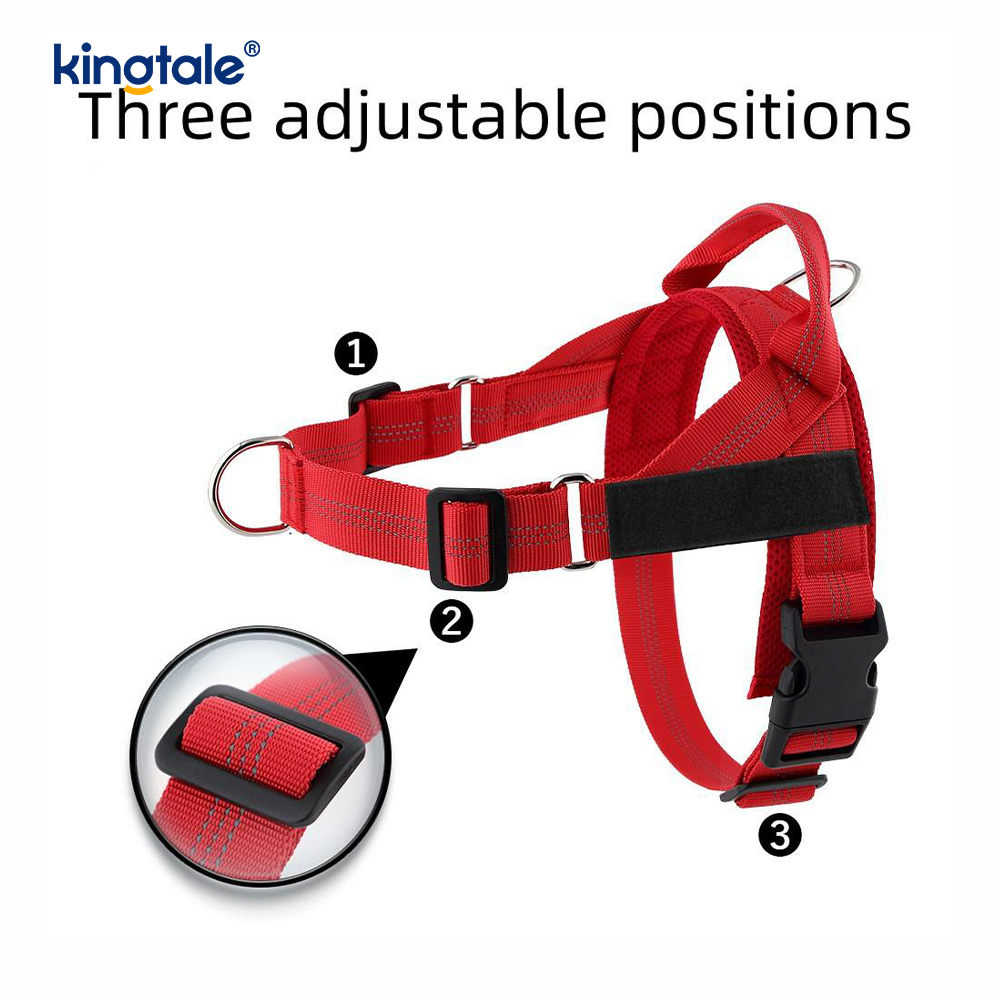 Custom Reflective Mesh No-Pull Harness with Front RingThis harness uses polyester mesh for ventilation with reflective webbing for visibility, plus a front attachment ring for directional control. Load-bearing webbing handles tension, so the mesh stays breathable—useful for everyday walks and brand customization.View Product →
Sourcing Breathable Dog Harnesses for Retail and Brands
When you source breathable dog harnesses for a brand, the fabric specification and test reports decide whether the product can support the claims on its hang tag.
Retail photos cannot show air permeability, coating off-gassing, or buckle corrosion. A commercial buyer should request a data sheet and a pre-production sample, then verify the points below before committing to a carton quantity.
- Air permeability report: ASTM D737 or ISO 9237 values for the shell fabric, not a marketing phrase.
- Material compliance: OEKO-TEX Standard 100 for linings and REACH declarations for dyes and coatings.
- Hardware: zinc-alloy or POM buckles with a 48-hour salt-spray result.
- Reflective trim: glass-bead or microprismatic tape that keeps working after 20 wash cycles.
- OEM changes: webbing width, mesh density, logo embroidery, silicone patches, and packaging are all reconfigurable at factory level.
16+years of harness production experience
Verticalintegrated factory from fabric to packing
OEM/ODMcustom materials, hardware, trim, and labels
If you need a custom specification for warm-climate markets, discuss the options with our factory team, which covers the complete production line from material selection to finished packaging. The heavy-duty mesh vest line is the starting point for brands that want a large-breed, high-weight option.
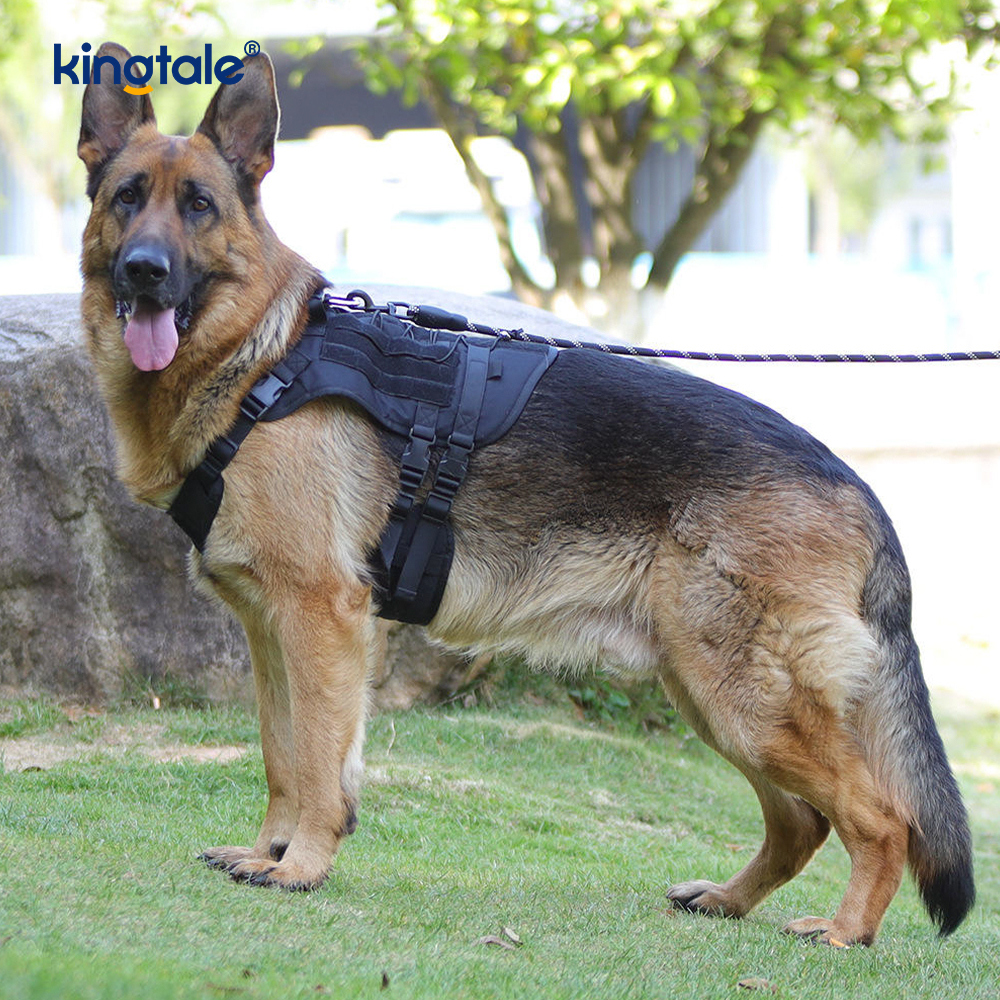 Heavy-Duty Mesh Vest Harness for Large BreedsThis vest-style harness combines nylon webbing with breathable mesh panels along the chest and abdomen, offering multiple adjustment points for deep-chested dogs. It's a durable, customizable option for large-breed daily wear in warm climates.View Product →
Breathable Dog Harness FAQ
The mechanical rule behind every answer below: a breathable dog harness fails in one of four ways - insufficient airflow, a collapsed spacer layer, poor fit geometry, or hardware failure.
Does a mesh harness wear out faster than a solid nylon one?
It can, when mesh is the only structural layer. A well-built breathable harness uses solid webbing for load-bearing straps and restricts mesh to panels, which keeps an active dog's daily-harness working range between two and three years. Check that the front ring is stitched into a webbing loop, never into the mesh itself.
How tight should a breathable harness fit?
Snug enough that two fingers slide under each strap with light resistance, and the chest buckle sits just behind the front legs. Recheck after five minutes of walking, because the coat compresses and the harness settles. A harness that shifts more than three to five centimeters in any direction is too loose and will trap moisture as it rubs.
Can a breathable harness prevent skin irritation and hot spots?
It removes two causes of harness-related dermatitis: trapped moisture and friction. The spacer layer keeps the chest dry, and the open weave stops fur from matting under the panel. For dogs with existing skin sensitivity, choose a model with a washable contact layer that can be cleaned frequently.
Are front-clip no-pull harnesses breathable?
Yes, when the chest plate is laminated spacer mesh instead of solid foam. The mesh spreads the brake force and still passes air, so buyers do not have to choose between steering control and heat management.



Reliable Materials - Sourced for performance and pet safety.

Quick Links
Ready to Customize Your Pet Products?
