

 English
 Español
Don't hesitate to send a message
Dog Collar Types, Materials & Comfort Guide: Nylon, Leather, Neoprene
Content
Dog Collar Types: A Complete Overview
Dog collars serve different functions depending on the dog's size, temperament, training stage, and everyday use. Understanding the main types makes it easier to choose the right collar for your dog's specific needs — and to avoid using a style that could cause discomfort or injury in the wrong situation.
Standard Flat Collar
The standard flat collar is the default collar for most dogs — a simple band of material with an adjustable buckle or quick-release clasp and a ring for leash attachment. It sits at a fixed circumference around the neck and is worn continuously for ID tag and license display. Flat collars are appropriate for well-behaved dogs on leash and for everyday wear when not actively walking. They are not suitable for dogs that pull heavily, as sustained leash pressure on a flat collar concentrates force on the trachea and neck vertebrae.
Martingale Collar
A martingale collar has two loops: a larger loop that sits around the neck and a smaller loop connected to the leash ring. When the dog pulls or backs up, the smaller loop tightens the larger loop to a preset limit — preventing the collar from slipping over the head without applying the unlimited pressure of a choke chain. Martingales are the standard recommendation for sighthounds (greyhounds, whippets, salukis) whose necks are wider than their heads, making standard flat collars easy to escape. They are also widely used as a gentler alternative to choke collars for dogs in active leash training.
Choke Collar
A choke collar — also called a slip collar or choke chain — is a loop of chain or nylon cord with no fixed circumference. When the dog pulls, the loop tightens around the neck; when pressure releases, the loop loosens. Choke collars are training tools, not everyday wear items. They should only be used under the supervision of an experienced trainer, fit correctly (the ring should sit at the top of the neck, not the throat), and removed when the dog is unsupervised. Incorrectly used choke collars can cause tracheal damage, esophageal injury, and spinal problems in the neck. Nylon choke dog collars are a softer version of the chain style and are used in obedience training where a less abrasive material is preferred.
Prong / Pinch Collar
Prong collars use metal links with blunt inward-facing tines that apply even pressure around the circumference of the neck when tightened, rather than concentrating force at one point like a choke chain. They are used in the training of strong, large dogs that have not responded to other methods. Like choke collars, prong collars are training tools for use under professional guidance — not everyday wear collars.
Bark Collar
A bark collar detects vocalization through vibration sensors or microphones and delivers a deterrent response — a spray of citronella, a static pulse, or a high-frequency tone — when barking is detected. Bark collars are behavior-management tools for nuisance barking situations and require careful selection for the individual dog's temperament and sensitivity. They are not leash attachment collars and are not used for walking.
GPS and Smart Collars
GPS tracking collars integrate location technology into the collar body or an attached module, allowing real-time location monitoring via smartphone. These are standard flat collars with electronics integrated into the band or a clip-on unit. They add weight — typically 30–80 grams for the GPS unit — which is a consideration for small breeds.
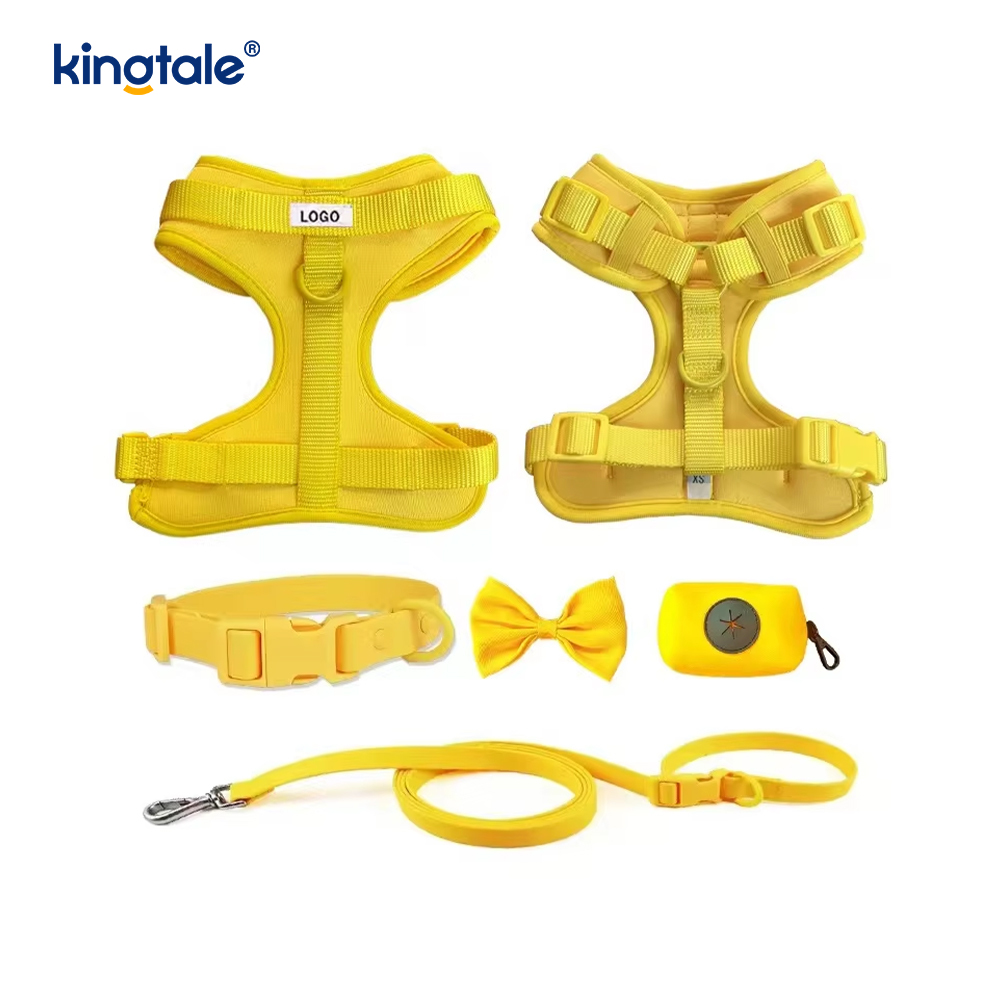
Dog Collar Materials: What Each One Offers
The material a collar is made from determines how it feels against the dog's skin, how long it lasts, how easy it is to clean, and whether it causes skin irritation in sensitive dogs. Each material has a defined performance profile — no single material is ideal for every dog and every environment.
Nylon
Nylon is the most widely used dog collar material for good reason: it is strong, inexpensive, lightweight, available in every width and color, and easy to clean. Nylon webbing used in quality dog collars is typically woven at 900–1800 denier — a density that resists fraying, holds its shape under leash tension, and tolerates repeated washing without degrading. The material is also resistant to odor absorption compared to leather, which matters for dogs that swim or get muddy frequently.
The limitation of nylon is edge comfort in narrow widths. A thin nylon collar under heavy leash tension can concentrate pressure and cause hair loss or abrasion on the neck — particularly in dogs with fine or short coats. Wider nylon collars (1 inch and above for medium to large dogs) distribute pressure more evenly and reduce this risk substantially. Padded nylon collars add a neoprene or fleece lining to the inner surface, eliminating edge discomfort while retaining nylon's durability and washability.
Neoprene
Neoprene is a synthetic rubber material that is soft, flexible, waterproof, and naturally resistant to mold and mildew. Neoprene dog collars — often constructed as a neoprene inner lining on a nylon or biothane outer band — are the top choice for water dogs, beach environments, and dogs that swim regularly. The material dries quickly, does not absorb water or bacteria the way woven fabrics do, and feels smooth and cushioned against the skin. A neoprene collar dog owners typically report as a solution for dogs that develop irritation or hair loss under standard nylon collars, particularly during wet-weather use.
Pure neoprene collars are less structurally rigid than nylon webbing and are generally used as an inner padding layer rather than the primary structural material of the collar.
Leather
Genuine leather collars are the traditional premium option. Full-grain leather becomes supple and conforms to the dog's neck over time, offering excellent long-term comfort and a smooth contact surface that resists hair breakage. Leather is naturally strong — a 1-inch full-grain leather collar can withstand forces well above the practical requirements of even large, powerful dogs — and ages gracefully with conditioning. The limitations are water sensitivity (repeated soaking weakens leather fibers and causes cracking without regular conditioning), higher cost, and heavier weight than nylon equivalents.
Rolled leather collars — a cylindrical tube of leather stitched around a leather core — are specifically designed for dogs with long or fine coats. The rounded profile eliminates the flat edge that causes the parting and matting of fur seen under flat collars on breeds like Collies, Golden Retrievers, and Afghan Hounds.
Biothane
Biothane is a polyester webbing coated in TPU or PVC, producing a material that looks and handles like leather but is fully waterproof, odor-resistant, and wipeable clean with a damp cloth. It does not stretch, does not absorb water, and does not rot or mildew. Biothane collars are increasingly popular among working dog owners, hunters, and anyone whose dog lives an outdoor lifestyle where leather would deteriorate quickly. The material is available in a wide color range and accepts hardware identical to leather collars.
Chain
Stainless steel or chrome-plated chain is used primarily in choke collar and prong collar configurations. Chain flat collars exist but are heavy, cold in winter, and provide no comfort advantage over nylon — their use is primarily aesthetic. Chain choke collars release more cleanly and quickly than nylon rope equivalents, which is why chain remains the standard material for correction-based training tools despite the alternatives.
| Material | Waterproof | Comfort | Durability | Best For |
|---|---|---|---|---|
| Nylon | No (dries slowly) | Good (wide widths) | High | Everyday use, all sizes |
| Neoprene | Yes | Excellent | High | Water dogs, sensitive skin |
| Leather | No | Excellent (broken in) | Very high (conditioned) | Long-coat breeds, premium everyday |
| Biothane | Yes | Good | Very high | Working dogs, outdoor use |
| Chain | Yes | Poor (flat collars) | Very high | Choke/training collars only |
Nylon vs Leather Dog Collars
Nylon and leather are the two dominant materials in the dog collar market, and the comparison between them comes up consistently because both are genuinely good choices — the decision depends on the dog's lifestyle and the owner's maintenance preferences rather than one material being objectively superior.
Choose nylon when: the dog swims or gets wet regularly, the collar is a functional everyday item rather than a premium accessory, the owner wants a washable collar, budget matters, or the dog is still growing and collar sizes will change frequently. Nylon collars in the $10–$25 range from reputable brands offer excellent hardware quality and webbing durability that will outlast several years of normal use.
Choose leather when: the dog has a long or fine coat that mats or breaks under flat webbing, the owner wants a collar that improves with age rather than degrading, comfort on the neck skin over long-term wear is the priority, or the dog lives primarily indoors and dry environments. A well-maintained full-grain leather collar from a quality maker can outlast the dog's life — the same cannot be said for any nylon collar regardless of price.
The key maintenance distinction: nylon collars can go in the washing machine. Leather collars require periodic conditioning with leather balm or oil to prevent drying and cracking, and should be dried flat away from heat after exposure to water. Owners who are not willing to condition leather regularly are better served by a quality nylon collar that requires no maintenance beyond occasional washing.
Most Comfortable Dog Collars: What to Look For
Comfort in a dog collar is determined by four variables: material contact surface, width, weight, and hardware placement. Getting these right matters more for small dogs and dogs with sensitive or short coats than for large-breed dogs with thick neck coats, but the principles apply across all sizes.
- Inner surface: The material touching the dog's neck is more important than the outer material. Padded neoprene or fleece inner linings, rolled leather, and smooth full-grain leather all outperform raw nylon webbing against bare skin. Any signs of hair loss, redness, or irritation under the collar indicate the inner surface needs to change.
- Width relative to dog size: For small dogs, 5/8 inch or 3/4 inch width distributes leash pressure adequately without the collar feeling heavy or bulky. For medium dogs, 1 inch. For large and giant breeds, 1.5 to 2 inches. A collar that is too narrow for the dog's size creates concentrated pressure; a collar that is too wide sits awkwardly and impedes movement.
- Weight: Small dogs feel collar weight more acutely than large dogs. A lightweight nylon or biothane collar with a plastic quick-release buckle is significantly lighter than a leather collar with solid brass hardware — a relevant difference for a 5-pound Chihuahua that is not for a 70-pound Labrador.
- Hardware position: D-rings, buckles, and tag rings that sit at the front of the throat create pressure points and noise during activity. Collars designed for comfort route the leash ring to the side or top of the neck, and place ID tag rings where the hardware rests quietly against the chest rather than clinking at the throat.
Most Comfortable Dog Collar for Small Dogs
Small dogs are disproportionately affected by collar comfort because their necks are thin, tracheas are more fragile, and the relative weight of the collar and hardware is more significant. For small breeds, the best options are narrow padded nylon collars (5/8 inch with neoprene lining), thin rolled leather collars, or lightweight biothane collars with plastic hardware. Avoid chain collars entirely on small breeds. A well-fitted harness paired with a lightweight ID collar is often the most comfortable long-term configuration for toy breeds and dogs with collapsing trachea conditions.
Non-Irritating Dog Collars for Sensitive Skin
Some dogs develop consistent skin reactions under standard collars — hair loss at the contact line, redness, pustules, or persistent scratching at the neck. The causes are usually one of three things: friction from a stiff or narrow collar material, moisture trapped against the skin under a non-breathable material, or an allergic reaction to a dye, treatment, or hardware plating.
For friction and pressure irritation, the solution is a collar with a softer, smoother inner surface: neoprene-lined nylon, rolled leather, or a padded biothane collar. The inner surface should feel smooth under a fingernail with no rough weave texture.
For moisture-related irritation — common in water-loving breeds and dogs in humid climates — the solution is a fully waterproof collar that dries quickly and resists bacterial growth: neoprene, biothane, or coated nylon. Remove the collar periodically and allow the neck skin to dry. Leaving a wet collar on a dog continuously is a reliable path to skin problems regardless of material.
For suspected allergic reactions, test with a collar made from a different material category entirely: switch from nylon to leather, or from dyed webbing to natural undyed materials. Nickel-plated hardware is a common contact allergen in dogs — switching to stainless steel or plastic hardware often resolves persistent neck irritation that does not respond to fabric changes.
Parts of a Dog Collar
Understanding the components of a standard flat collar helps when evaluating quality, sizing, and hardware durability across different products.
- Band / strap: The primary body of the collar — the length of material that encircles the neck. Width and material determine the collar's core performance characteristics.
- Buckle: The closure mechanism. Side-release (quick-snap) plastic buckles allow one-handed on/off and are standard on everyday collars. Traditional metal frame buckles with a center bar and prong are more secure under sustained tension and are preferred for working dogs and escape artists. Breakaway buckles are designed to release under a set threshold of pull force — used as a safety feature for cats and dogs at risk of collar entanglement.
- Adjustment slider / keeper: A loop or ring that slides along the band to take up slack after the buckle is fastened, maintaining the collar at the correct adjusted circumference.
- D-ring: The metal ring welded or riveted to the band where the leash attaches. D-ring quality — weld integrity, metal gauge, and gate style — is the most structurally critical hardware component on the collar. A failed D-ring under leash tension is the most common catastrophic failure mode in cheap collars.
- ID ring: A smaller ring, usually a split ring, riveted to the band near the buckle for attaching identification tags and license discs.
- Lining / padding: An inner layer of softer material — neoprene, fleece, foam, or leather — bonded or stitched to the inside of the band to improve skin contact comfort. Present only in padded collar designs.
Buying Dog Collar Material in Bulk
For manufacturers, rescue organizations, groomers, and pet product retailers sourcing collar components or finished collars in volume, the material selection criteria shift from individual comfort preference toward consistency, cost per unit, and supplier reliability.
Nylon webbing for dog collar production is available in continuous rolls from textile suppliers in standard widths (3/8, 5/8, 3/4, 1, 1.5, and 2 inch) and deniers from 600 to 2200. 1000-denier polypropylene or nylon webbing is the standard specification for quality flat collars in the mid-market price range — strong enough for all size classes and consistent enough in width and edge finish for automated production. Polyester webbing is an alternative with lower stretch under load than nylon, useful for applications where dimensional stability under leash tension is a priority.
Hardware — buckles, D-rings, and sliders — is sourced separately from webbing in bulk production. Zinc alloy hardware is the cost-effective standard for consumer-grade collars; stainless steel or solid brass hardware is specified for premium and working-dog product lines. Hardware quality is a reliable indicator of overall collar quality: any collar with cast zinc D-rings under $0.10 per unit should be evaluated with skepticism for heavy-duty applications.
Biothane in bulk is supplied in rolls by the meter or in pre-cut lengths, with coating weight and color specified at order. For waterproof collar production at scale, biothane offers the most consistent quality-to-cost ratio and requires no additional finishing after cutting — unlike leather, which requires edge burnishing, and neoprene, which requires bonding to a structural substrate.



Reliable Materials - Sourced for performance and pet safety.
Quick Links
Ready to Customize Your Pet Products?
