

 English
 Español
Don't hesitate to send a message
The Complete Guide to Dog Collars: Types, Materials, Training & Safety
Content
Do Dogs Like Wearing a Collar?
Most dogs, once properly introduced to a collar, become completely indifferent to wearing one—they neither love it nor resent it. The collar becomes part of their normal sensory background, like wearing a watch feels to a person who has worn one for years. Dogs that appear to dislike their collars are almost always reacting to fit issues, unfamiliar textures, or a negative association formed during an abrupt first introduction, not to the collar itself as a concept.
Studies on canine stress behavior confirm that dogs wearing well-fitted collars show no elevation in cortisol levels or stress-related body language during normal daily activity. What does elevate stress is an ill-fitting collar—one that rubs, catches fur, or restricts breathing—so the quality and fit of the collar matters as much as the training process used to introduce it.
Some dogs scratch at a new collar repeatedly for the first day or two. This is a normal orienting response to a novel tactile stimulus and typically disappears on its own within 48–72 hours as the sensation becomes familiar. If scratching persists beyond three days, check the fit and material rather than assuming the dog will simply adapt.
How to Get a Puppy Used to a Collar
The earlier a puppy is introduced to wearing a collar, the easier the process. Puppies that first experience a collar between 8 and 12 weeks of age—when they are in a sensitive developmental window for accepting new experiences—typically adapt within one to three sessions. Older puppies and adult dogs can absolutely be trained to accept a collar, but the process may take slightly longer.
Step 1: Let the Puppy Investigate First
Before putting the collar on, lay it on the floor and let the puppy sniff and investigate it freely. This removes the element of surprise and gives the puppy a chance to form a neutral first impression. Pair the collar's presence with a treat so the puppy begins to associate the object with something positive before it ever touches their neck.
Step 2: Put It On Briefly and Reward Immediately
Fasten the collar loosely enough to pass two fingers underneath—this is the correct fit for a puppy—and immediately give a high-value treat and begin play or another enjoyable activity. The goal is for the collar to predict good things, not to be the center of attention. Keep the first session to two to five minutes. Remove the collar calmly, without fanfare, so removal does not itself become a reward that the puppy seeks.
Step 3: Gradually Extend Wearing Time
Over three to five days, extend the duration the puppy wears the collar during positive activities—mealtimes, play sessions, short walks in the yard. By the end of the first week, most puppies are wearing their collar for several hours without noticing it. Once the puppy is comfortable, the collar can be worn continuously during waking hours, with removal only during crate time or sleep for young puppies to prevent snag hazards.
What to Do If the Puppy Resists
If the puppy freezes, claws at the collar, or shows distress, slow the process down rather than pushing through it. Go back to the investigation phase, spend more time pairing the collar's presence with treats, and try shorter wearing sessions. Never scold a puppy for reacting to a collar—this creates exactly the negative association you are trying to avoid and will extend the training timeline significantly.
Types of Dog Collars and What Each Is For
Dog collars fall into several distinct categories that serve different purposes. Choosing the right type depends on the dog's size, breed, training stage, and how the collar will be used day to day.
Flat Buckle Collars
The flat buckle collar is the standard everyday collar for most dogs. It sits at a fixed circumference, fastened by a metal or plastic side-release buckle, and carries ID tags, license tags, and leash attachments. Flat collars are appropriate for dogs that walk without pulling and do not require any training correction function from their collar. They are available in virtually every width, color, and material, making them the most customizable collar category on the market.
Martingale Collars
A martingale collar—also called a limited-slip collar—has a fixed section and a loop section that tightens slightly when tension is applied, preventing a dog from backing out of the collar without applying the full choking force of a slip collar. Martingales are the standard recommendation for sighthounds (greyhounds, whippets, salukis) whose necks are wider than their heads, and for any dog that tends to slip out of flat collars. They are not training correction tools; they are escape-prevention devices that remain comfortable at rest.
Rolled Leather Collars
Rolled leather collars are cylindrical rather than flat, making them the preferred choice for long-coated breeds—golden retrievers, collies, setters—where a flat collar would mat and break the coat over time. The round profile distributes pressure more evenly around the neck and minimizes contact area with the surrounding fur. High-quality rolled leather softens with use and is generally considered one of the most comfortable long-term wear options for dogs with sensitive skin.
Head Collars
Head collars (brands such as Halti and Gentle Leader are the most widely known) fit over the dog's muzzle and behind the ears, redirecting the dog's head when leash pressure is applied rather than applying force at the neck. They provide significant mechanical advantage for handlers walking strong pullers or reactive dogs and are often recommended by veterinary behaviorists for dogs in early leash training. Head collars require a separate acclimation process—many dogs object strongly to having something on their face—and should not be used with a sudden jerk on the leash, as this can cause neck strain.
GPS and Smart Collars
GPS tracking collars embed a cellular or satellite location module into the collar body, allowing owners to track their dog's real-time position via a smartphone app. They are most useful for hunting dogs, dogs in rural areas, and escape artists. Current GPS collar modules add 40–120 g to the collar weight and require regular charging; battery life ranges from 12 hours to several days depending on tracking frequency. Smart collars may also include activity monitors, bark sensors, and temperature alerts.
| Collar Type | Best For | Not Recommended For |
|---|---|---|
| Flat Buckle | Everyday ID tag wear, non-pullers | Dogs that slip out easily |
| Martingale | Sighthounds, escape-prone dogs | Unsupervised wear (snag risk) |
| Rolled Leather | Long-coated breeds, sensitive skin | Water dogs (leather degrades) |
| Head Collar | Strong pullers, reactive dogs | Snap corrections, unsupervised wear |
| GPS / Smart | Rural dogs, hunting dogs, escape artists | Very small breeds (weight burden) |
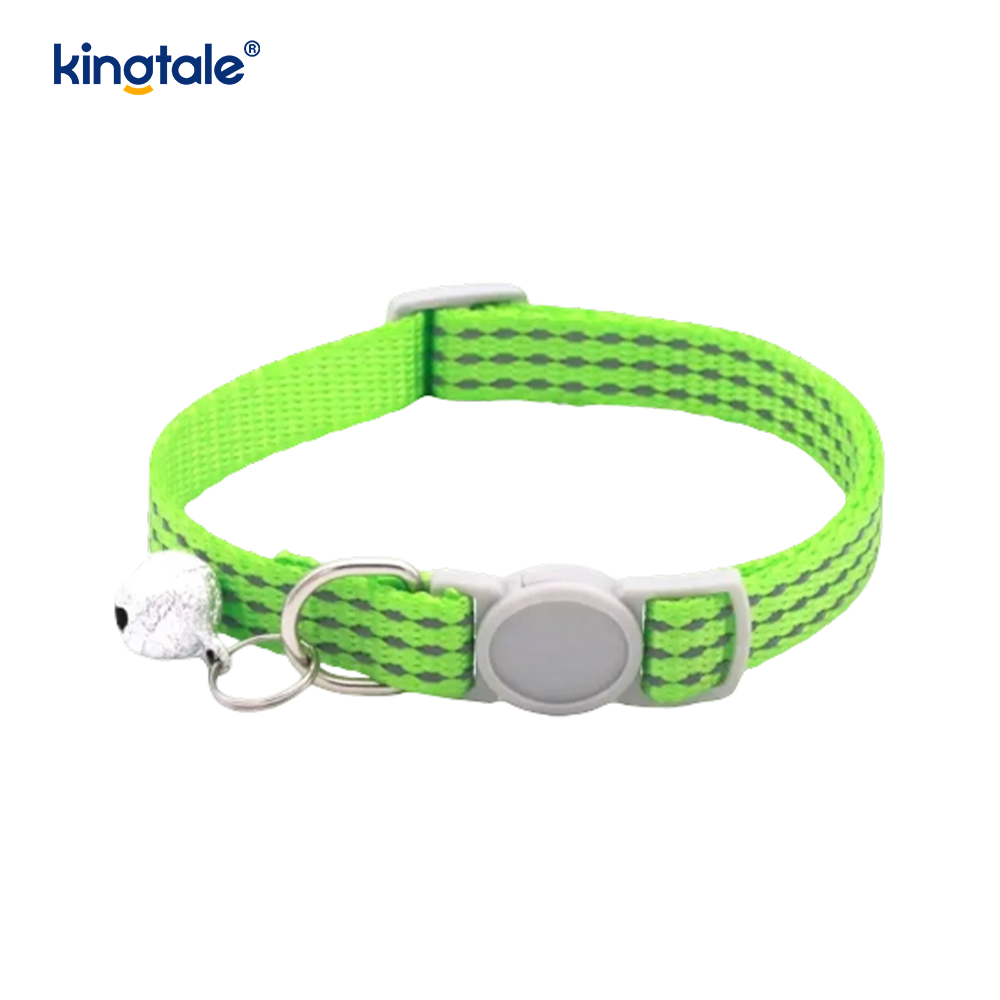
Nylon Webbing vs. Neoprene: Which Material Is Right?
The two most widely used materials in modern dog collar construction are nylon webbing and neoprene, and they serve meaningfully different needs.
Nylon Webbing for Dog Collars
Nylon webbing is the dominant material for everyday flat and martingale collars across all price points. It is woven from nylon fibers into a flat, dense tape that is lightweight, extremely strong for its weight, and resistant to UV degradation. High-tenacity nylon webbing used in quality dog collars typically has a tensile strength of 500–2,000 lbs depending on width, far exceeding the load any dog can realistically apply. Nylon webbing is inexpensive to produce, takes dye readily (enabling the enormous range of colors and patterns available), and can be printed with graphics. Its main limitation is that it absorbs water and takes time to dry, and the woven texture can trap dirt, odors, and bacteria if not washed regularly.
For most dogs in most climates, nylon webbing for dog collars represents the best combination of durability, cost, and ease of care. A collar made from quality nylon webbing, washed monthly, will last two to four years under normal daily wear.
Neoprene Collars for Dogs
Neoprene is a closed-cell synthetic rubber originally developed for wetsuits. When used in dog collars—either as the primary collar material or as a lining bonded to a nylon webbing base—it provides a soft, padded surface that is fundamentally different in character from bare nylon webbing.
Neoprene collars for dogs excel in three situations: active water dogs that swim frequently (neoprene dries faster than nylon, resists odor buildup, and does not stiffen when wet), dogs with thin or sensitive skin around the neck where bare webbing causes irritation, and working or sport dogs that wear their collars under physical stress for extended periods. The cushioned contact surface distributes pressure more evenly than flat webbing and significantly reduces the risk of fur breakage and neck abrasion in dogs that are active on leash.
The tradeoffs are modest: neoprene-lined collars are heavier than plain nylon webbing collars of the same size, cost more, and can retain heat in warm climates—a minor consideration for most dogs but worth noting for heavy-coated breeds in summer. For sporting dogs, water-loving retrievers, and any dog prone to collar sores, a neoprene-lined collar is worth the additional investment.
Collar Fit, Safety, and When to Remove It
A correctly fitted dog collar should allow two adult fingers to slide underneath it flat against the dog's neck. Tighter than this risks pressure sores, fur loss, and tracheal damage in dogs that pull; looser than this creates a snag hazard and allows the dog to slip free. Puppies must have their collar fit checked at least weekly during growth spurts—a collar that was correct on Monday can be dangerously tight by the following weekend in a rapidly growing breed.
Collars should be removed in three situations: during crate time for puppies, during play with other dogs (collar grabs are a common cause of accidental strangulation), and whenever a dog is left unsupervised in an environment with potential snag points—fence wire, deck slats, crate bars, and low branches have all caused fatalities in dogs whose collars became caught. Breakaway safety collars—which release under a set load—are available for dogs that must wear a collar in unsupervised environments; they are not suitable for leash walking but are a valuable safety tool for cats and for dogs kenneled or left in outdoor runs.
Regardless of collar material or type, inspect the collar monthly for wear: check that buckle teeth grip securely without slipping, that stitching at D-ring attachment points is intact, and that the collar material itself shows no cracking, fraying, or discoloration that could indicate UV or chemical degradation. A collar that fails at the D-ring during a leash correction can result in sudden loss of control at the worst possible moment.



Reliable Materials - Sourced for performance and pet safety.
Quick Links
Ready to Customize Your Pet Products?
