

 English
 Español
Don't hesitate to send a message
Types of Dog Collars Explained: Materials, Styles & How to Choose
Content
The Main Types of Dog Collars
Dog collars divide into two broad categories: everyday wear collars and training or control collars. Most dogs only ever need the first kind — a flat or rolled collar worn continuously for ID tags and leash attachment. The second category includes tools like martingale collars, slip collars, and head collars, which are purpose-built for specific training situations and generally shouldn't be left on unsupervised dogs.
Flat Collars
The flat collar is the default for most dogs — a straight band of material with a buckle or quick-release clasp and a D-ring for tags and leash attachment. They come in every material and width imaginable. Width should scale with the dog: a 3/4-inch collar suits a small dog well, while a large breed typically wears 1 to 1.5 inches. The fit rule is consistent regardless of size: you should be able to slide two fingers under the collar comfortably, but not slip it over the dog's head.
Martingale Collars
Martingale collars feature a small loop that tightens the collar when the dog pulls, then releases when pressure drops. They were originally designed for sighthounds — greyhounds, whippets, and similar breeds whose necks are wider than their heads — but work well for any dog that tends to back out of a standard flat collar. They tighten only to a set limit and cannot choke, making them safer than traditional slip collars for everyday use.
Rolled Collars
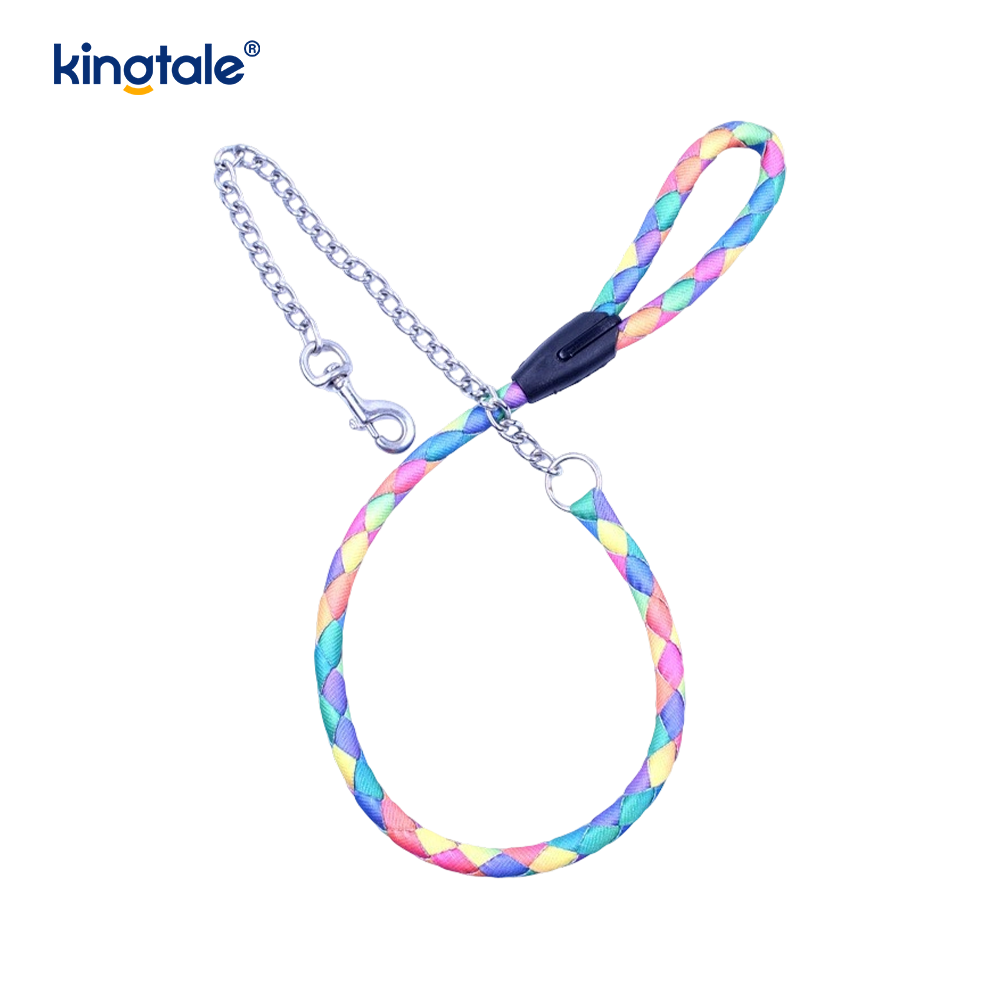
Rolled collars are cylindrical rather than flat, typically made from rounded leather or rope. The rounded profile distributes pressure more evenly around the neck and avoids the matting and fur breakage that flat collars can cause on long-coated breeds. They're a popular everyday choice for dogs like spaniels, setters, and poodles.
Harnesses and Head Collars
Technically not collars, but often grouped with them: harnesses redirect pressure from the neck to the chest and are recommended for brachycephalic breeds (pugs, bulldogs, French bulldogs) and dogs with tracheal issues. Head collars fit around the muzzle and redirect pulling force by turning the dog's head — effective for strong pullers but require gradual introduction.
Best Collar Materials: What Each One Offers
Material is where comfort, durability, and odor resistance play out most directly. The right choice depends on your dog's lifestyle, skin sensitivity, and how much maintenance you're willing to do.
Nylon
Nylon is the most widely used collar material because it's affordable, lightweight, and available in hundreds of colors and patterns. Standard nylon holds up well to daily use but has a significant drawback: it traps moisture, skin oils, and environmental bacteria, and will start to smell within weeks on an active dog. Odor-resistant nylon collars treated with antimicrobial coatings address this problem, as do biothane-coated nylon options. If odor is a concern, look specifically for these treated versions rather than plain woven nylon.
Leather
Full-grain leather is the traditional premium choice. It's durable, develops a patina with age, and — critically — resists odor far better than nylon because it doesn't trap moisture the same way. A well-maintained leather collar can last for years. The tradeoffs: it costs more upfront, softens and can stretch when wet, and should not be left on a dog that swims regularly without drying properly afterward. Vegetable-tanned leather is softer and more skin-friendly than chrome-tanned alternatives, which matters for dogs with sensitivities.
Biothane
Biothane is a polyester webbing coated in TPU (thermoplastic polyurethane), giving it a leather-like appearance and feel while being fully waterproof and nearly odor-proof. It's widely considered the best material for dogs that spend time in water, mud, or high-humidity environments. It wipes clean in seconds, doesn't absorb bacteria-harboring moisture, and holds up to heavy use. It's also a strong option for dogs with skin sensitivities because the smooth, non-porous surface doesn't accumulate the irritants that rough textiles can.
Neoprene
Neoprene-lined or neoprene collars are soft, padded, and gentle against skin — making them a go-to recommendation for dogs with sensitive necks or allergies. The material is also water-resistant, though it can retain odor over time if not cleaned regularly. Many padded collars combine a nylon or biothane outer layer with a neoprene lining to get the benefits of both.
Cotton and Hemp
Natural fiber collars are breathable and feel soft against skin, which some dogs tolerate better than synthetic materials. Hemp in particular is durable and naturally antimicrobial to a degree. The downside is that both materials absorb water and odor readily, and they're less durable than leather or biothane under heavy daily use.
| Material | Odor Resistance | Skin-Friendly | Water Resistance | Durability |
|---|---|---|---|---|
| Nylon (plain) | Low | Moderate | Low | High |
| Leather | High | High | Moderate | Very High |
| Biothane | Very High | High | Very High | Very High |
| Neoprene | Moderate | Very High | High | Moderate |
| Cotton / Hemp | Low | High | Low | Moderate |
Most Comfortable Collars for Small Dogs
Small dogs have proportionally more delicate necks than large breeds, and the collar that works fine on a Labrador can cause discomfort — or worse, tracheal stress — on a Chihuahua or Yorkshire Terrier. For small dogs, the priority is a lightweight, narrow collar with a smooth interior surface and a secure but gentle fit.
Rolled leather and rolled nylon collars are a strong choice for small long-coated breeds because the rounded profile doesn't mat the fur around the neck. Padded flat collars in soft neoprene or cotton are comfortable for small dogs with short coats. Avoid wide, stiff collars — anything over 3/4 inch is often too bulky for toy and small breeds and can restrict movement or cause the dog to hold its head awkwardly.
Hardware matters too. Heavy metal buckles and large D-rings that work fine on a 40-pound dog become disproportionately heavy on a 6-pound one. Look for collars with lightweight aluminum or plastic hardware scaled for small dogs. Breakaway clasps — which release under strong pressure — add a safety benefit for small dogs that might get a collar caught on furniture or fencing.
Best Dog Collar for Sensitive Skin
Dogs with skin allergies or sensitivities react to a collar through two main mechanisms: friction and chemical exposure. Rough-textured materials like standard woven nylon create friction that irritates already-sensitive skin, especially at the contact edges. Dyes, coatings, and hardware finishes on cheap collars can also trigger contact dermatitis in reactive dogs.
The best options for sensitive-skinned dogs are:
- Vegetable-tanned leather — naturally soft, chemical-free tanning process, smooth contact surface
- Biothane — non-porous, smooth surface, no dye bleed, easy to keep clean
- Neoprene-padded collars — soft, flexible padding cushions the contact area
- Rolled leather or rope collars — minimal surface contact area reduces friction hotspots
Regardless of material, a collar that accumulates dirt, bacteria, and moisture against the skin will cause irritation over time. Cleaning the collar weekly — and the skin beneath it — is as important as choosing the right material. Check under the collar regularly for redness, hair loss, or rawness, especially after wet weather or swimming.
How to Keep Dog Collars from Smelling
Collar odor develops when sweat, skin oils, water, and bacteria accumulate in the collar material. Porous materials like plain nylon, cotton, and untreated rope are most susceptible; smooth non-porous materials like biothane and coated leather resist it significantly.
For nylon collars, the most effective approach is regular washing — weekly for active or outdoorsy dogs. Most nylon collars can be scrubbed with warm water, mild dish soap, and a soft brush, then air-dried completely before going back on the dog. Putting a damp collar back on a dog accelerates odor buildup. Never put a wet collar back on immediately after washing or swimming.
Leather collars should be wiped down regularly and conditioned periodically to prevent the material from drying out and cracking. Biothane collars require the least maintenance — a quick wipe with a damp cloth removes most buildup, and they don't need conditioning. If odor is a persistent issue regardless of cleaning, the material itself may need to be reconsidered; some collars simply hold odor by design, and no amount of washing fully eliminates it long-term.



Reliable Materials - Sourced for performance and pet safety.
Quick Links
Ready to Customize Your Pet Products?
