

 English
 Español
Don't hesitate to send a message
How to Evaluate a Multi-functional Retractable Pet Leash?
Content
Introduction to Modern Pet Leash Engineering
The pet industry continues to evolve with a strong focus on animal welfare and owner convenience. A critical component in this sector is the Pet Leash, which serves as the primary link between a domestic animal and its handler. Product developers and B2B buyers are currently seeking solutions that offer a balance between freedom of movement and reliable control. This article evaluates the technical specifications of modern retractable and multi-functional leashes. We will focus on mechanical durability, material science, and safety standards essential for bulk procurement.
Mechanism and Structural Analysis
The internal complexity of a retractable leash defines its performance. Engineers must scrutinize the assembly to ensure long-term reliability.
The Engineering Behind the Retractable Dog Leash Mechanism
The core of a retractable unit is the retractable dog leash mechanism. This system typically consists of a high-tension recoil spring, a spool for the webbing or cord, and a braking module. The spring must provide a consistent retraction force without causing the webbing to snap back dangerously. Manufacturers often use high-carbon steel for these springs to prevent metal fatigue. The braking system usually employs a pawl and ratchet design. This design allows the user to lock the leash at a specific length. Precision in the molding of these plastic or metal parts is crucial to prevent jamming.
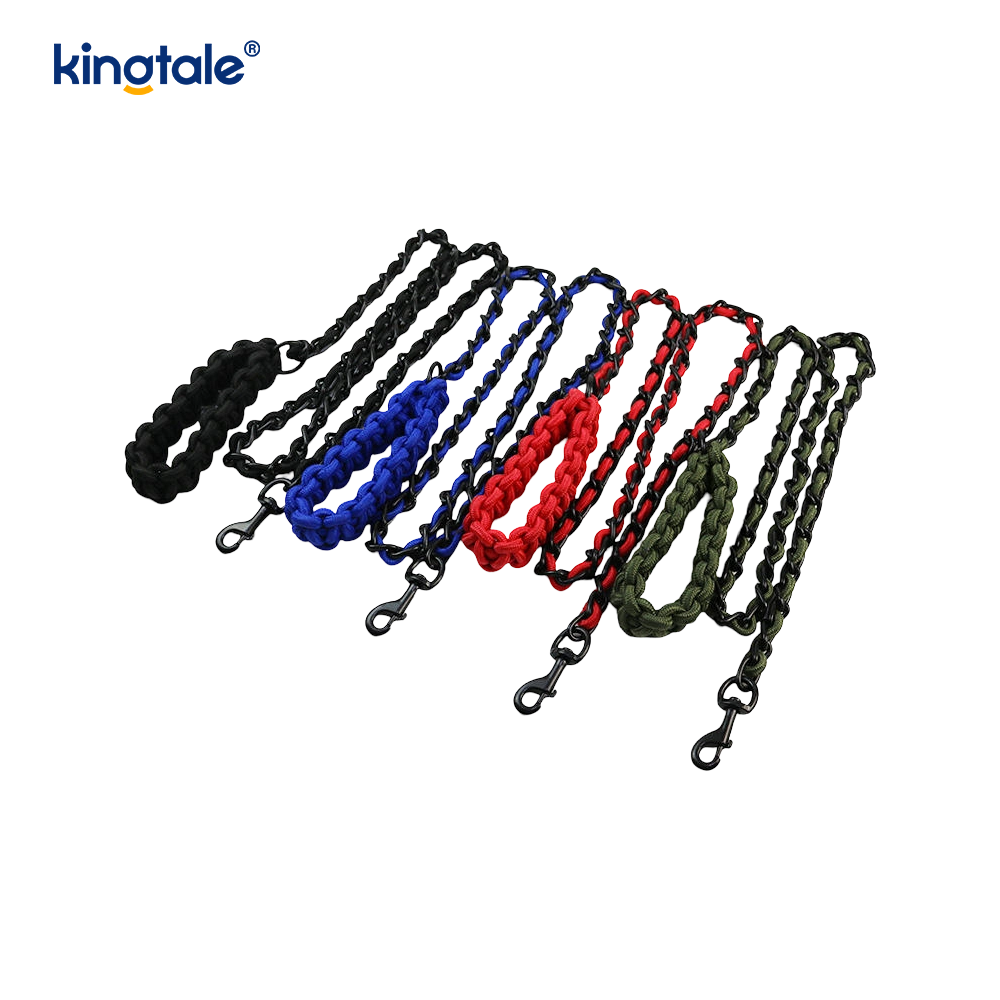
Ergonomics and Handle Design
The handle acts as the user interface for the device. A poorly designed handle can lead to hand fatigue or loss of grip. Engineers design handles with contoured thermoplastic rubber (TPR) or silicone overlays. These materials improve the coefficient of friction, even when the user's hands are sweaty. The center of gravity must align with the webbing exit point to minimize torque on the wrist during sudden pulls.
Material Science and Load Bearing
The strap or cord material determines the maximum load the leash can withstand. Material selection is a critical factor for safety.
Properties of Nylon Webbing Dog Leash Materials
Most high-quality leashes utilize nylon due to its excellent tensile strength. A nylon webbing dog leash offers high abrasion resistance against rough surfaces like concrete. Engineers measure this using the Martindale abrasion test. Nylon also has a moderate elasticity, which helps absorb the shock of a sudden impact. This reduces the strain on both the dog's neck and the owner's arm. For B2B buyers, checking the denier (D) of the fiber is essential. Higher denier counts usually indicate a denser, more durable weave.
Structural Integrity for Heavy Duty Pet Leash for Large Dogs
Large breeds can generate significant kinetic energy when they lunge. A heavy-duty pet leash for large dogs must be engineered to withstand these peak forces. The breaking strength of the webbing should exceed the maximum pulling force of the target animal breed by a safety factor of at least three. For example, a webbing rated for 500 lbs is appropriate for a dog that pulls with 150 lbs of force. The hardware, specifically the snap hook, must also match this strength. Zinc-alloy die-casting provides a robust connection point that resists deformation under load.
Comparative Analysis of Control Systems
Buyers must match the leash type to the end-user's environment. Different designs offer varying degrees of control and freedom. The table below compares the key functional differences between three common leash configurations.
| Feature | Standard Fixed Leash | Retractable Leash | Dual Handle Leash |
| Control Level | High | Variable | High to Medium |
| Freedom Radius | Fixed (e.g., 6 ft) | Adjustable (up to 26 ft) | Fixed (with traffic loop) |
| Safety in Traffic | Excellent | Moderate | Excellent |
| Mechanism Complexity | Low | High | Low |
Functional Features and Safety Innovations
Advantages of a Dual Handle Dog Leash
Urban environments require immediate control in tight spaces. A dual-handle dog leash features a second handle located closer to the dog's collar. This design allows the owner to shorten the leash quickly when navigating through crowds or crossing streets. It eliminates the need to wrap the leash around the hand, which can cause injuries. The traffic handle is often padded for comfort during short-term gripping.
Impact Resistance and Locking Durability
Retractable housings are subject to impact if dropped on pavement. Manufacturers use high-impact polystyrene (HIPS) or polypropylene (PP) for the casing. The locking button undergoes thousands of actuations during testing. Quality assurance protocols dictate a cycle test to verify that the button does not fail prematurely. A stuck button can result in a runaway dog, posing a liability risk for brands.
B2B Sourcing and Quality Assurance
Strategies for Wholesale Pet Supplies
For businesses sourcing wholesale pet supplies, consistency is key. Variations in batch quality can damage a brand's reputation. Procurement managers should request detailed technical drawings and material certifications. It is also vital to verify compliance with safety standards such as ASTM (American Society for Testing and Materials). A reliable Pet Leash supplier will provide tensile test reports for every shipment. This documentation ensures that the products meet the advertised specifications for strength and durability.
Conclusion
Selecting the right pet restraint system requires a deep understanding of mechanical engineering and material science. The Pet Leash market demands products that combine durability with user-friendly features. By focusing on the mechanism integrity, material strength, and ergonomic design, B2B buyers can ensure they procure safe and effective products. This approach minimizes risk and maximizes consumer satisfaction.
References
- Black, R. M. (2018). "Materials and Design for Pet Safety Products." Journal of Consumer Product Safety.
- ASTM F2458 - 05, Standard Specification for Pet Leashes. ASTM International.
- Kadolph, S. J. (2014). Textiles (11th ed.). Pearson.
- Rosato, D. V., & Rosato, M. G. (2010). Plastics Engineered Product Design. Elsevier Advanced Technology.
- Budinski, K. G., & Budinski, M. K. (2015). Engineering Materials: Properties and Selection (9th ed.). Prentice Hall.



Reliable Materials - Sourced for performance and pet safety.

Quick Links
Ready to Customize Your Pet Products?
