

 English
 Español
Don't hesitate to send a message
The Complete Adjustable Dog Collar Guide: Sizing, Safety, Materials, and Fit Tips
Content
- 1 How Adjustable Dog Collars Prevent Fit-Related Injuries
- 2 How to Measure Your Dog for an Adjustable Dog Collar
- 3 Adjustable Dog Collar Materials: Durability and Comfort Compared
- 4 Safety Features Every Adjustable Dog Collar Should Have
- 5 Adjustable vs Fixed-Size Collars: A Practical Comparison
- 6 Adjustable Dog Collar FAQ
A 14-week-old puppy with a 12-inch neck can outgrow a fixed-size collar in six weeks. That is why the adjustable dog collar has become the default for owners who refuse to rebuy neckwear every season. An adjustable design with a proper size span absorbs growth spurts, winter coat changes, and weight fluctuations, but only if the size bracket, buckle type, and material are chosen correctly in the first place.
This guide covers how adjustability works, how to measure for it, which materials hold up, and which safety features justify a higher unit price. It is written for pet owners and for wholesale buyers who source collars in volume.
How Adjustable Dog Collars Prevent Fit-Related Injuries
An adjustable dog collar prevents the two most common collar-related injuries: tracheal compression and skin chafing. Both develop when a collar is worn outside its intended fit range.
When a collar sits too tight, even by one inch, it presses on the trachea and can trigger coughing, gagging, and in chronic cases, tracheal collapse, a condition most common in small breeds such as Chihuahuas and Pomeranians. When a collar hangs too loose, the dog can back out of it, and the skin under the buckle can rub raw as the collar shifts through the day.
Adjustable collars solve this problem by spreading the usable fit across a continuous span, usually 3 to 6 inches, rather than locking you into one circumference. That matters most for puppies, which can gain 20 percent of adult neck size between 4 and 8 months of age.
How to Measure Your Dog for an Adjustable Dog Collar
Measure the neck at its widest point, the base just above the shoulders, while the dog stands. Use a soft tape and keep it snug enough to touch the fur without pressing into it.
- Wrap the tape around the base of the neck and read the measurement to the nearest half inch.
- Add two finger widths, about 1.5 to 2 inches, to get the minimum comfortable circumference.
- Check the collar's adjustment range. The maximum setting should never exceed the minimum comfortable circumference by more than 4 inches, or the excess strap can catch on branches and brush.
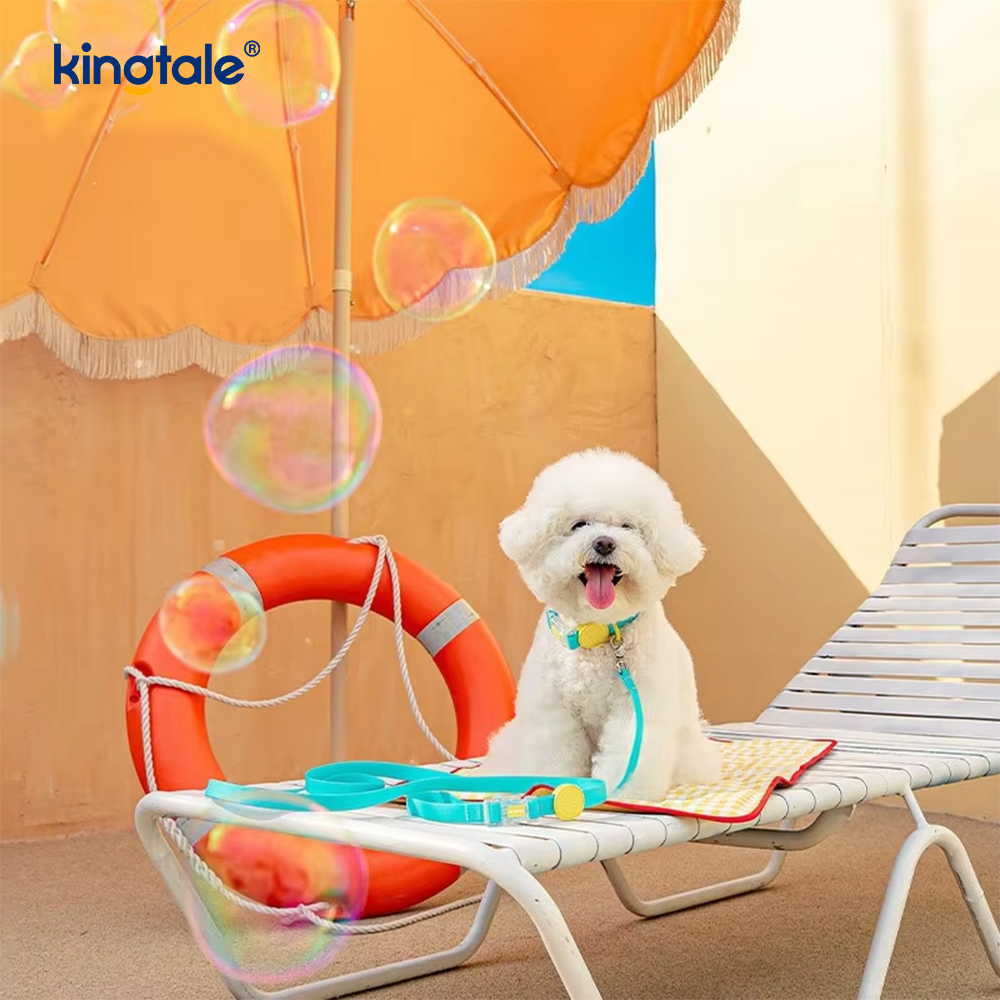 Macarons PVC Dog Collar with Safety Buckle for Active DogsThis collar suits buyers checking neck-fit adjustments before purchase. It features a safety buckle that releases under sudden tension, ideal for cats and high-activity breeds.View Product →
| Size bracket | Adjustable range | Best for |
| Small | 8 to 12 inches | Puppies, Chihuahuas, toy breeds |
| Medium | 12 to 18 inches | Beagles, Border Collies, spaniels |
| Large | 18 to 26 inches | Labradors, German Shepherds, Boxers |
| Extra large | 24 to 34 inches | Great Danes, Mastiffs, Saint Bernards |
Buyers sourcing for retail should check whether the adjustment range is printed on the packaging. Products that list both minimum and maximum neck fit reduce return rates because customers can verify the span before purchase.
Adjustable Dog Collar Materials: Durability and Comfort Compared
Nylon webbing is the most common material in adjustable dog collars because it keeps its structure across thousands of buckle adjustments. Leather develops a comfortable patina but stretches over time. Neoprene feels soft yet degrades faster when soaked and sun-dried repeatedly.
Abrasion cycles to failure in lab webbing tests. Higher is better for daily outdoor wear.
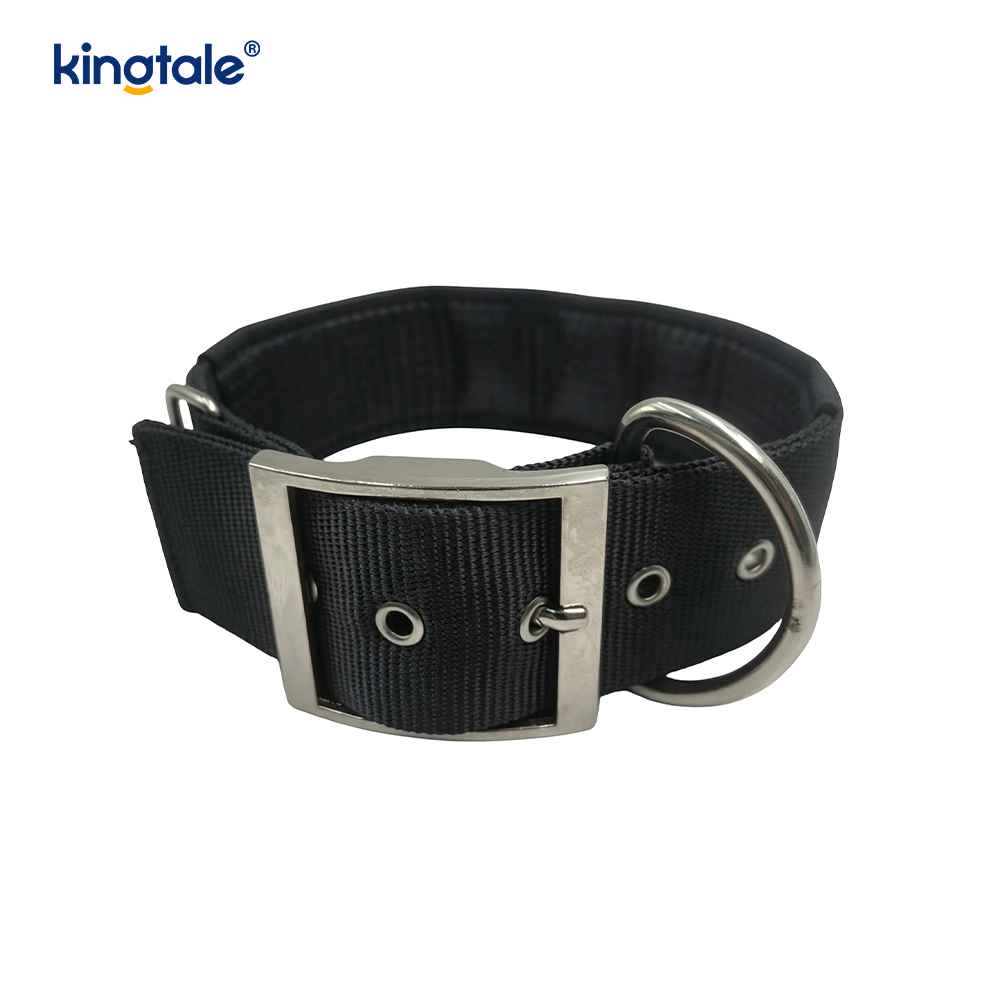 Double Layer Padded Nylon Dog Collar for Large DogsConsider this collar for its durable double-layer nylon webbing and metal buckle, which withstand frequent adjustment and daily wear. The padded interior prevents chafing and spreads pressure evenly.View Product →
| Material | Water resistance | Comfort | Best use case |
| Nylon webbing | Excellent | High once broken in | Daily walks, training, outdoor wear |
| Leather | Poor unless treated | Very high after break-in | Decorative collars, show dogs |
| Neoprene | Excellent | High, plush padding | Sensitive necks, swimming dogs |
| Hemp blend | Moderate | Medium | Eco-conscious owners, light daily use |
For a collar that gets buckled and adjusted daily for three years, double-layer nylon webbing with a metal buckle is the safest procurement default. It survives repeated re-threading of the adjuster without fraying at the sliders.
Safety Features Every Adjustable Dog Collar Should Have
Adjustability only improves safety if the collar also controls how it tightens. The five features below separate a safe adjustable dog collar from one that simply changes length.
- Quick-release or side-squeeze buckle: frees a caught dog in seconds. Standard side-release buckles need two hands and can jam under load.
- Reflective stitching: keeps the collar visible at night. Thread woven into the webbing outlasts printed tape that cracks and peels.
- Martingale loop: a limited-slip design that tightens slightly under pull and relaxes when the dog stops, ideal for breeds with necks wider than their heads.
- Padded inner face: a thin neoprene or felt lining spreads pressure evenly and stops fur from matting in thick-coated breeds.
- Breakaway clasp for cats only: if the collar line includes felines, the breakaway release is non-negotiable safety hardware.
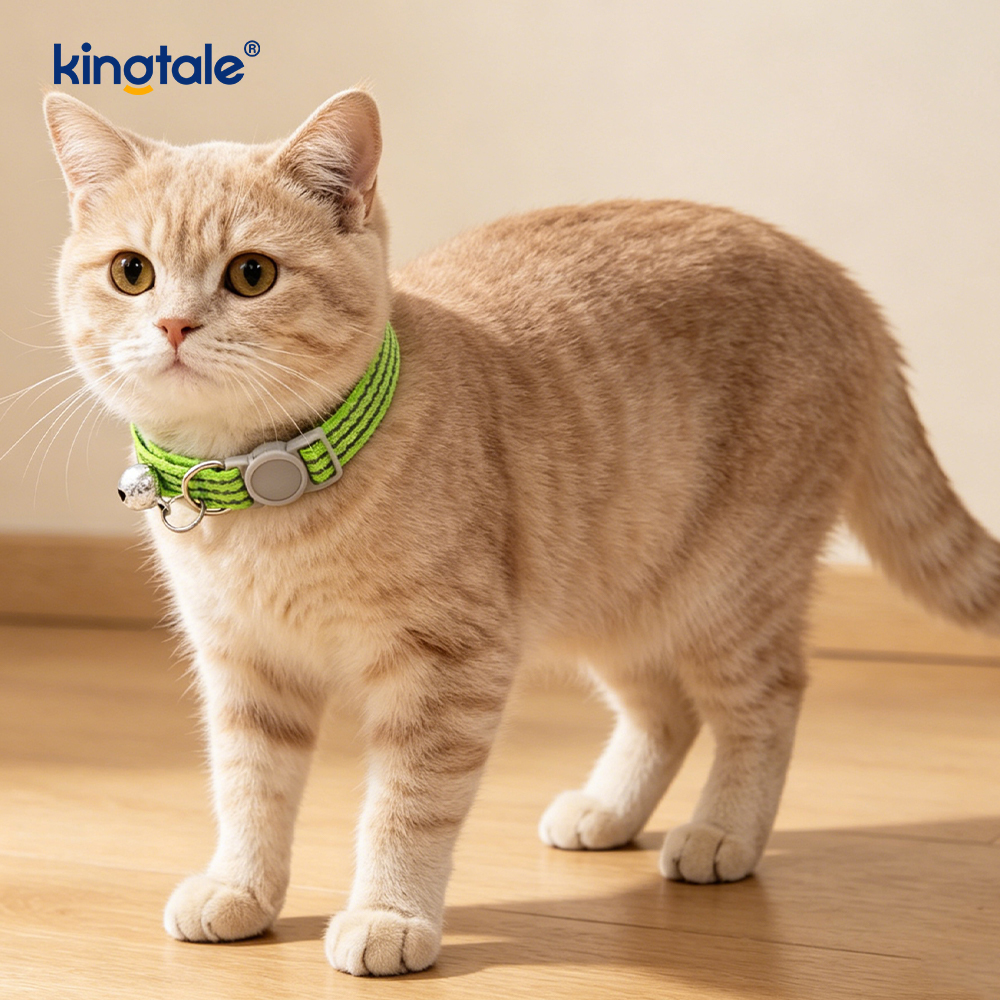 High Visibility Reflective Breakaway Cat Collar with BellFor escape-prone cats, this collar offers a breakaway safety buckle and reflective strips for nighttime visibility. Its adjustable nylon webbing fits most cats and includes a detachable bell for location awareness.View Product →
Do not confuse adjustment range with training function. A martingale control loop is not a choke chain, and a quick-release buckle should never sit on a slip lead. Choose the mechanism for the job: a buckled adjustable collar for daily wear, a martingale for escape-prone breeds, and a breakaway collar for cats.
Adjustable vs Fixed-Size Collars: A Practical Comparison
Fixed-size collars still sell because they are cheap to manufacture, but for most dogs the adjustable version wins on total cost of ownership.
Adjustable dog collar
- One collar covers 3 to 6 inches of growth
- Replace once per growth stage, not per season
- Fits multiple dogs in multi-dog households
- Better for puppies and thick winter coats
Fixed-size collar
- Exact fit at one moment, then too tight or too loose
- Needs replacement every few months for growing dogs
- No excess strap, so less bulk on short necks
- Works for adult dogs whose size stays stable
The clear-eyed conclusion: fixed sizes make sense for mature dogs that are done growing and keep a stable weight. For puppies, seasonal shedders, or anyone buying without measuring first, the adjustable style is the safer bet.
Adjustable Dog Collar FAQ
How loose should an adjustable dog collar be?
Two fingers should fit flat between the collar and the neck while the dog stands. If the collar slides over the head without unbuckling, it is too loose and the dog can back out of it.
Can an adjustable dog collar be used for training?
Yes, when the adjustment mechanism is combined with a martingale or control loop. A standard buckled adjustable collar only changes fit length, not leash behavior. Choose a martingale-style adjustable collar that tightens under pressure and releases automatically.
What is the best width for an adjustable dog collar?
Use 1 inch for most medium and large dogs, 0.75 inches for small breeds, and 0.5 inches for toy breeds and puppies. Wider collars spread pressure over more surface area and lower the risk of tracheal strain.
What should a wholesale buyer specify for adjustable dog collars?
Confirm the adjustment range in inches, the webbing break strength (at least 300 pounds for large-breed collars), the buckle type, and whether the reflective component is stitched or printed. Zhangjiagang Kingtale International Co., Ltd. lists those specifications for each collar; you can discuss sizing options with the Kingtale team before committing to a production run.



Reliable Materials - Sourced for performance and pet safety.
Quick Links
Ready to Customize Your Pet Products?
