

 English
 Español

Don't hesitate to send a message
The Metal Chain Dog Leash Guide: Types, Sizing, and Wholesale Buying Tips
Content
- 1 What a Metal Chain Dog Leash Actually Does
- 2 Metal Chain Dog Leash Materials and Finishes Compared
- 3 Metal Chain Dog Leash Gauge, Link Shape, and Break Strength
- 4 Slip Chains and Martingale Leashes in Training
- 5 Chew-Proof and Tie-Out Configurations
- 6 Wholesale Sourcing Checks for Chain Leash Buyers
- 7 Frequently Asked Questions
A German Shepherd can tear through a 25 mm nylon lead in roughly 40 seconds of focused chewing, and a sudden lunge can snap a stamped clip on a budget webbing leash. A metal chain dog leash eliminates both failure points: welded steel links resist teeth, and the chain carries the load directly to the collar with zero stretch. That is why chain leashes remain the default tool for strong chewers, working breeds, tie-out restraint, and correction-based training. The real challenge, for dog owners and wholesale buyers alike, is choosing the correct gauge, finish, and closure hardware so the leash is strong enough to hold and comfortable enough to handle daily.
A metal chain dog leash is a lead constructed entirely from interlocking steel links, designed to transfer force from handler to collar without stretching or deforming while resisting bites, abrasion, and weather exposure.
What a Metal Chain Dog Leash Actually Does
Chain leashes earn their place in four specific scenarios where fabric leads fail predictably.
- Chew-proof daily walking for dogs that destroy rope, nylon, or leather leads within weeks.
- Training precision through slip chain or martingale designs that give instant audible feedback.
- Outdoor tie-out restraint where sun, rain, and constant pulling degrade other materials.
- High-tension security for adult dogs whose sudden bolts exceed the ratings of flat collar hardware.
Outside those scenarios, a chain leash is the wrong choice. Small dogs under 10 kg find the metal weight tiring. Puppies can injure their necks if a slip chain is used too early. Sustained tension against the throat can also damage the trachea. Match the leash to the dog's size and the task, and it becomes a dependable tool rather than a risk.
Metal Chain Dog Leash Materials and Finishes Compared
Stainless steel is the best material for a metal chain dog leash that will live outdoors. Chrome-plated carbon steel is the best choice when appearance matters and the leash stays dry. The table below covers four finishes that dominate retail and wholesale specifications.
| Material or Finish | Corrosion Resistance | Surface Feel | Best Use Case | Price Factor |
| Stainless steel 304 | Excellent | Smooth, cool | Wet climates, daily wear | 2.0 to 2.5x |
| Chrome-plated carbon steel | Good | Glossy, smooth | Show chains, indoor training | 1.3 to 1.6x |
| PVC-coated steel | Very good | Soft, grippy | Tie-outs, outdoor restraint | 1.4 to 1.7x |
| Zinc or copper-plated steel | Moderate | Matte, dry | Budget retail lines | 1.0x base |
Plating quality matters more than base metal choice. A thin chrome layer flakes off within weeks of rain exposure, leaving carbon steel to rust. Specify a minimum plating thickness of 8 to 12 micrometers and request a 48 hour salt-spray test certificate on every batch.
For buyers specifying large-breed stainless chain, welded 4.3 mm stainless big-dog chains with export packaging are available directly from the manufacturer's wholesale catalog.
Metal Chain Dog Leash Gauge, Link Shape, and Break Strength
Link gauge is the single most important specification. A 3.0 mm chain suits small dogs under 10 kg; a 6.0 mm chain belongs on dogs above 40 kg and on chew-proof tie-outs. Approximate static break strengths for new, properly welded round-link chain appear below.
Approximate new-chain static break load in kilograms. Actual values depend on weld quality and steel grade.
Never buy a chain leash without a stated gauge. Many low-cost imports list only the total length and ignore the wire diameter, and a 2.0 mm chain that looks neat can snap under a 25 kg dog's bolt. Confirm the wire diameter in millimeters, the weld process (electric resistance welding is preferred), and a load test certificate for 4.0 mm and larger chains.
Link shape changes performance: round-link welded chain is the strongest and most common; cable chain flexes easily and shows a bright finish but has lower tensile strength; Cuban-link chain sits flat and looks elegant, yet it suits light training or visual symmetry, not heavy pulling.
Slip Chains and Martingale Leashes in Training
A slip chain leash works on a simple mechanical principle: tension closes the loop around the dog's neck, and release opens it again. That clarity gives a handler precise timing, but it demands correct sizing and placement.
- Size correctly: the closed loop should equal the dog's head circumference plus 2 to 4 cm, never more.
- Position correctly: the live ring sits at the top of the dog's neck so the chain releases the instant tension stops.
- Avoid on risk-prone breeds: never use a slip chain on brachycephalic dogs such as French Bulldogs, Pugs, or Pekingese, or on puppies under six months.
- Limit duration: treat the chain as a training instrument and switch to a flat collar after each session.
A slip chain is a training aid, not an all-day walking collar. Sustained pressure on the trachea can cause damage that outlasts the session.
Martingale-type chain leashes use a fixed two-ring loop that closes only to a preset diameter, which makes them safer than open slip chains for novice handlers. Whichever design you choose, the leash should move through the collar ring smoothly and release without catching fur. For a full comparison of leash types for training and running, read this training leash selection guide.
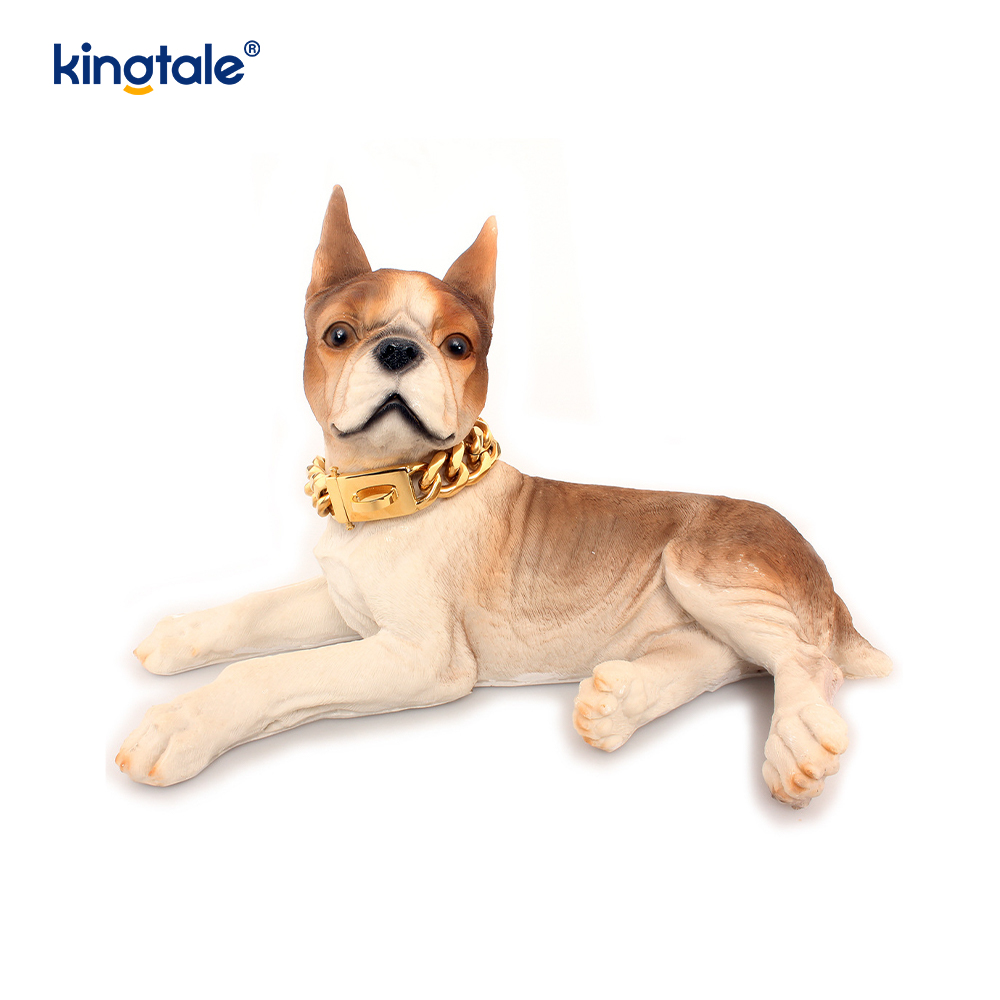 Polished Stainless Steel Cuban Link Dog Choke Chain CollarThis chew-proof, rust-resistant collar features a welded curb chain and secure locking clasp, making it a durable training option for large breeds. Its rounded links lie flat to prevent fur snagging, as noted in the discussion on chain-style restraints.View Product →
Chew-Proof and Tie-Out Configurations
For stationary outdoor restraint, a metal chain dog leash with swivels at both ends outperforms rope and cable options because the links cannot be severed by teeth and the swivels prevent the line from twisting into knots.
Nylon web tie-out
Chews through in one to three weeks of exposure. UV light degrades the fibers in about six months. The material absorbs moisture and develops odor.
Steel chain tie-out
Survives two or more years outdoors. Weather does not reduce strength. Requires a swivel clip on both ends to stay tangle-free.
Manufacturers also build mixed configurations, attaching a short chain segment to the dog's end of a rope leash. This adds chew resistance where the dog mouths the lead while keeping the rest of the line light. For yard use, specify PVC-coated chain to reduce noise and protect the dog's coat. Heavy-duty multicolored metal chains are also popular for visual differentiation in retail lines and can be produced in custom colors. The full chain category page lists available finishes, lengths, and custom options for bulk orders.
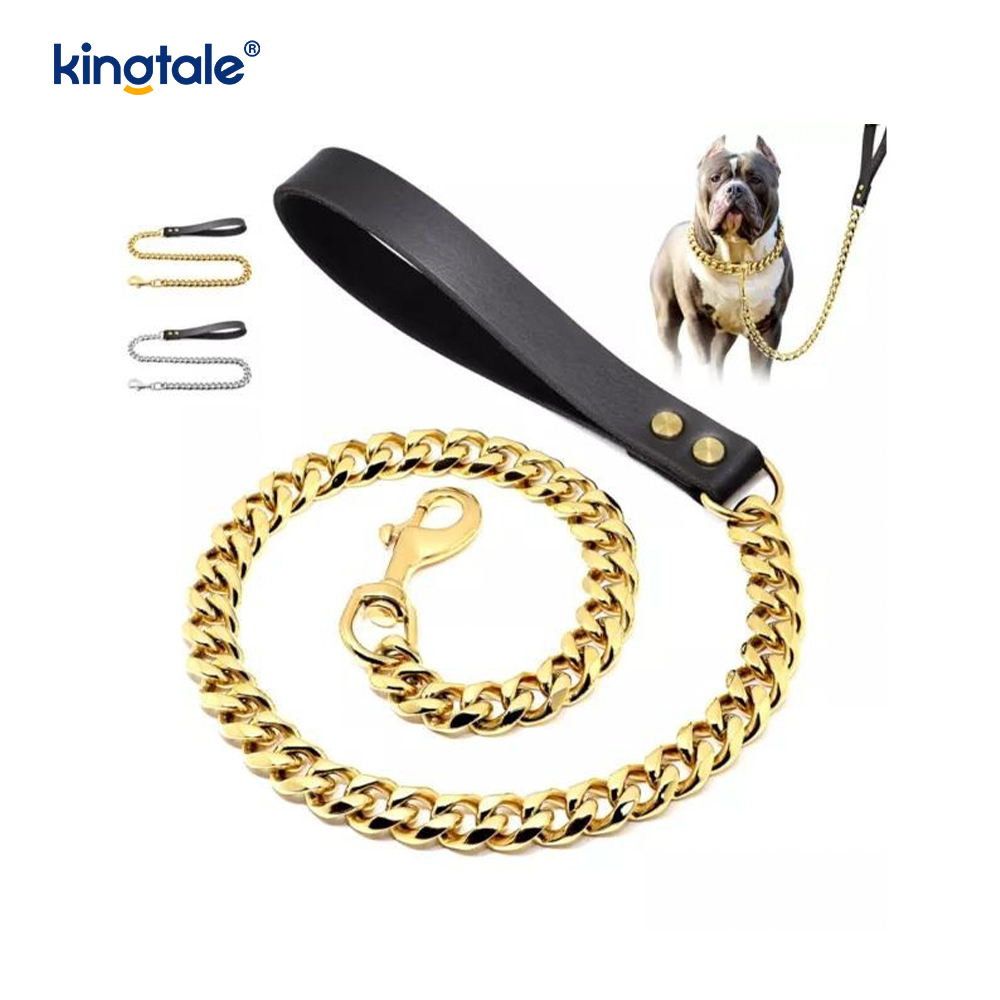 Heavy Duty Multicolored Metal Chain Dog Leash with Leather HandleBuilt from 316L stainless steel with a welded snake-style chain and ergonomic leather grip, this leash resists chewing and pulling. Its quick-release clasp and easy-to-clean materials suit daily walks, aligning with the buyer verification points for metal chain leashes.View Product →
Wholesale Sourcing Checks for Chain Leash Buyers
Buyers sourcing metal chain dog leashes should verify four things before placing a production order: link weld quality, plating adhesion, hardware rating, and gauge consistency.
- Weld inspection: sample 1 percent of the batch and pull-test individual links, looking for open welds or burrs.
- Salt-spray test: require 48 hours for chrome plating and 96 hours for stainless steel, with no red rust on the surface.
- Hardware match: the swivel or bolt snap must be rated at or above the chain's own breaking strength.
- Gauge tolerance: confirm that the wire diameter stays within plus or minus 0.1 mm across the entire batch.
2.0 to 2.5x
Price factor of 304 stainless steel over zinc-plated carbon steel
48 hours
Minimum salt-spray requirement for chrome-plated chain
780 kg
Static hold of a 4.0 mm welded round-link chain
10 to 15x
Typical lifespan advantage of steel chain over nylon webbing
Zhangjiagang Kingtale International Co., Ltd. has produced pet chains and collars for over 16 years, offering OEM and ODM programs with raw-material certificates, batch-level salt-spray tests, and custom packaging. For pricing and sample requests, the sales team responds with a chain specification sheet and delivery lead time.
Frequently Asked Questions
Is a metal chain dog leash safe for everyday walking?
A metal chain dog leash is safe for daily walks when the gauge matches the dog's weight and the chain is used with a flat or martingale collar. Open slip chains should be removed after each training session.
What gauge chain do I need for a large dog?
For dogs between 25 and 40 kg, choose a 4.5 to 5.0 mm welded round-link chain. For dogs above 40 kg, specify 6.0 mm or thicker with a breaking strength above 1,500 kg.
Will a metal chain leash rust?
Carbon steel chains with thin plating rust within weeks in wet conditions. Choose 304 stainless steel or PVC-coated steel for outdoor use, and rinse the chain after contact with salt water.
What is the difference between a slip chain and a martingale chain?
A slip chain has a continuous loop that keeps closing under sustained tension. A martingale chain uses a limited two-ring loop that stops tightening at a preset diameter, making it safer for novice handlers.



Reliable Materials - Sourced for performance and pet safety.

Quick Links
Ready to Customize Your Pet Products?
