

 English
 Español

Don't hesitate to send a message
Leather Dog Collar Buying Guide: Grades, Stitching, Sizing, and Wholesale Tips
Content
- 1 What Really Separates a Leather Dog Collar from a Nylon One
- 2 Construction Specs That Decide Whether a Collar Lasts Five Years or Five Walks
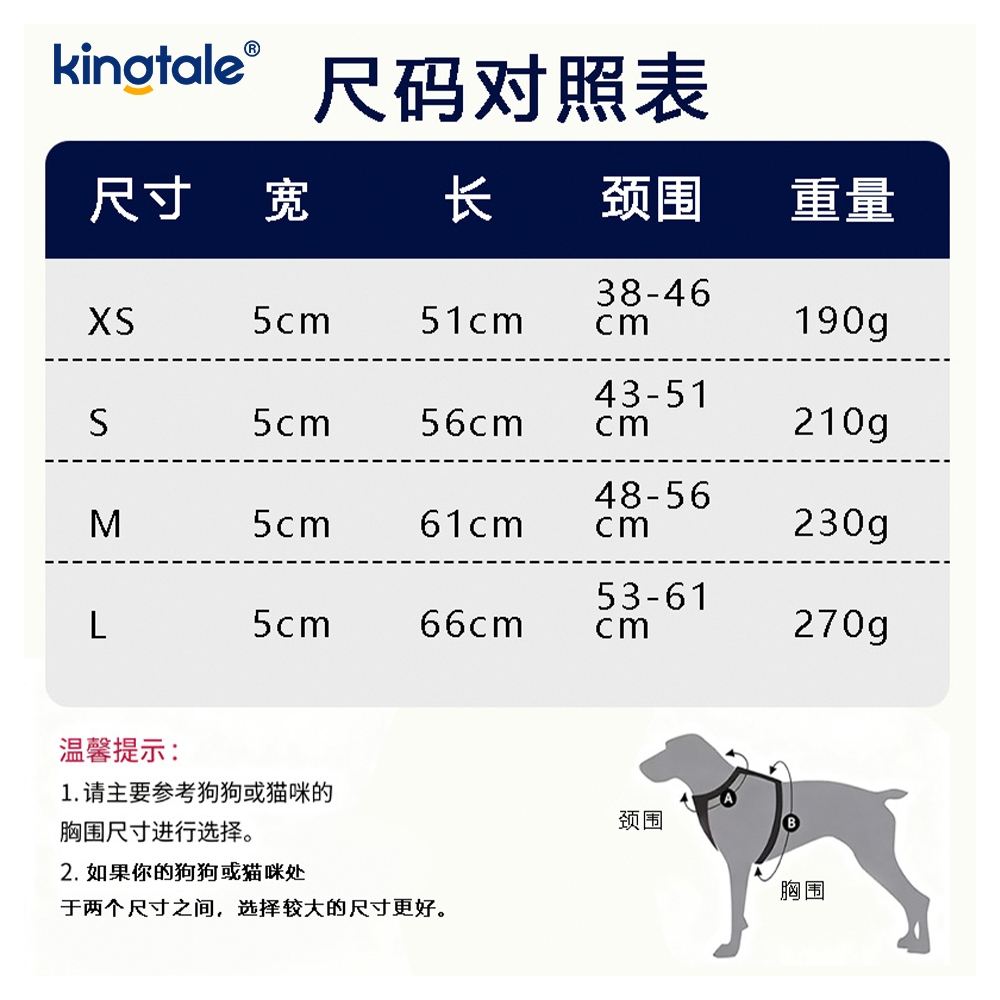
- 3 Sizing a Leather Dog Collar by Weight and Neck Measurement
- 4 Leather Collar Care: The Six-Week Oiling Rule
- 5 Wholesale and OEM Buying Considerations for Leather Dog Collars
- 6 Frequently Asked Questions
Choosing a leather dog collar for your product catalog means judging leather grade, stitching, hardware, and sizing against how dogs actually wear them. A collar that looks premium in a showroom can fail at the stitch line in six weeks when a 25 kg retriever pulls hard every day. For a wholesale buyer, that distinction is not aesthetic. It is the difference between repeat orders and returns.
What Really Separates a Leather Dog Collar from a Nylon One
Full-grain leather is the only material grade that explains the premium price of a leather collar. Nylon webbing is strong and cheap, but leather brings a combination of grip, comfort, and long-term patina that nylon cannot reproduce. The material grade determines whether that leather feeling survives a year of daily walks or fades into a cracked, brittle strap.
Across the market, leather is divided into four grades:
| Grade | Source and structure | Real-world behavior | Typical lifespan |
| Full-grain | Outermost layer of the hide, grain kept intact | Develops patina, handles daily wear | 8-10+ years |
| Top-grain | Full-grain sanded to remove marks | Smoother, slightly less breathable | 5-7 years |
| Genuine leather | Lower split layers, often coated | Prone to cracking and peeling | 1-3 years |
| Bonded leather | Recycled leather fibers bonded with polyurethane | Stiff, low structural strength | Under 1 year |
The table above mirrors the supply-side reality in factories. Full-grain hide is the outer layer of the animal skin, with the natural grain intact. Top-grain is the same layer sanded down to remove blemishes, which removes part of the fiber structure. Genuine leather and bonded leather come from lower layers or recycled fibers, and their short lifespan makes them unreliable for a collar that faces pulling force.
A leather dog collar reaches its expected lifetime only when the strap is cut from full-grain or top-grain hide, stitched with bonded nylon thread, and fitted with solid brass or stainless steel hardware.
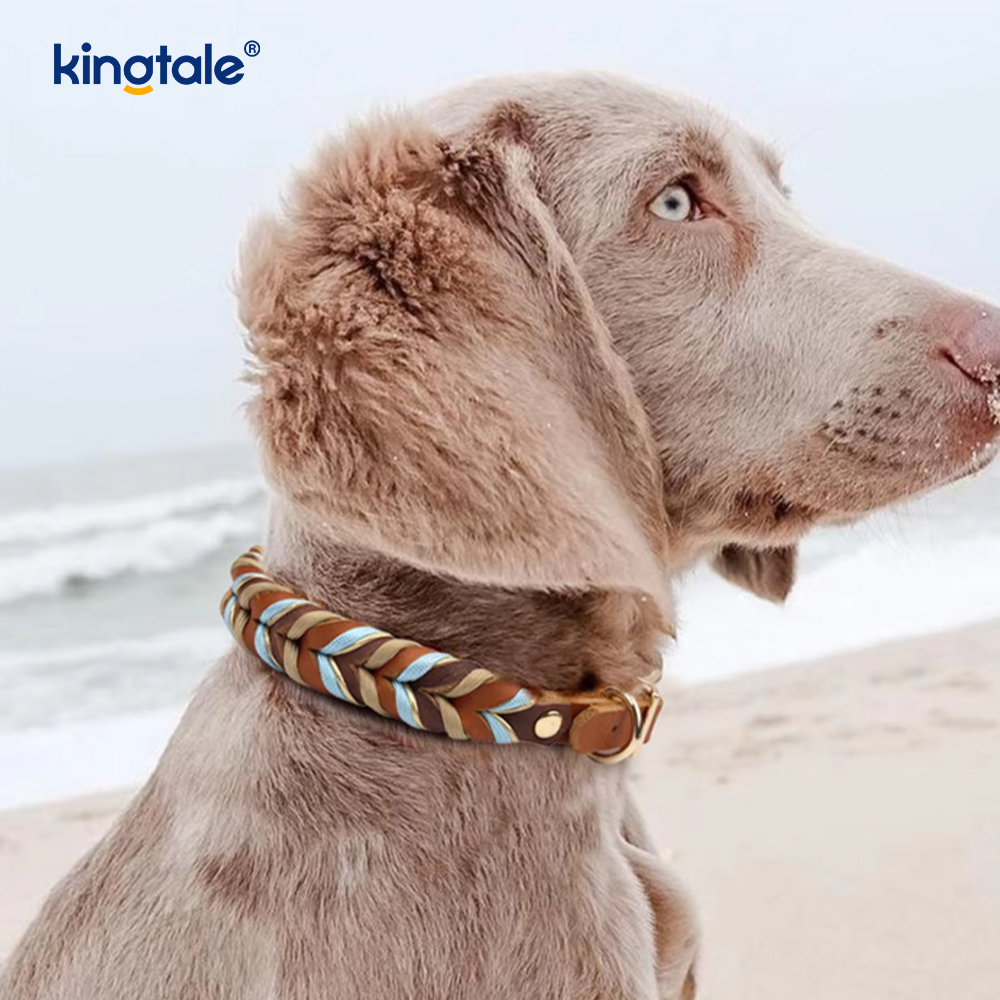 Braided Genuine Leather Dog Collar and Leash Set with Adjustable FitThis set combines genuine leather with a braided design to distribute pressure evenly. Durable stitching and rust-resistant hardware make it a practical choice for daily walks, suitable for buyers evaluating long-lasting materials.View Product →
Construction Specs That Decide Whether a Collar Lasts Five Years or Five Walks
Stitching and hardware fail before the leather strap does, so construction specs matter as much as hide quality.
When a collar fails, the break almost always appears at a seam, a buckle hole, or the D-ring attachment. Straps tear in the middle only after years of dry rot or after an obvious cut. The stitching, thread, rivets, and buckles define how much punishment the design can take.
400 Nbreaking strength for a 20-25 mm strap
3-4stitches per cm on factory-grade seams
0.7 mmbonded nylon thread resists rot
What to check before ordering a batch
- Thread: bonded nylon or polyester. Cotton thread rots from moisture and creates hidden weak points.
- Stitch density: at least 3 stitches per cm. Sparse stitches let the seam open under tension.
- Hardware: solid brass or stainless steel. Zinc alloy plating peels and exposes rust-prone base metal.
- Reinforcement: double stitching at the D-ring and buckle anchor points.
- Edge finish: beveled or burnished edges prevent the strap from cutting into the dog's neck.
Hardware rule of thumb: if the buckle prong bends under light finger pressure, the collar is not built for a medium or large dog. Specify cast brass or stainless steel hardware in your purchase order and reject thin stamped buckles.
Sizing a Leather Dog Collar by Weight and Neck Measurement
Measure the dog's neck circumference and add 5-8 cm to find the correct collar length.
Most leather collars come in widths from 10 mm to 35 mm. The right width depends on body weight and pulling behavior, not just neck measurement. A 20 kg dog with a thin 35 cm neck still needs a 20 mm wide strap, because the pull force spreads through the full width of the leather.
Recommended collar width by dog weight class
Length is the other half of the equation. A well-designed collar has an adjustment range of at least 8-10 cm, so the same size works for a puppy and the same breed's adult size. In OEM orders, specify the range and hole spacing in your spec sheet.
Two-finger fit rule: slide two flat fingers between the collar and the neck. If they do not fit, the collar is too tight for normal swallowing, drinking, and daily handler adjustment.
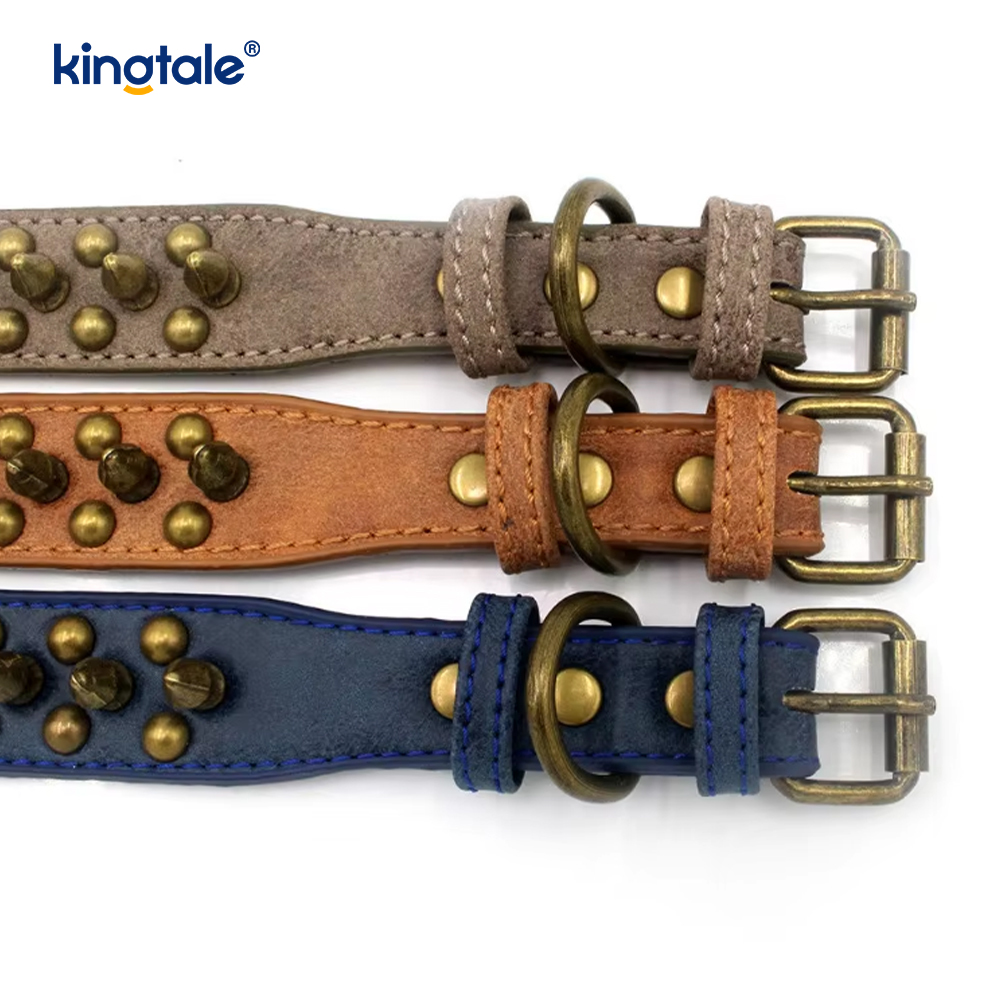 Anti-Bite Rivet PU Pet Collar with Safety Buckle and Multiple SizesThis studded PU collar offers protection during play while its safety buckle reduces choking risks. Clear sizing guidance helps avoid returns, making it a practical option for owners seeking both style and secure fit.View Product →
Leather Collar Care: The Six-Week Oiling Rule
Condition the leather every six to eight weeks, or it will dry, stiffen, and crack at the bend points.
Leather is protein fiber held together by natural oils. Water, sweat, and humidity pull those oils out of the strap. The leather stiffens, and a stiff collar bends at the same point around the buckle until a stress line opens. Conditioning after cleaning replaces those lost oils and keeps the strap flexible.
- Wipe the strap with a damp cloth to remove surface dirt and salts.
- Condition with a thin coat of leather balm or neatsfoot oil on both sides.
- Dry naturally away from radiators and direct sunlight for at least 12 hours.
- Inspect the stitching, buckle holes, and D-ring attachment after each drying cycle.
Wet collar rule: remove a soaked leather collar, air-dry it at room temperature, and oil it before the next walk. A full-grain strap treated with waterproof wax can handle occasional drizzle, but daily swimming demands nylon instead.
Wholesale and OEM Buying Considerations for Leather Dog Collars
Put the full material spec in writing, or the factory will default to the cheapest leather that meets your target price.
Importers and e-commerce brands sourcing leather dog collars in bulk face three main risks: wrong material grade, inconsistent stitching, and sizing errors across production batches. All three are avoidable with a precise specification sheet that follows the collar through sampling and mass production. As a vertically integrated manufacturer, Zhangjiagang Kingtale International Co., Ltd. runs leather collars through the same in-house line whether you order 300 or 30,000 pieces. Before you place an order, read our guide on sourcing profitable wholesale pet collars to align price brackets with real factory cost structures.
What to specify in your purchase order
- Leather grade, mineral or vegetable tanning, and thickness range in mm
- Thread type, thread thickness, and minimum stitches per centimeter
- Hardware material: solid brass, stainless steel, or powder-coated metal
- Width and length ranges plus adjustment hole spacing for each size
- Edge treatment: beveled, burnished, or painted edge finish
- Sample approval protocol and AQL inspection level before shipment
MOQ reality check: most leather collar factories in China start at 300-500 pieces per style. Below that, you are paying sample-grade labor rates, which erases the wholesale price advantage.
 Spiked Studded Faux Leather Dog Collar with Nickel-Plated HardwareA wide double-layer faux leather collar with five adjustment holes and a heavy-duty D-ring. Nickel-plated hardware adds corrosion resistance, and the studs offer a bold look while maintaining comfort for larger dogs.View Product →
Frequently Asked Questions
How long does a leather dog collar last?
A full-grain leather collar with stainless steel hardware lasts eight to ten years with regular conditioning. Top-grain lasts five to seven years, and genuine or bonded leather typically fails within one to three years.
Are leather dog collars better than nylon?
Leather suits everyday wear on adult dogs because it is naturally grippy, comfortable, and ages well. Nylon is lighter, cheaper, and dries faster, so working dogs that swim daily or live in wet climates are better served by a nylon collar.
How tight should a leather dog collar fit?
The collar should allow two flat fingers to slide between the strap and the neck. Measure the neck circumference, add 5-8 cm, and choose a model with an adjustment range that covers that target.
Can a leather dog collar get wet?
Occasional rain is fine if the leather is conditioned and air-dried afterwards. Daily water exposure shortens the life of the strap unless the factory adds a waterproof wax finish; even then, inspect and oil it weekly.
Need a leather collar spec sheet template with AQL inspection points? Contact our team and we will send a ready-to-use version.



Reliable Materials - Sourced for performance and pet safety.
Quick Links
Ready to Customize Your Pet Products?
