

 English
 Español

Don't hesitate to send a message
Dog Recovery Collar Buying Guide: Types, Fit, Sourcing Tips for Wholesale Buyers
Content
- 1 What Exactly Is a Dog Recovery Collar?
- 2 Which Dog Recovery Collar Type Should You Stock?
- 3 How to Fit a Dog Recovery Collar for Different Breeds
- 4 Materials and Durability: What Wholesale Buyers Should Specify
- 5 Recovery Suits vs Collars: Which One Covers More SKU Risk?
- 6 Sourcing Recovery Collars for Retail or Private Label
- 7 FAQ
A 22 kg Labrador wakes from spay surgery and tries to lick the incision within minutes. The right dog recovery collar keeps that wound protected, but a poorly fitted one can cause pressure sores, stress, a night of restless panting, and a return trip to the clinic.
For wholesale buyers, the practical question is not "plastic or fabric?" It is which design will actually improve healing outcomes, hold up in shipping, and reduce product returns. This guide breaks down the functions, sizing rules, material trade-offs, and sourcing steps that production and purchasing teams should use before adding a recovery collar SKU.
10-14days a dog usually needs wound protection after surgery
3measurement points for a reliable recovery collar fit
24/7recommended wear during the highest-risk healing phase
What Exactly Is a Dog Recovery Collar?
A dog recovery collar is any protective device that stops a dog from licking, biting, scratching, or rubbing a healing wound during recovery.
The term covers several product formats: the traditional plastic Elizabethan collar, soft fabric cones, inflatable rings, and postoperative bodywear. Each one physically blocks the dog's mouth or claws from the injury, but the coverage zone and comfort level differ significantly.
Core definition: A dog recovery collar is a restraint worn around the neck or torso that prevents self-trauma after surgery, skin injury, or dermatological treatment.
Buyers often treat these products as a single commodity. That is a mistake because a collar that works for a 5 kg Chihuahua will fail on a 35 kg border collie, and a design that protects an eye wound will not protect an abdominal incision.
Which Dog Recovery Collar Type Should You Stock?
The four main dog recovery collar categories are plastic cones, soft fabric collars, inflatable rings, and recovery suits, and each one covers a different risk profile.
Plastic cones extend far beyond the nose and work for determined chewers, but they are noisy, hard to sleep in, and often cause more stress. Soft fabric collars are easier to wear overnight and still block most licking. Inflatable rings are comfortable but can leave long-legged dogs able to reach hind-end wounds. Recovery suits protect the torso but leave the head and paws exposed.
Sourcing priority score by dog recovery collar category, 0-100
Soft fabric90
Recovery suit82
Inflatable ring74
Plastic cone68
| Type | Protection zone | Comfort level | Durability | Best use |
| Plastic cone | Head and neck | Low | High | Short confinement after eye or ear surgery |
| Soft fabric | Neck and face | High | Medium | Hot spots and general wound protection |
| Inflatable ring | Neck only | Very high | Medium | Muzzle-area wounds or mild licking |
| Recovery suit | Torso and abdomen | High | Medium | Spay, abdominal surgery, skin grafts |
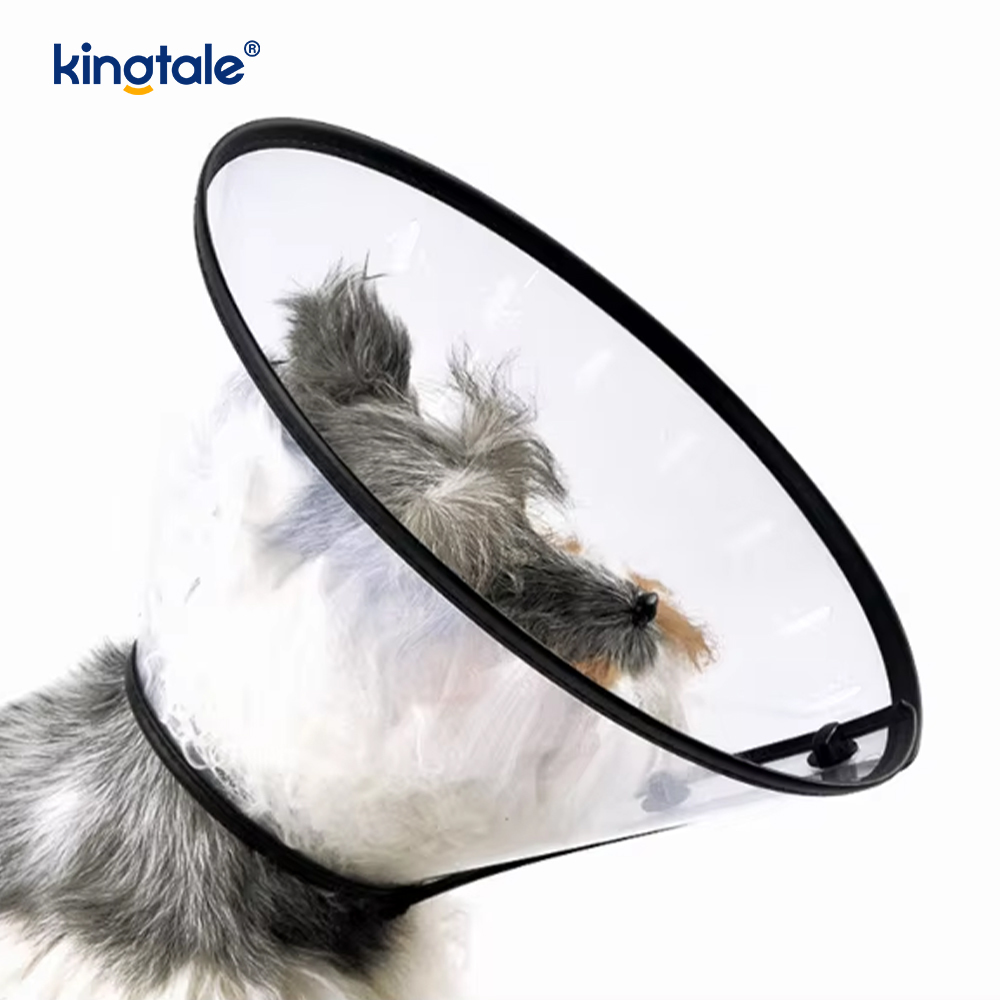 Kingtale Adjustable Recovery Cone for Dogs and CatsA transparent layered recovery collar with adjustable screw fasteners, designed for post-surgery protection. Its clear panels preserve vision while the flared rim prevents licking, and fit depends on neck and head measurements, not breed weight.View Product →
Stocking note: Carry soft collars as the core SKU, plastic cones for high-risk chewers, and recovery suits for spay and abdominal coverage. That three-option range covers most retail demand without creating a large inventory footprint.
How to Fit a Dog Recovery Collar for Different Breeds
Fit is determined by neck girth, collar depth, and the distance from the ears to the nose, and breed weight alone is not a reliable sizing input.
A collar that is too short lets the dog reach the wound; one that is too long blocks peripheral vision and increases stress. The front edge should clear the tip of the nose by 1-2 cm when the dog is standing normally.
Measure the neck girth snugly over two fingers placed under the jaw.
Check the collar depth against the cheekbone and the back of the skull.
Confirm the front edge extends past the nose by 1-2 cm.
 Pet Cone E-Collar for Post-Operative ProtectionA classic Elizabethan-style recovery collar that keeps pets from reaching wounds. Proper sizing is critical to avoid stress or blocked vision, and material choice should balance durability with comfort for long-term wear.View Product →
Rule of thumb: A recovery collar fits when the dog cannot reach the wound while lying down, turning its head, or reaching backward with a paw. Test all three positions before sending a production sample to a lab or customer.
Materials and Durability: What Wholesale Buyers Should Specify
The right recovery collar material depends on bite strength, washability, and how long the dog will wear the product, and the most durable option is not automatically the most comfortable.
Nylon webbing resists chewing and holds its shape, but it can be abrasive on sensitive skin if the edge is unfinished. Polyester fabric is soft and light, yet it needs strong seams around buckles. PVC is waterproof and easy to wipe clean, but it stiffens in cold weather and can crack after repeated folding. Cotton blends are breathable in recovery suits but stretch out when washed.
- Nylon: strongest general-purpose choice for soft collars and straps.
- Polyester mesh: lightweight and quick-drying, best for mild recovery.
- PVC-coated material: fully waterproof, useful for wound drainage.
- Cotton blend: soft against the coat, but reinforcement needed at zippers.
Material shortlist: Specify 600-900D nylon for soft recovery collars, reinforced stitching at the buckle, and rounded edges to avoid pressure marks.
For a wider comparison of collar materials and comfort trade-offs, review the dog collar material and comfort guide before finalizing your spec sheet.
Recovery Suits vs Collars: Which One Covers More SKU Risk?
Recovery suits reduce cone-related stress and protect abdominal incisions, but collars remain necessary for head, ear, eye, and paw wounds.
If you stock only suits, customers will still need a collar for facial wounds. If you stock only collars, spay customers may ask for a more comfortable alternative after the second night. A balanced range includes both.
Collars
Protect head, neck, ear, and eye wounds.
Block mouth and paw access to most body areas.
Recovery suits
Cover torso and abdominal incisions.
Reduce cone stress and allow normal sleep.
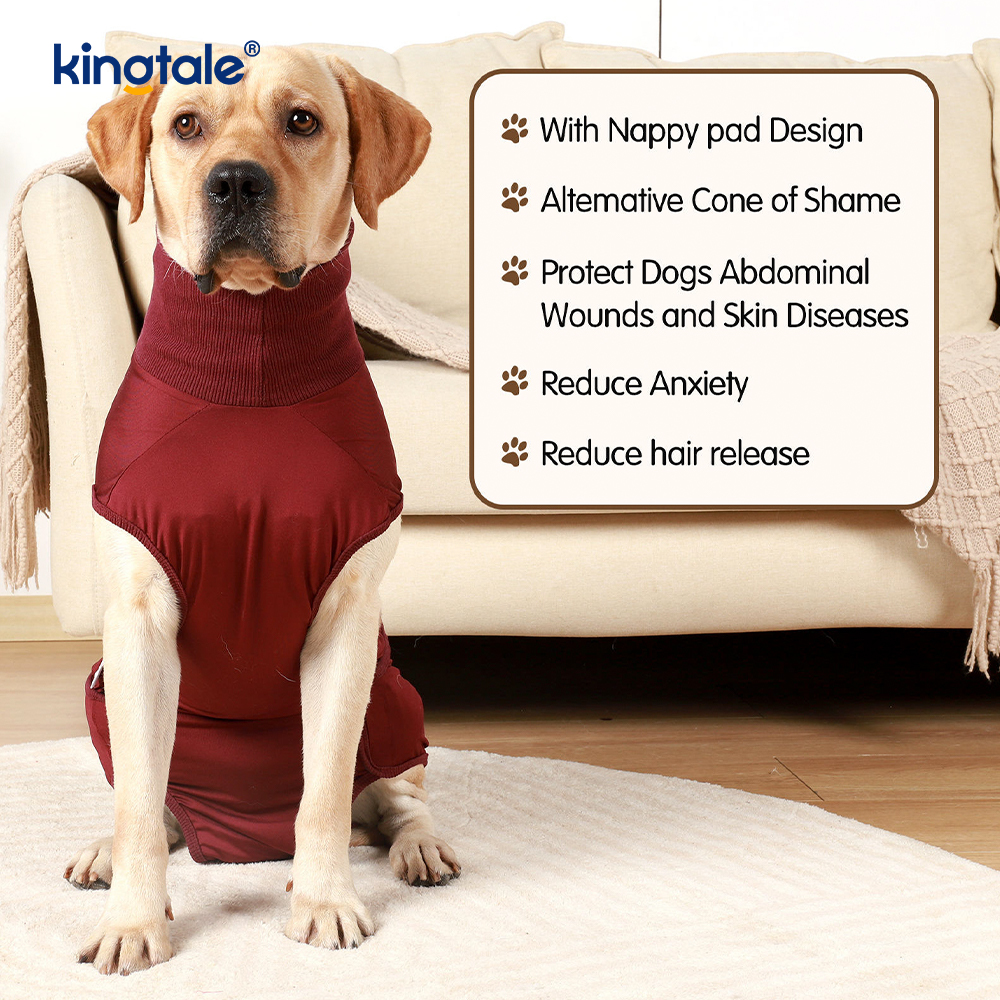 Dog Recovery Suit for Post-Surgical Abdominal ProtectionA breathable, stretchable suit that serves as a collar alternative to prevent licking and biting after surgery or during menstruation. Velcro closure and a built-in urine pad make it easy to wear and clean, supporting natural movement and rest.View Product →
Sourcing note: Recovery suits need more SKU depth than collars because torso length varies widely across breeds. Order at least three sizes per target weight range.
Sourcing Recovery Collars for Retail or Private Label
Private label success starts with a product spec that covers material, closure style, sizing range, packaging, and compliance documents, not just a photo.
Zhangjiagang Kingtale International Co., Ltd. (Kingtale) designs and exports pet accessories with more than 16 years of production experience, supporting OEM and ODM projects for recovery collars, recovery suits, and related wound-care products.
- Confirm the size range for your target breeds, including neck girth and collar depth.
- Define strap width, buckle material, and seam reinforcement.
- Ask for washability data and drying behavior.
- Request current test reports or certificates required by your destination market.
OEM checklist: Send a sample of your target dog's typical neck girth and nose length. That data is more useful than a breed name because body shape varies within every breed.
Talk through your order volume, packaging preferences, and lead time on the contact page before you issue a purchase order.
FAQ
Quick answer: The best dog recovery collar is the one that blocks the wound, survives chewing, and lets the dog sleep, eat, and move without panic.
How long does a dog need to wear a recovery collar?
Most dogs wear one for 10-14 days after surgery, or until a veterinarian confirms the incision has closed and sutures or skin glue have done their job.
Can a dog sleep in a soft recovery collar?
Yes. Soft fabric and inflatable collars are designed for overnight use, but the fit must be snug enough to stay on and short enough to keep the dog's vision and hearing reasonably clear.
How do I measure a dog for a recovery collar?
Measure neck girth, the depth from the jaw to the back of the skull, and the distance from the ears to the nose, then compare all three numbers to the product size chart.
What is the difference between a recovery collar and a recovery suit?
A recovery collar blocks access to head, ear, face, and front leg wounds, while a recovery suit covers the torso and abdominal incisions. Some dogs need both during the same recovery period.



Reliable Materials - Sourced for performance and pet safety.
Quick Links
Ready to Customize Your Pet Products?
