

 English
 Español
Don't hesitate to send a message
Which Pet Leash is Best for Your Dog?
Content
Durability and Strength: Solutions for Powerful Breeds
For B2B buyers and retailers specializing in large breed accessories, structural integrity is the primary concern. A standard Pet Leash may fail under the sudden impact force generated by a large dog. Engineering a heavy duty dog leash for large dogs requires specific material choices and construction techniques to ensure safety.
Features of a Heavy Duty Dog Leash for Large Dogs
The kinetic energy of a large dog in motion can exceed several hundred joules. To withstand this, high-performance leashes often utilize reinforced nylon webbing or steel cable cores. The tensile strength is the critical metric for procurement. While standard leashes may offer a breaking strength of 200-300 lbs, a true heavy-duty solution must exceed 600 lbs.
The following comparison highlights the technical differences between standard and heavy-duty specifications:
| Specification | Standard Leash | Heavy Duty Leash |
| Tensile Strength | Approx. 200-300 lbs (90-136 kg) | Exceeds 600-1000 lbs (272-453 kg) |
| Hardware Material | Standard Zinc Alloy | Forged Stainless Steel or Aviation Aluminum |
| Webbing Density | Standard weave (approx. 1.0-1.5mm thick) | Double-layer or reinforced weave (2.0mm+ thick) |
| Clasp Mechanism | Spring-loaded snap hook | Locking carabiner or bolt snap |
Innovation in Active Lifestyles
The modern pet market demands products that integrate seamlessly into active human lifestyles. This has driven the development of specialized ergonomic designs that differ significantly from traditional walking leads.
Benefits of a Hands Free Dog Leash for Running
For runners and joggers, a hands free dog leash for running offers a distinct advantage by freeing the hands for natural arm movement. From a biomechanical perspective, these leashes typically feature an elastic bungee section to absorb shock. When the dog pulls, the bungee extends, reducing the sudden impact force on the runner's waist. This shock-absorption can reduce peak force by up to 30-40%, minimizing the risk of injury to both the pet owner and the dog's neck.
- Waist Belt Design: Adjustable neoprene belts distribute force across the hips rather than the lower back.
- Quick-Release Mechanism: Essential for safety, allowing the user to detach the leash instantly if necessary.
Technology Integration: Retractable Pet Leash with Flashlight
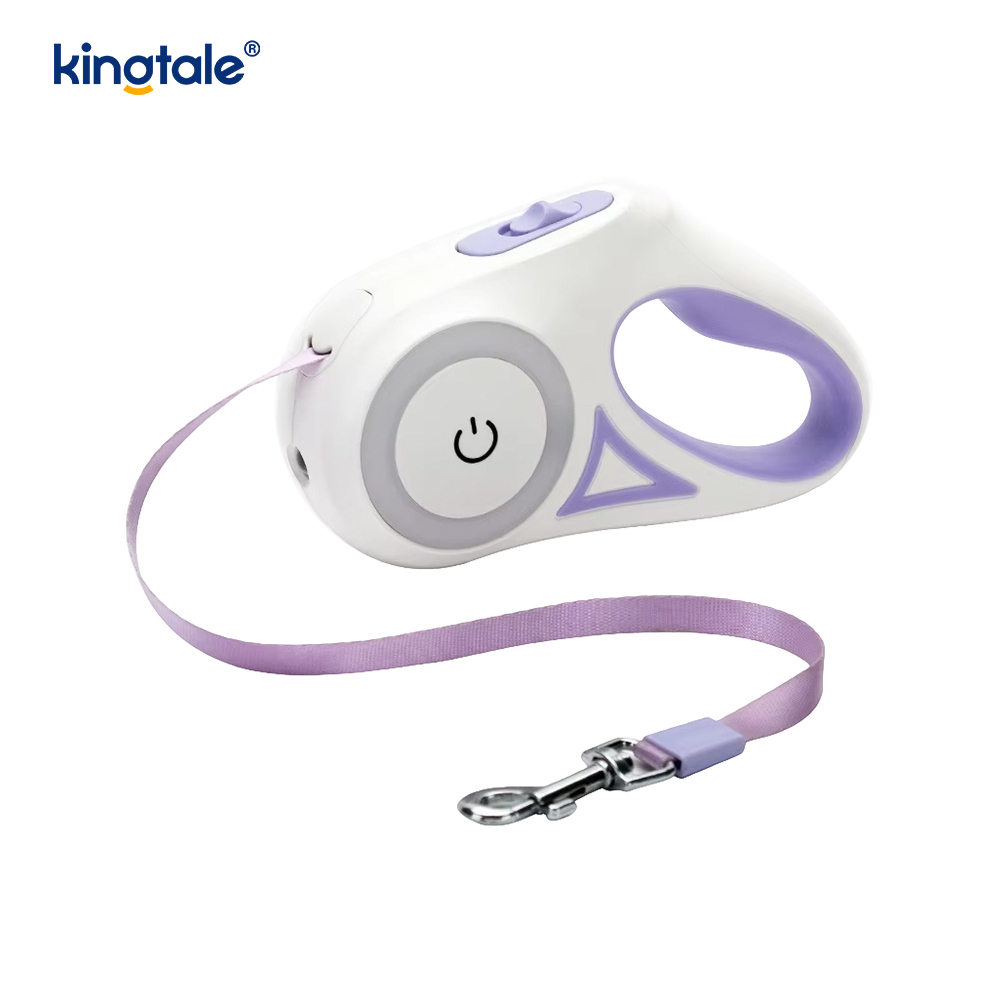
Walking dogs in low-light conditions requires enhanced visibility. A retractable pet leash with flashlight integrates illumination directly into the handle housing. This design challenges engineers to balance battery weight, motor mechanics for retraction, and LED circuitry in a compact, ergonomic form factor. The flashlight component typically utilizes high-lumen LEDs (often 50-100 lumens) with focused beam optics to illuminate the path ahead, while the internal spool mechanism maintains smooth extension and retraction.
Style and Functionality
Craftsmanship of Personalized Leather Pet Leash
In the premium market segment, aesthetics combine with durability. A personalized leather pet leash appeals to consumers seeking exclusivity. Full-grain leather is the preferred material due to its high tensile strength and ability to develop a patina over time. Technically, the quality is determined by the tanning process and the stitching method. Bridle leather, often used in equestrian gear, is an excellent choice for leashes as it is treated with waxes and oils to maximize suppleness and water resistance. Customization via laser engraving or embossing adds brand value without compromising the leather's structural fibers.
Multi-Pet Management
Tangle-Free Design: Double Dog Leash for Two Dogs
Walking multiple dogs presents a specific mechanical challenge: tangling. A double dog leash for two dogs solves this through a swivel mechanism. The central connector typically features a 360-degree rotating bearing. This allows the two leads to move independently around a central axis, preventing the twist that occurs with static connectors. For manufacturers, the quality of the bearing is critical; low-quality swivels can jam under load, rendering the anti-tangle feature useless and potentially causing friction burns.
Professional Manufacturing and Supply
Quality in pet accessories stems from vertical integration and strict quality control. Zhangjiagang Kingtale International Co., Ltd. specializes in designing and exporting innovative pet accessories. As a vertically integrated manufacturer and exporter, we offer a carefully crafted line of pet products including: high performance collars, carriers and leashes, eco-conscious toys, and grooming and toiletry essentials. Jintianrui is dedicated to enhancing the safety, comfort and happiness of pets.
Our manufacturing process ensures that every component, from the webbing weave to the clasp spring, meets rigorous international safety standards.
Material Science and Selection Guide
Comparative Analysis of Leash Materials
Selecting the right material is crucial for product positioning. Different materials offer varying degrees of durability, weight, and comfort.
| Material | Tensile Strength | Pros | Cons |
| Nylon | High | Cost-effective, versatile, easy to clean | Can cause friction burns if pulled rapidly |
| Leather | Very High | Premium feel, comfortable grip, durable | Requires maintenance, not machine washable |
| Rubber/Biothane | Medium-High | Waterproof, easy to clean, soft grip | Heavier than nylon, can be slippery |
| Metal Chain | Extreme | Chew-proof, indestructible | Heavy, cold in winter, noisy |
Conclusion
Choosing the correct Pet Leash requires an understanding of materials, mechanics, and user needs. Whether it is a heavy duty dog leash for large dogs or a hands free dog leash for running, the product must prioritize safety and ergonomics. By partnering with established manufacturers like Zhangjiagang Kingtale International Co., Ltd., buyers can ensure they provide high-quality, reliable products to the market.
Frequently Asked Questions
1. What is the standard length for a dog leash?
The standard length for a training or walking leash is typically 4 to 6 feet (1.2 to 1.8 meters). This length provides enough freedom for the dog to move while keeping the owner in control. Retractable leashes can extend up to 26 feet (8 meters), but they are generally not recommended for training in high-traffic areas due to reduced control.
2. How do I determine the correct width for a heavy-duty leash?
The width correlates with tensile strength. For small dogs (under 20 lbs), a 3/8 inch or 1/2 inch width is sufficient. For medium dogs (20-60 lbs), a 3/4 inch width is standard. For large breeds requiring a heavy duty dog leash, a 1-inch width or wider is necessary to distribute the force and prevent the webbing from snapping.
3. Are retractable leashes safe for large dogs?
Retractable leashes can be risky for large, powerful dogs. The thin cord can snap under high tension, and the plastic handle can be pulled out of the owner's hand. If using a retractable pet leash for a larger breed, it is essential to choose a model rated for the dog's specific weight and one with a robust braking system.
4. How should a leather leash be maintained?
To maintain a personalized leather pet leash, it should be kept dry and cleaned with a damp cloth. Periodic conditioning with a leather conditioner is recommended to prevent the material from drying out and cracking. Avoid soaking leather in water as it can damage the fibers.
5. Can I wash a nylon leash in a washing machine?
Yes, nylon leashes are generally machine washable. It is recommended to place the leash in a mesh laundry bag to prevent the metal hardware from damaging the machine drum. Use cold water and mild detergent, and allow it to air dry completely before use to maintain fiber integrity.
References
- Miller, J. (2022). Material Science in Pet Product Engineering. Journal of Consumer Goods Technology.
- American Kennel Club. (2023). "Safety Standards for Canine Restraint Systems."
- Veterinary Orthopedics Society. (2021). "Biomechanics of Leash Impact on Canine Cervical Spines."



Reliable Materials - Sourced for performance and pet safety.

Quick Links
Ready to Customize Your Pet Products?
