

 English
 Español
Don't hesitate to send a message
Dog Leash Types, Materials and Selection Guide
Content
- 1 What Is a Dog Leash and What Are Its Core Functions?
- 2 A Breakdown of the Main Dog Leash Types
- 3 Dog Leash Materials: Nylon, Leather, and Biothane Compared
- 4 Retractable vs. Standard Leash: Freedom vs. Control
- 5 Specialized Leashes for Safety, Visibility, and Extreme Conditions
- 6 Dog Leash Accessories That Improve Functionality
- 7 Matching the Leash to Your Dog's Size, Temperament, and Activity
A dog leash is far more than a simple strap that connects a handler to a dog—it is a critical safety tool, a training aid, and a communication device. The leash you choose directly influences your control over the dog, the dog's comfort, and the quality of every walk. With dog leashes types ranging from lightweight nylon designs for casual strolls to heavy-duty tactical builds for working K9s, and with materials spanning budget-friendly polyester to full-grain leather that lasts a decade, the selection can be overwhelming. This article breaks down the different types, materials, and features that define a leash's performance, so you can match the leash to your dog's size, temperament, and your specific activity—whether that's a relaxed neighborhood walk, a focused training session, or a nighttime run in low-light conditions.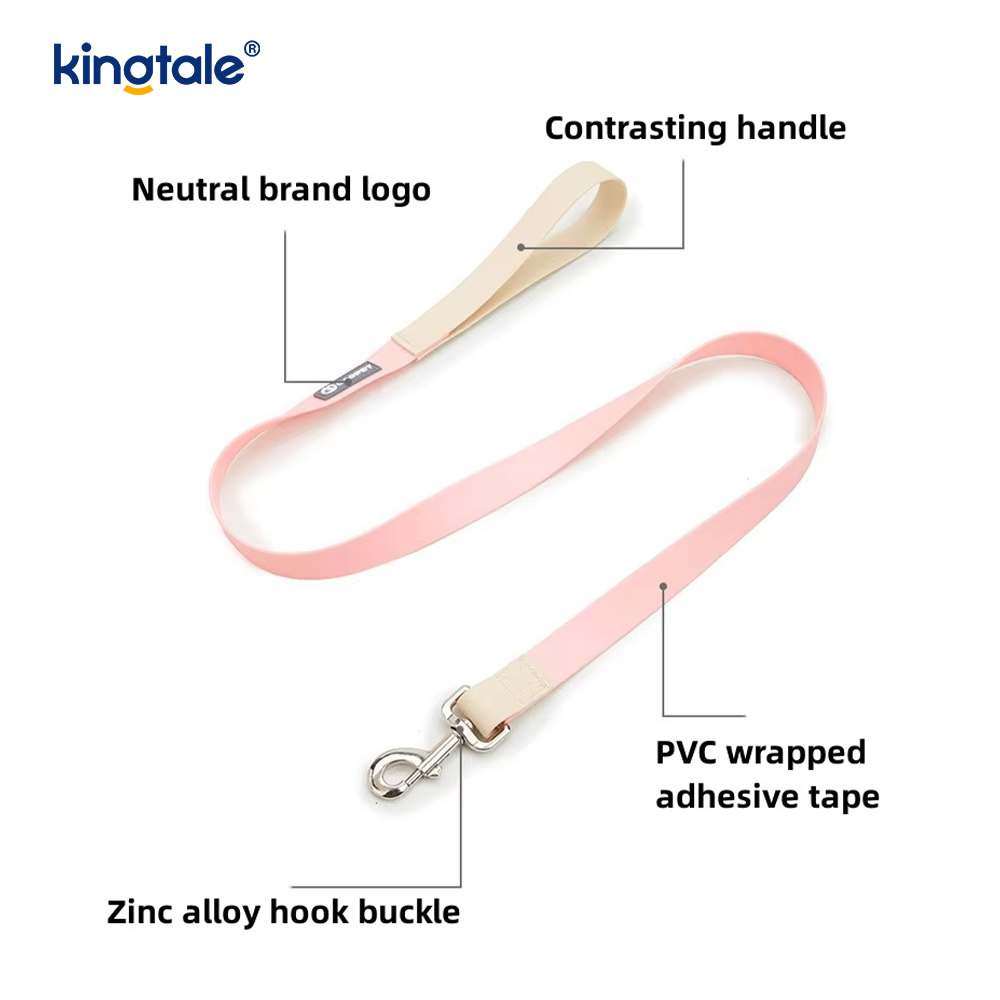
What Is a Dog Leash and What Are Its Core Functions?
At its simplest, a dog leash is a length of material with a handle at one end and a clip or clasp at the other, designed to attach to a dog's collar or harness. Its primary function is restraint: keeping the dog within a defined radius for safety, legal compliance, and the protection of others. However, a leash also serves as a communication channel. Through subtle tension and release, a handler can guide a dog, signal a change of direction, or provide immediate correction during dog leash for training exercises. The right leash allows for consistent feedback, while a poorly chosen one—too short, too heavy, or made of a material that burns the hands—can impede learning and make walks frustrating for both dog and handler. The different types of dog leashes have evolved to serve these distinct functions: some prioritize control, others freedom, and some are engineered specifically for the demands of working dogs or extreme weather.
A Breakdown of the Main Dog Leash Types
The variety of dog leashes types reflects the diversity of canine activities and handling preferences. Each type is designed with a specific use case in mind, and understanding these categories is the first step in narrowing down the choices.
- Standard flat leash: The most common type, typically 4 to 6 feet long and made from nylon, leather, or rope. It provides good control for everyday walking and is available in various widths to match the dog's size.
- Training leash: Usually longer—6 to 30 feet—to allow distance work, recall training, and off-leash practice in controlled settings. Long-line training leashes are often made from lightweight, waterproof materials that resist tangling.
- Retractable leash: A spring-loaded mechanism inside a plastic handle allows the handler to pay out and retract a thin cord or ribbon, giving the dog variable freedom. These leashes can extend up to 26 feet but offer less immediate control and have been subject to safety concerns regarding cord burns and sudden failure.
- Hands-free leash: Worn around the waist, these leashes are popular with runners and hikers. They allow the handler to run freely without holding a leash, and often incorporate a bungee section to absorb shock from sudden pulls.
- Slip lead: A combination of leash and collar in one, where the leash loops through a ring to form a slip that tightens when tension is applied. Used widely in shelters and veterinary settings for their speed of application, slip leads must be used carefully to avoid excessive pressure on the dog's neck.
For handlers looking for a heavy duty dog leash, the standard flat leash construction is often scaled up with wider straps, reinforced stitching, and metal hardware rated for extreme pulling forces. These leashes are built for powerful breeds and for use in dog leash for training scenarios where the dog may lunge or pull unexpectedly.
Dog Leash Materials: Nylon, Leather, and Biothane Compared
The choice of dog leash materials affects durability, hand feel, maintenance, and the leash's performance in wet conditions. The two classic materials—nylon and leather—continue to dominate, but modern synthetics offer compelling alternatives.
| Material | Durability | Water Resistance | Hand Feel and Grip |
|---|---|---|---|
| Nylon | Good; susceptible to fraying over time with heavy chewing | Absorbs water; becomes heavy and may freeze in cold | Can cause rope burn if pulled quickly; lightweight |
| Leather | Excellent; softens and strengthens with use | Natural water resistance; requires conditioning to prevent drying | Warm, supple, and grippy; becomes more comfortable over time |
| Biothane (polyester webbing coated with TPU) | Extremely durable; resists abrasion and chewing | Fully waterproof; ideal for a waterproof dog leash | Smooth, easy to clean; slightly less soft than leather |
The nylon dog leash vs leather dog leash debate often comes down to maintenance and comfort. Nylon is affordable, available in a vast array of colors, and dries quickly after a light spray, but it can become stiff and smelly if soaked repeatedly. Leather, particularly full-grain English bridle leather, develops a rich patina and molds to the handler's grip over time. However, leather requires periodic conditioning to prevent cracking, and it is generally more expensive. For a truly waterproof dog leash, Biothane—a polyester webbing coated with thermoplastic polyurethane—has gained popularity. It handles like leather, is odor-proof, and can be rinsed clean after a muddy hike, making it a favorite for search-and-rescue and waterfowl hunting dogs.
Retractable vs. Standard Leash: Freedom vs. Control
The retractable leash vs standard leash choice reflects a fundamental trade-off between the dog's freedom and the handler's immediate control. A retractable leash allows a dog to roam up to 26 feet while remaining attached, which can be useful in open, low-risk areas where the dog can sniff and explore. However, the thin cord can be difficult to see and can cause severe rope burns or lacerations if it wraps around a limb. The lock mechanism can also fail under sudden load, leaving the handler with no effective restraint. Many trainers discourage retractable leashes for dogs that pull, because the constant light tension teaches the dog that pulling is rewarded with more line. A standard flat leash, by contrast, provides consistent tactile feedback and allows a handler to bring the dog to heel position instantly, which is why it remains the preferred tool for a dog leash for walking in urban environments, on crowded trails, or anywhere that close control is necessary.
Specialized Leashes for Safety, Visibility, and Extreme Conditions
For specific needs, a range of specialized leashes has been developed to enhance safety and performance. A reflective dog leash is stitched with high-visibility thread that reflects light back toward its source, making the dog and handler visible to drivers at night from distances of up to 600 feet. This is a critical safety feature for evening walks, and many high-quality reflective leashes also incorporate a padded handle for comfort. For a heavy duty dog leash, often sought for large breeds over 50 kg or for working dogs, the construction typically includes a double-layered nylon strap with reinforced box stitching at the clip attachment, a solid metal carabiner or locking snap rated for extreme loads, and a traffic handle near the clip for close-quarters control. These leashes are tested to withstand sudden shock loads that far exceed the dog's body weight.
A dedicated dog leash for walking in wet or muddy environments should ideally be a waterproof dog leash that does not absorb moisture, mud, or odor. Materials such as Biothane and rubberized nylon excel here because they can be wiped down or hosed off without degrading. For training, a dog leash for training often includes a traffic handle positioned close to the clip, allowing the handler to maintain a short, secure hold when passing other dogs or crossing streets. Combined with a well-fitted harness or training collar, these design features transform the leash from a passive tether into an active training instrument.
Dog Leash Accessories That Improve Functionality
A variety of dog leash accessories can enhance the basic leash setup without the need to replace the entire leash. A padded handle wrap, for example, can be added to a flat nylon leash to increase grip comfort on long walks and to reduce the risk of rope burn if the dog lunges. Quick-release carabiners and swivel snap hooks can be swapped in for standard bolt snaps to prevent the leash from twisting and to allow faster, one-handed attachment. For hands-free walking, a dedicated waist belt with a bungee section can be combined with a standard leash to absorb shock. In low-light conditions, a clip-on LED light or a reflective leash sleeve can provide additional visibility. These accessories allow a handler to tailor a quality leash to evolving needs, rather than purchasing a new leash for every activity.
Matching the Leash to Your Dog's Size, Temperament, and Activity
The final selection of a dog leash is a personal decision informed by the dog's weight, pulling strength, coat type, and the environments in which you walk. For a small, calm dog, a narrow nylon or leather leash of 1/2 to 5/8 inch width is light and sufficient. For a large, energetic breed, a wider 3/4 to 1 inch strap prevents the leash from cutting into the handler's hands and provides a stronger connection. A dog that pulls should not be paired with a retractable leash; instead, a short, fixed-length leash combined with a training harness is the safer, more effective approach. By considering the type, material, specialized features, and accessories together, you can select a leash that ensures safe, enjoyable walks while supporting any training goals, rain or shine, day or night.



Reliable Materials - Sourced for performance and pet safety.
Quick Links
Ready to Customize Your Pet Products?
