

 English
 Español
Don't hesitate to send a message
Martingale Collars: Types, Sizing & Custom Options Guide
Content
What Is a Martingale Collar?
A martingale collar is a two-loop collar designed to tighten slightly when a dog pulls against the leash, without closing all the way like a choke chain. The design uses a smaller control loop attached to a larger main loop — pulling on the leash draws the control loop taut, which snugs the main loop evenly around the dog's neck just enough to prevent it from slipping over the head and out of the collar.
Martingale collars were originally developed for sighthounds like greyhounds and whippets, whose narrow heads and wide necks let them back out of a standard buckle collar, but they're now widely used across breeds for dogs that tend to slip their collar or pull hard on leash.
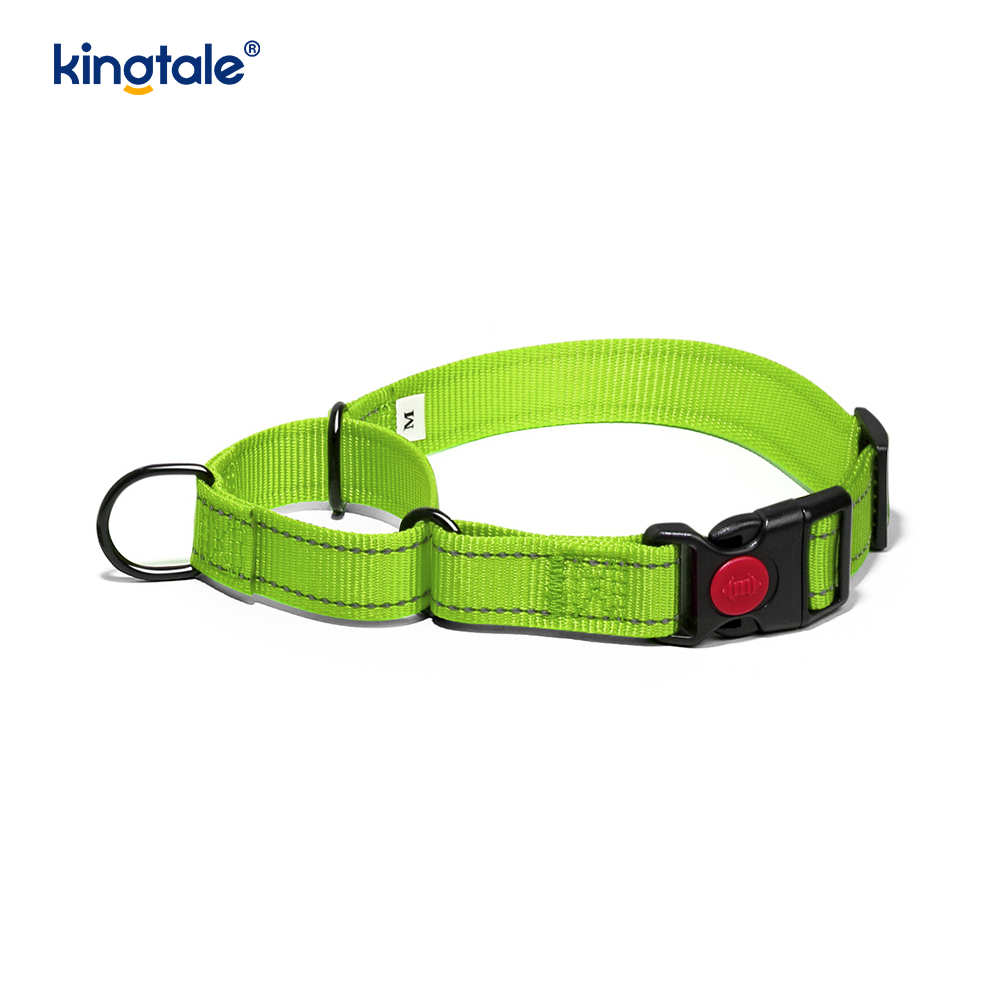
Choosing the Best Martingale Collar for Your Dog
The best martingale collar for a given dog comes down to matching a few key features to that dog's size, coat, and pulling tendency rather than picking whichever option looks best.
- Correct sizing: A properly fitted martingale collar should sit loose around the neck normally, tightening only enough to sit snugly (not tight) when the control loop is pulled fully taut — too loose and the dog can still slip out, too tight and it restricts comfort even at rest.
- Material and width: Wider webbing distributes pressure across more of the neck for dogs that pull hard, while narrower widths suit smaller or more sensitive-necked breeds.
- Adjustability: A collar with an adjustable main loop, not just the control loop, makes it easier to fine-tune fit as a dog grows or changes coat thickness seasonally.
- Hardware quality: D-rings and adjustment buckles should be rated for the dog's pulling strength — a large, strong dog needs heavier-gauge hardware than a small or moderate puller.
- Locking mechanism (optional): Some martingale collars include a buckle that allows the collar to be taken on and off like a standard buckle collar while still functioning as a martingale on the leash.
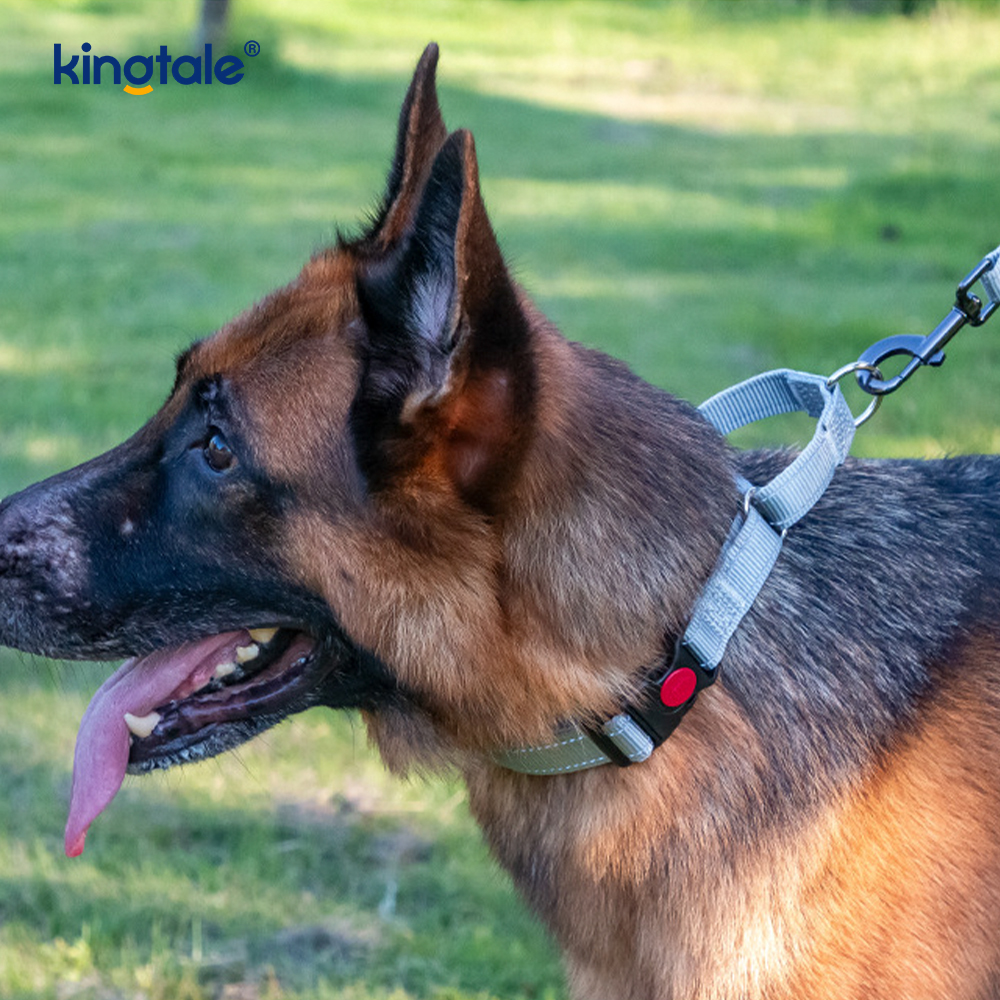
Martingale Collars for Small Dogs and Large Dogs
Martingale collars for small dogs are typically built with narrower webbing, in the 1/2 inch to 3/4 inch range, and lighter-gauge hardware sized to match a smaller dog's proportions and lower pulling force. Fit tolerance matters more at this scale too — a collar that's even slightly oversized on a small, narrow-headed dog can still slip off, so precise neck measurement before ordering is especially important.
Martingale collars for large dogs generally use webbing 1 inch or wider, along with heavier-duty D-rings and buckles rated for higher pulling force, since a large, strong dog puts significantly more stress on the collar's hardware than a small one. For large dogs prone to pulling hard on leash, wider webbing also helps by spreading pressure across more surface area of the neck rather than concentrating it in a narrow band.
Martingale Dog Collars with Chain
A chain martingale collar replaces the fabric control loop, and sometimes the entire collar, with a metal chain, which adds a distinct sound and feel that some trainers use as an additional cue during leash corrections. Chain martingales are more common in traditional obedience and show settings, particularly for sighthound breeds, and tend to hold their shape and resist chewing better than fabric versions.
The trade-off is comfort and weight — chain collars are heavier than fabric and can be less comfortable for a dog to wear for extended periods, so they're generally used for training or leash walks rather than as an everyday collar left on all day.
What Is a Breakaway Collar?
A breakaway collar is a safety collar built with a buckle designed to release under a set amount of force, allowing the collar to pop open if it gets caught on something — a fence, another dog's jaw during play, or a household object — rather than choking or trapping the dog. Most breakaway collars still function as a normal buckle collar for everyday wear and leash walks, but will separate if enough sideways or perpendicular force is applied to the release mechanism.
Because the safety release can also disengage under firm leash pressure, breakaway collars aren't generally recommended as the primary collar for leash walking a dog that pulls; a separate martingale or standard collar is often used for walks, with the breakaway reserved for everyday wear, especially for dogs that play off-leash with other dogs or spend time in an environment with entanglement risk.
Custom Dog Collars with Names
Dog collars with names on them typically use one of a few production methods: embroidery, which stitches the name directly into the webbing for durability that holds up to years of daily wear; laser engraving, usually on a separate nameplate or the collar's hardware, giving a clean, permanent mark that won't fade or fray; and printed or heat-pressed lettering, which is often the most budget-friendly option but can wear or fade faster with repeated washing and sun exposure.
Custom name collars serve a practical safety purpose beyond personalization — a name (and often a phone number) visible directly on the collar means a lost dog can potentially be identified and returned even without a tag, which can otherwise fall off or get lost separately from the collar itself.
Collars for Long-Haired Dogs
Long-haired dogs need collars that minimize matting and coat damage at the point of contact, since a narrow or rough-edged collar worn daily can wear a visible ring into a thick coat over time. Wider, smooth webbing distributes pressure and friction across more coat area than a narrow collar, and rounded or fully finished edges reduce the fraying and matting that a raw-cut edge can cause with repeated rubbing.
Martingale collars work particularly well for long-haired breeds prone to slipping collars, such as many sighthound and spitz-type breeds, since the design's slight tightening action helps prevent the collar from sliding forward over a wide, fluffy neck the way a standard buckle collar sometimes can.
What Are Dog Collars Made Of?
- Nylon webbing: The most common collar material, valued for its strength, low cost, wide range of colors and patterns, and quick-drying nature after getting wet.
- Genuine or synthetic leather: Offers a classic look and, with genuine leather, improves in feel as it breaks in, though it requires more care to avoid drying out or cracking and doesn't handle repeated water exposure as well as nylon.
- Polyester or cotton webbing: Used less often than nylon but valued for a softer hand-feel, sometimes chosen for dogs with sensitive skin.
- Biothane (coated webbing): A polyester webbing coated in a waterproof polymer layer, combining nylon-like strength with a wipe-clean surface that resists odor and mildew better than uncoated fabric.
- Metal hardware: D-rings, buckles, and adjustment sliders are typically stamped or cast from steel, brass, or zinc alloy, with stainless steel offering the best corrosion resistance for dogs that swim frequently.



Reliable Materials - Sourced for performance and pet safety.
Quick Links
Ready to Customize Your Pet Products?
