

 English
 Español
Don't hesitate to send a message
What Makes a Good No-Pull Dog Harness, and How to Choose One for Your Dog
Content
Dog Harnesses & Walking Gear
A no-pull harness doesn't stop a dog from wanting to pull — it changes the mechanics of the pull itself, redirecting force so a lunge turns the dog back toward the handler instead of dragging them forward, and understanding that mechanism makes it much easier to judge which harness design actually fits a specific dog's size, strength, and pulling habits.
How No-Pull Dog Harnesses Work
Most no-pull harnesses rely on the position of the leash attachment point rather than any restrictive tightening mechanism. A back-clip harness, where the leash attaches over the shoulders, gives a pulling dog a straight line of force to lean into — which is part of why back-clip designs alone often don't reduce pulling on strong or enthusiastic dogs. A front-clip harness moves the attachment point to the chest, so when the dog pulls forward, the leash tension gently turns the dog's body sideways back toward the handler instead of letting them drive straight ahead.
Many no-pull harnesses combine a front clip with a secondary back clip, giving handlers the option to use either attachment point — or both at once with a double-ended leash — depending on the dog's training stage and how much pulling correction is needed on a given walk.
01
Front-Clip Design
Redirects a pulling dog's momentum sideways rather than letting them pull straight ahead against the leash.
02
Even Weight Distribution
Wider straps across the chest and body spread pressure evenly, reducing strain on the neck compared to a collar.
03
Secure, Adjustable Fit
Multiple adjustment points keep the harness snug without restricting natural shoulder movement during walks.
Best No-Pull Harnesses for Strong Pullers
For dogs that pull hard and consistently, harness construction matters as much as the clip design itself. Reinforced stitching, sturdy metal D-rings, and a wide, padded chest strap distribute the force of a strong pull across a larger area rather than concentrating it on a thin strap, which improves both comfort and control during a determined lunge.
A dual-clip design with both front and back attachment points gives handlers the most flexibility with strong pullers, since a double-ended leash connected to both points lets the handler apply gentle correction from the front while still having the more familiar over-the-shoulder connection at the back. Some harnesses for strong pullers also add a top handle, which gives the handler a quick, secure grip point for close control in crowded areas or unexpected situations.
Tip: A harness that fits snugly enough to prevent a dog from backing out of it, without restricting shoulder movement, is one of the most important factors for strong pullers — checking fit around the chest and behind the front legs is worth doing every few walks as a dog's coat or weight changes seasonally.
Sizing for Large and Small Breeds: Great Pyrenees vs. Pomeranian
Harness sizing isn't just about overall size — it's about matching strap width, padding, and adjustment range to a breed's specific body shape and strength. A harness built for a large, powerful breed and simply scaled down rarely fits a small dog comfortably, and the reverse is just as true.
| Breed Type | Key Fit Considerations |
|---|---|
| Great Pyrenees (large breed) | Wide, heavily padded straps and reinforced hardware to handle substantial pulling force; adjustable girth to fit a broad, deep chest |
| Pomeranian (small/toy breed) | Lightweight materials and narrower straps to avoid restricting movement; secure fit around a small chest without gapping |
Fit priorities differ significantly between large and small/toy breed harnesses
Step-In Vest Harnesses
A step-in vest harness lets the dog step through two leg openings before the vest is lifted and secured over the back, which many owners find easier for dogs that dislike having a harness pulled over their head. The vest-style body typically offers wider surface coverage across the chest and torso than a strap-only harness, spreading pressure more evenly — a feature that benefits both small breeds with delicate frames and larger dogs during active pulling.
Custom No-Pull Dog Harnesses
Personalized sizing
Custom measurements accommodate unusual body proportions that standard size charts don't cover well.
Material and color options
Choice of fabric, padding thickness, and color/pattern lets owners match the harness to their dog's comfort needs and personal style.
Name or ID embroidery
Added identification directly on the harness offers a practical safety feature beyond a standard tag.
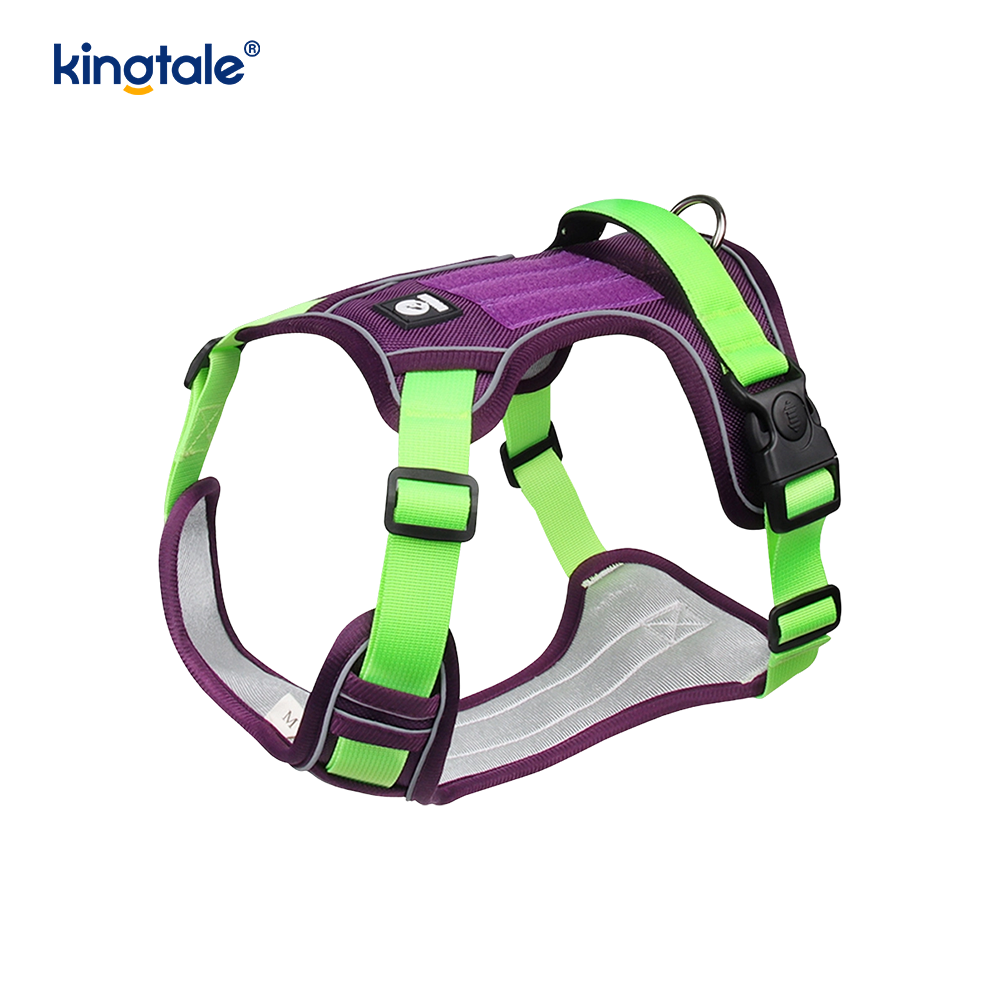
What Makes a Good Dog Harness Overall
- Proper fit — snug enough to prevent backing out, loose enough not to restrict natural movement
- Durable hardware — metal D-rings and buckles rated for the dog's size and pulling strength
- Even weight distribution — wider straps and padded chest panels reduce pressure points during pulling
- Clip placement suited to training needs — front clip for active pull correction, back clip for general everyday walks
- Adjustability — multiple adjustment points accommodate coat thickness changes and growth in younger dogs



Reliable Materials - Sourced for performance and pet safety.
Quick Links
Ready to Customize Your Pet Products?
