

 English
 Español

Don't hesitate to send a message
How to Choose and Source a Quality Leather Dog Leash for Wholesale Buyers
Content
- 1 Why a Leather Dog Leash Beats Nylon and Biothane
- 2 Leather Dog Leash Grades: What the Leather Actually Determines
- 3 Hardware and Stitching: The Real Failure Points on a Leather Dog Leash
- 4 How to Source a Leather Dog Leash for Wholesale or OEM
- 5 Leather Dog Leash Specifications to Put in Your Brief
- 6 Leather Dog Leash FAQ
A leather dog leash fails at four points before the hide itself gives out: the snap, the stitching, the handle loop, and the buckle attachment. That order of failures is consistent across the sample reviews we run at Zhangjiagang Kingtale International Co., Ltd., a vertically integrated pet accessory manufacturer with 16 years of export production experience. The visible grain can look correct while a zinc-alloy snap or cotton thread decides whether the leash survives a full season.
16 years of export production is not a quality claim by itself. The specification sheet is what creates a durable leather dog leash.
The buyer job is not simply to find a leather leash. It is to separate true leather quality from surface appearance. A full-grain hide with poor hardware fails faster than a top-grain hide with solid 304 stainless steel hardware. If you source on first price or surface finish alone, returns will be higher than the product margin can absorb.
Why a Leather Dog Leash Beats Nylon and Biothane
A leather dog leash earns its place in a retail or wholesale lineup when natural grip, comfort, and a controlled aging process matter more than low cost or fast drying.
Leather has a different load response from webbing. The fibres absorb the initial jerk and spread tension into the handle, which reduces hand fatigue on a pulling dog. Nylon dries quickly and is inexpensive, but narrow nylon webbing can cut into the palm during sudden lunges. Biothane is fully waterproof and easy to wipe clean, yet it has a plastic hand-feel and does not develop the same customer attachment over time.
Material Scores for Dog Leash Production
Full-grain leather comfort
9/10
Full-grain leather appearance
9.5/10
Nylon weather resistance
9/10
Nylon comfort
6/10
Biothane weather resistance
10/10
Biothane natural grip
6.5/10
In durability terms, a 10 mm full-grain leather dog leash with a solid brass snap should last 4-6 years of daily walks. A corrected-grain leash with zinc-coated hardware often returns as a failed sample in 12-18 months. That gap is the real price difference.
Leather Dog Leash Grades: What the Leather Actually Determines
Full-grain is the only grade that should anchor a durable leather dog leash line.
Full-grain leather dog leash: a leash cut from the top layer of a hide with the natural grain left intact, preserving the dense fibre structure that resists tearing and develops a patina with use.
Top-grain is smoother and easier to emboss, but the split surface has shorter fibres and less tear strength. Corrected-grain is buffed to hide defects, which lowers cost and hides the very problems that lead to early cracking. Bonded leather should not be used for active dog leashes at all.
| Grade | Structure | Best fit | Tear resistance | Typical life |
| Full-grain | Outer layer of hide, grain intact | Premium daily-use leashes | High | 4-6 years |
| Top-grain | Split below the grain layer | Smooth, embossed leashes | Medium-high | 2-4 years |
| Corrected-grain | Buffed and recoated top layer | Budget SKUs | Medium | 1-2 years |
| Bonded | Leather fibres with binder | Non-load accessories | Low | Not recommended |
Hardware and Stitching: The Real Failure Points on a Leather Dog Leash
A leather dog leash is only as strong as its hardware and stitching, not as strong as the hide.
- Snap hook: specify 304 stainless steel or solid brass. Avoid zinc-alloy castings with thin plating because plating wears off in sand and dust.
- Swivel: must rotate smoothly under load and hold a repeated pull test.
- Thread: use waxed polyester with 4-5 stitches per cm. Cotton thread rots from moisture and ultraviolet light.
- Handle: a folded and riveted handle outlasts a single stitched loop.
- Width: use 12-15 mm for small and medium dogs, and 19-25 mm for large breeds and strong pullers.
80 lb snap strength means the snap holds an 80 lb static pull, not repeat 25 lb jerks. Ask for cycle-test data on spring fatigue.
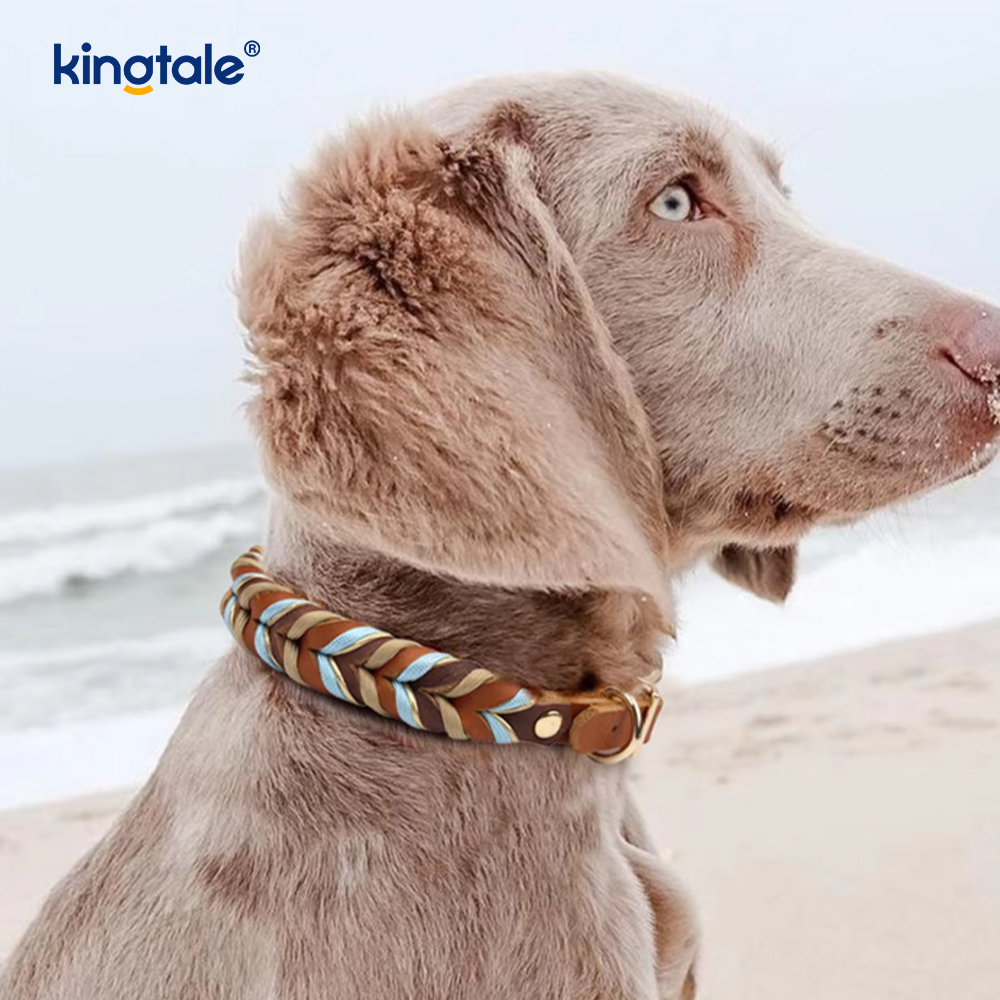 Genuine Leather Braided Dog Collar and Leash SetThis handcrafted set pairs a soft, adjustable leather collar with reinforced rust-resistant hardware, making it a reliable choice for retailers testing quality through samples before bulk orders.View Product →
How to Source a Leather Dog Leash for Wholesale or OEM
Begin with samples, not price sheets, when you source a leather dog leash for a retail line.
- Define the load class by dog weight and expected pulling force.
- Choose leather grade, width, and thickness before comparing prices.
- Specify hardware, thread, stitch density, and finish on paper.
- Approve pre-production samples and run a 500-cycle snap open-close test.
- Confirm lead time, MOQ, packaging, and embossed logo options.
A short lead time usually comes from stock leather, not custom tanning. Custom veg-tanned leather orders add roughly 30-45 days to production. Send your specification sheet through the Kingtale contact page before ordering bulk stock.
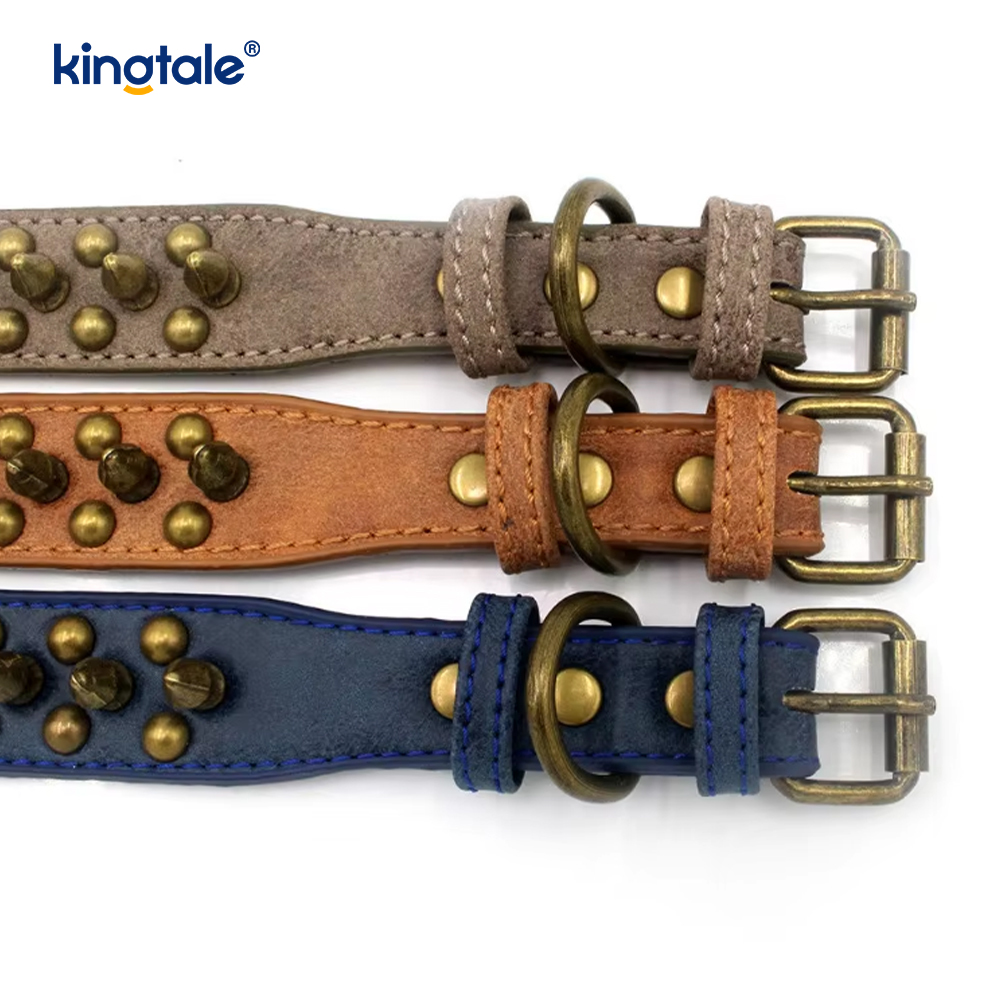 Anti-bite Studded PU Pet Collar with Safety BuckleFeaturing zinc alloy rivets and a secure elastic release buckle, this collar adds protection during play while emphasizing accurate neck measurement to reduce size-related returns.View Product →
Leather Dog Leash Specifications to Put in Your Brief
A written specification sheet removes most sample-round confusion.
- Leather grade: full-grain or top-grain, never bonded.
- Thickness: 2.0-2.5 mm for medium and large leashes.
- Width: 12 mm, 19 mm, or 25 mm depending on target load.
- Hardware: 304 stainless steel or solid brass with cycle-test data.
- Thread and stitching: waxed polyester, 4-5 stitches per cm.
- Finish: sealed edges and a low-solvent coating to reduce skin irritation.
Recommended minimum spec: full-grain, 2.0 mm leather, waxed polyester thread, and a 304 stainless steel snap.
Leather Dog Leash FAQ
The short answers below follow the same rule: choose the leather grade, width, and hardware for the dog body weight, not for the shelf price.
How long should a leather dog leash last?
With full-grain leather, sealed edges, and stainless or brass hardware, a daily-use leash lasts 4-6 years. Corrected-grain leashes usually last 1-2 years before surface cracking appears.
Is a leather dog leash strong enough for a large pulling dog?
Yes, at the correct width. Use a 19-25 mm full-grain leash with a 304 stainless steel snap and a folded, riveted handle. Avoid thin 10 mm fashion leashes for strong pullers.
What is the difference between leather and nylon dog leashes?
Leather provides better grip, lower hand fatigue, and a mature appearance. Nylon dries faster and weighs less, but it can cause rope burn and looks worn after continuous outdoor exposure.
Can I private label or customize a leather dog leash?
Yes. Wholesale leather dog leash programs typically accept custom width, leather color, embossed logos, hardware color, and retail packaging. OEM/ODM orders from a vertically integrated manufacturer such as Zhangjiagang Kingtale International Co., Ltd. normally start with a production sample.



Reliable Materials - Sourced for performance and pet safety.
Quick Links
Ready to Customize Your Pet Products?
